Growyourbrand.net Reference notes on brand consequence May 2026
The Brand Archive

Brand System / Automotive / Performance / 1963-present

McLaren and the Carbon Fiber Proof That Made Speed Technical

McLaren tied Bruce McLaren's racing team, papaya color memory, carbon fiber monocoques, the F1 road car, Le Mans proof, and the speedmark into a technical speed identity.

Editorial mark McLaren editorial wordmark treatment
Archive visual Premium editorial archive still-life of a McLaren carbon-fiber speed case with aerodynamic speedmark study, 1963 racing team card, papaya paint swatch, 1981 carbon monocoque note, 1992 F1 road car card, 1995 Le Mans timing slip, carbon weave sample, wind-tunnel lines, and lightweight fasteners
Editorial McLaren wordmark treatment paired with The Brand Archive rights-safe carbon-fiber speed-proof visual.

Short Answer

McLaren and the Carbon Fiber Proof That Made Speed Technical is a brand system case about McLaren in 1963-present. Carbon fiber gave McLaren a speed claim buyers could see as structure, not decoration. Performance brands get sharper when the material story and racing proof match. McLaren made carbon, papaya memory, road-car ambition, and race evidence serve one technical identity.

Key Takeaways

  • McLaren says Bruce McLaren formed a racing team in 1963.
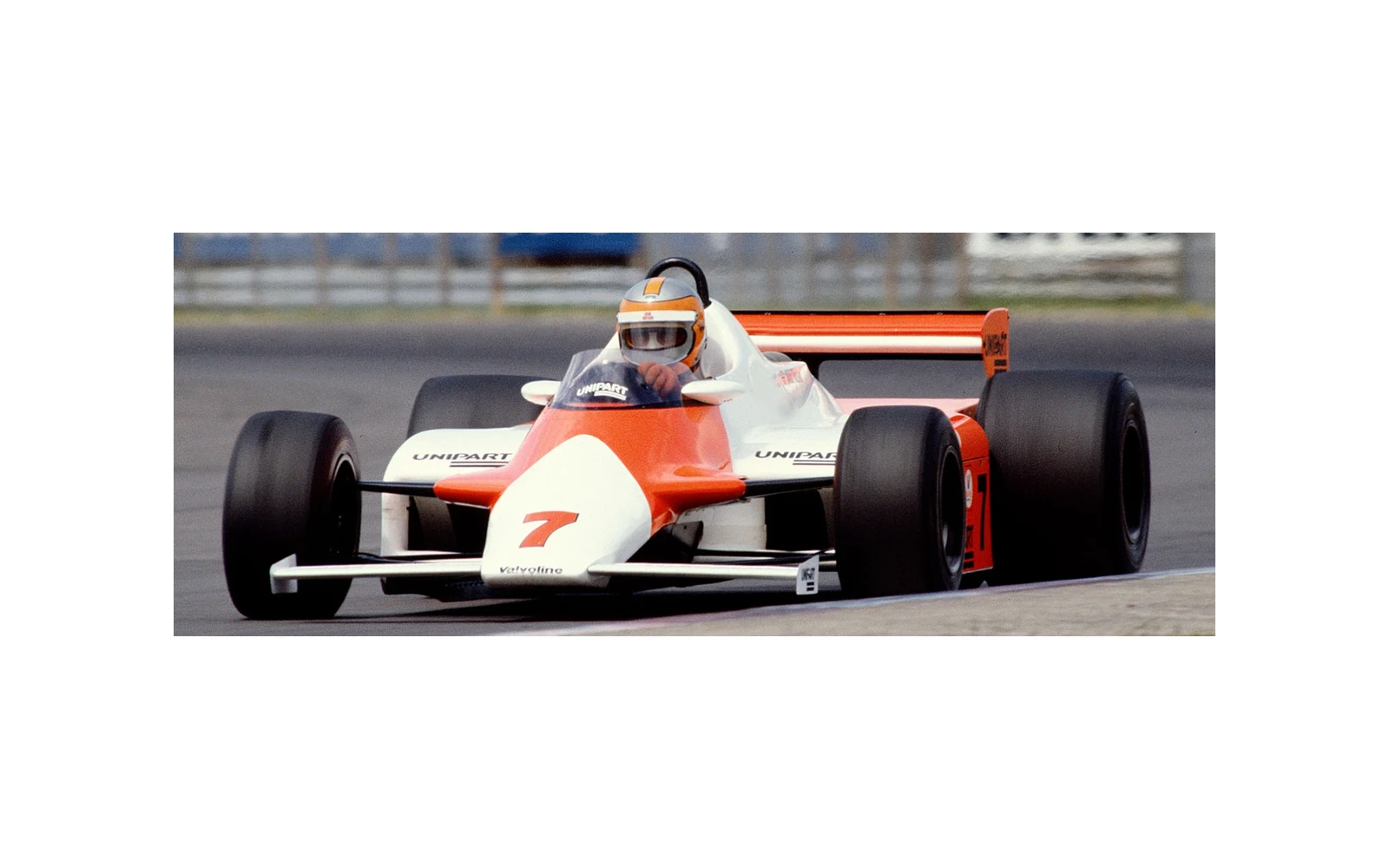
  • McLaren says the MP4/1 was the first carbon composite Formula 1 design.
  • McLaren says the F1 road car was realized in 1992 and was the first road car built around a lightweight carbon fiber monocoque.
  • McLaren says a modified F1 won the 1995 24 Hours of Le Mans.
  • The operator lesson is that speed becomes more believable when the product can show the material reason it is fast.

The Decision Context

McLaren sells speed to people who already know speed. That makes the proof standard harder. A badge and a racing story are not enough.

The brand's stronger cue is technical: carbon structure, racing origin, papaya memory, wind-tunnel thinking, and a road-car story that came from the track.

The Team Came Before The Road Car

McLaren says Bruce McLaren formed a racing team in 1963. The road-car division came later, so the brand's customer promise had to borrow honestly from competition work.

That gives McLaren a different kind of luxury. The product does not begin with comfort. It begins with a racing method brought into a road car.

Carbon Made The Method Visible

McLaren says the MP4/1 was the first carbon composite Formula 1 design. McLaren also says the F1 road car was realized in 1992 and was the first road car built around a lightweight carbon fiber monocoque.

That is the brand system. The customer can understand the speed claim through material, construction, and restraint: less weight, stronger structure, less compromise.

The Archive Reading

McLaren belongs in the archive because it shows how a technical material can become brand memory. Carbon fiber is not a background detail. It is the proof that lets the speedmark, papaya color, and racing story work.

For operators, the lesson is simple. If you sell performance, let the product show the reason instead of asking the slogan to carry it.

Comparable Cases

Sources

  1. McLaren Automotive, from the beginning
  2. McLaren Racing, MP4/1 carbon design
  3. McLaren Automotive, McLaren F1
  4. Editorial McLaren wordmark treatment

People Also Ask

What happened to McLaren?

McLaren and the Carbon Fiber Proof That Made Speed Technical is a brand system case about McLaren in 1963-present. Carbon fiber gave McLaren a speed claim buyers could see as structure, not decoration. Performance brands get sharper when the material story and racing proof match. McLaren made carbon, papaya memory, road-car ambition, and race evidence serve one technical identity.

Why is McLaren a brand system case?

McLaren is filed as a brand system case because the visible consequence sits in that decision pattern. Carbon fiber gave McLaren a speed claim buyers could see as structure, not decoration.

What can brands learn from McLaren?

Performance brands get sharper when the material story and racing proof match. McLaren made carbon, papaya memory, road-car ambition, and race evidence serve one technical identity.

Is McLaren still operating?

The Brand Archive marks McLaren as Active / continuing. That means the brand, company, platform, product system, or parent organization is still operating, continuing, or being actively resolved.

What should McLaren be compared with?

Compare McLaren with Lotus, Ferrari, Bugatti to see the same decision pattern from nearby cases.