Growyourbrand.net Reference notes on brand consequence May 2026
The Brand Archive

Brand System / Convenience retail / Daily services / 1978-present

Oxxo Trust Case

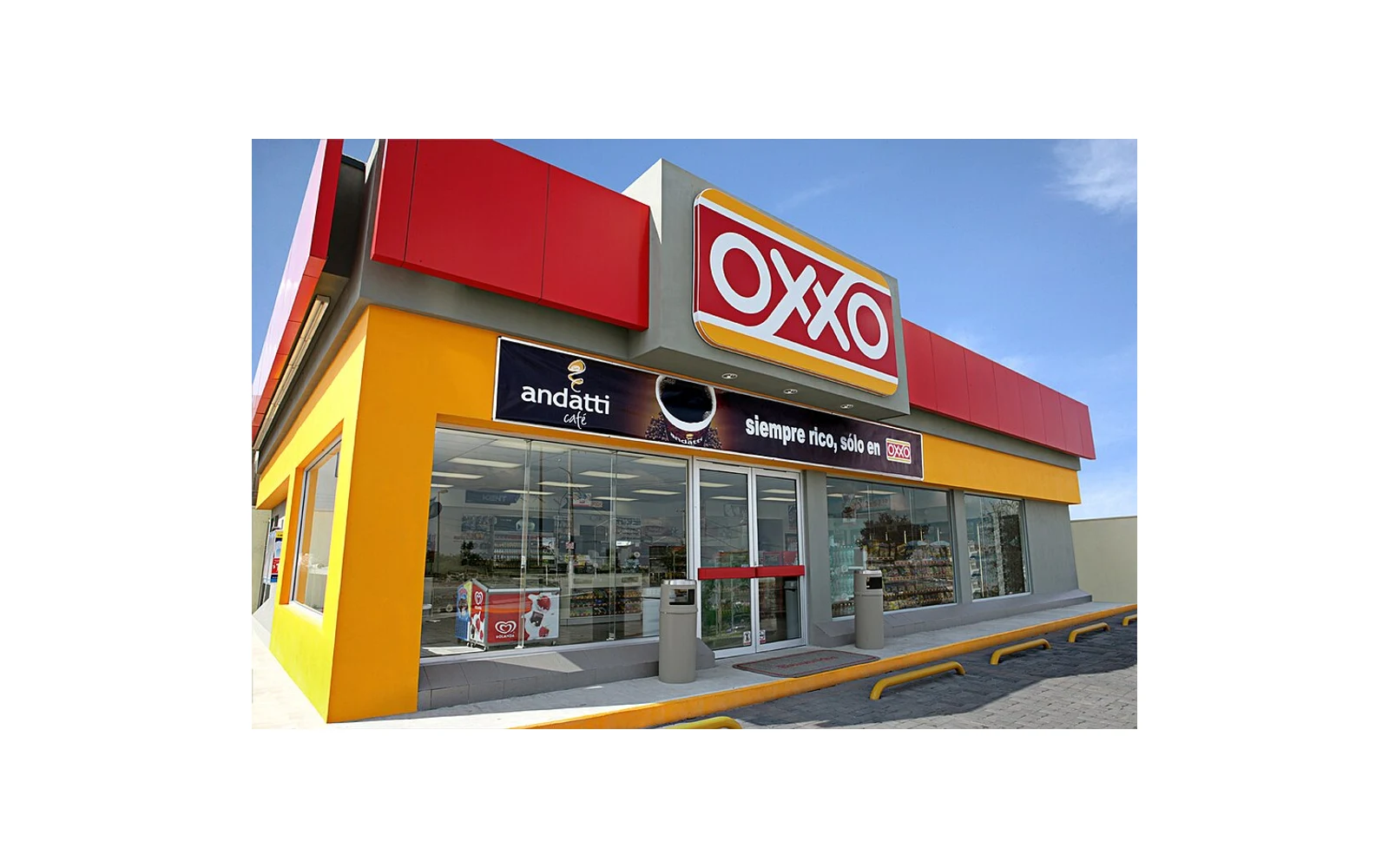
Oxxo made daily errands repeatable by joining dense stores, coffee, snacks, bill payment, mobile top-ups, cash services, delivery pickup, and neighborhood visibility.

Editorial mark Oxxo editorial wordmark treatment
Archive visual Premium editorial archive still-life of an Oxxo corner convenience network case with source-mark card, storefront elevation, coffee cup, payment receipt, mobile top-up card, snack shelf tags, neighborhood route map, and 1978 origin file
Editorial Oxxo wordmark treatment paired with The Brand Archive rights-safe corner convenience network visual.

Short Answer

Oxxo Trust Case is a brand system case about Oxxo in 1978-present. Oxxo made convenience a neighborhood operating system. Convenience is repetition, more than location. Oxxo widened the store into payments, top-ups, cash services, food, coffee, and pickup so the corner became a daily utility.

Case map

Read the case by decision risk.

Key Takeaways

  • Oxxo traces its first-store origin to Monterrey in 1978.
  • The brand is tied to convenience retail, daily services, payments, top-ups, and dense neighborhood access.
  • The archive value is frequency built through service bundling.
  • The operator lesson is to own the errand stack, not just the storefront.

The Decision Context

A convenience store becomes powerful when customers need it for more than one reason.

Oxxo's system made the nearby store useful for small purchases, small payments, and small interruptions in the day.

Density Changed The Role

A single store is retail. A dense network becomes infrastructure.

That is why coffee, top-ups, payments, snacks, pickup, and cash services can sit under one habit.

The Archive Reading

Oxxo belongs in the archive because it shows how convenience becomes a services network.

For operators, the lesson is to design for repeat errands before designing for occasional discovery.

Where The Strategy Can Break

Oxxo should not be read as a clean success label. The useful question is where the brand system promise can fail in the real category: customers are being asked to place money, identity, credit, or protection inside the system.

The weak reading is calling the brand trusted while avoiding the proof of access, error handling, fees, service, and recovery. That kind of page sounds polished but gives the reader no way to judge the decision.

The concrete failure mode is this: the public remembers the friction point first: a blocked account, a confusing fee, a failed claim, a poor branch handoff, or a weak digital recovery path. If the case cannot explain that risk, the brand story is not finished.

The Bad Example

A bad Oxxo copycat would start with the visible surface: the mark, the color, the store, the app, the route, the campaign, or the public phrase. Then it would assume the surface created the result.

That is usually backwards. The surface worked only if the category proof underneath it was already strong enough: access, transaction confidence, service recovery, and visible risk control.

The page has to protect readers from that shortcut. The mistake is not ambition. The mistake is copying the artifact while leaving the constraint untouched.

What To Copy

Copy the discipline, not the costume. For Oxxo, the discipline sits in the link between convenience retail / daily services pressure, customer behavior, and the proof a buyer or user can inspect.

A useful reader should be able to point to one behavior that changed, one risk that dropped, and one cue that helped the change stick.

If those three pieces are missing, the page should not pretend the case is a repeatable playbook. It is only a brand example with missing machinery.

The Proof Trail

Start with the year or period: 1978-present. Then ask what was visible to the market at that time, what changed after the decision, and what evidence still exists now.

The source list gives the inspection trail. Use it to separate what Oxxo says about itself from what the case page argues about the brand decision.

The proof should answer five checks: money or protection risk, access proof, service recovery, fee or claim clarity, regulatory and trust burden. If the page cannot answer them, the case needs more source work before anyone treats it as a decision record.

The Decision Limit

The case should not be used as a slogan for doing the same thing. It should be used as a boundary test. The question is whether the same market pressure, customer behavior, proof surface, and timing exist before the decision gets copied.

Oxxo gives the archive a concrete inspection point: access, transaction confidence, service recovery, and visible risk control. If a team cannot point to that proof in its own business, the comparison is weak, even when the visible asset looks similar.

The better lesson is operational. Decide what must be true before the cue, campaign, name, product, route, or experience can carry the promise. Then decide which signal would stop the move if customers reject it, ignore it, or use it in the wrong way.

A serious reader should leave with a constraint, not a mood. For Oxxo, the constraint sits in convenience retail / daily services: who is choosing, what risk they are managing, which proof they can inspect, and what would make the promise collapse under normal use.

The final check is the comparison set. Put Oxxo beside two adjacent cases and ask what changed in each file: the cue, the behavior, the channel, the proof, the public language, or the operating burden. The answer keeps the case from becoming trivia.

This is where the archive page earns its keep. It turns a brand story into a decision memo: what changed, who had to believe it, what proof reduced the risk, what failure would expose the gap, and which nearby cases warn against copying the surface too quickly.

Operator test

Before copying Oxxo, test the proof.

Oxxo is useful only if the reader can see the constraint, the proof, and the failure mode. The page should make those three things inspectable.

  1. Name the real customer or market risk: customers are being asked to place money, identity, credit, or protection inside the system.
  2. Find the proof surface: access, transaction confidence, service recovery, and visible risk control.
  3. Separate the visible cue from the operating proof. The cue is not enough on its own.
  4. Write the bad version of the strategy: calling the brand trusted while avoiding the proof of access, error handling, fees, service, and recovery.
  5. Check the failure mode: the public remembers the friction point first: a blocked account, a confusing fee, a failed claim, a poor branch handoff, or a weak digital recovery path.

Comparable Cases

Sources

  1. Oxxo, About
  2. Editorial Oxxo wordmark treatment

People Also Ask

What happened to Oxxo?

Oxxo Trust Case is a brand system case about Oxxo in 1978-present. Oxxo made convenience a neighborhood operating system. Convenience is repetition, more than location. Oxxo widened the store into payments, top-ups, cash services, food, coffee, and pickup so the corner became a daily utility.

Why is Oxxo a brand system case?

Oxxo is filed as a brand system case because the visible consequence sits in that decision pattern. Oxxo made convenience a neighborhood operating system.

What can brands learn from Oxxo?

Convenience is repetition, not only location. Oxxo widened the store into payments, top-ups, cash services, food, coffee, and pickup so the corner became a daily utility.

Is Oxxo still operating?

The Brand Archive marks Oxxo as Active / continuing. That means the brand, company, platform, product system, or parent organization is still operating, continuing, or being actively resolved.

What should Oxxo be compared with?

Compare Oxxo with Coupang, Alibaba, Tencent to see the same decision pattern from nearby cases.