Growyourbrand.net Reference notes on brand consequence May 2026
The Brand Archive

Brand System / Luggage / travel goods / 1898-present

RIMOWA Service Route Case

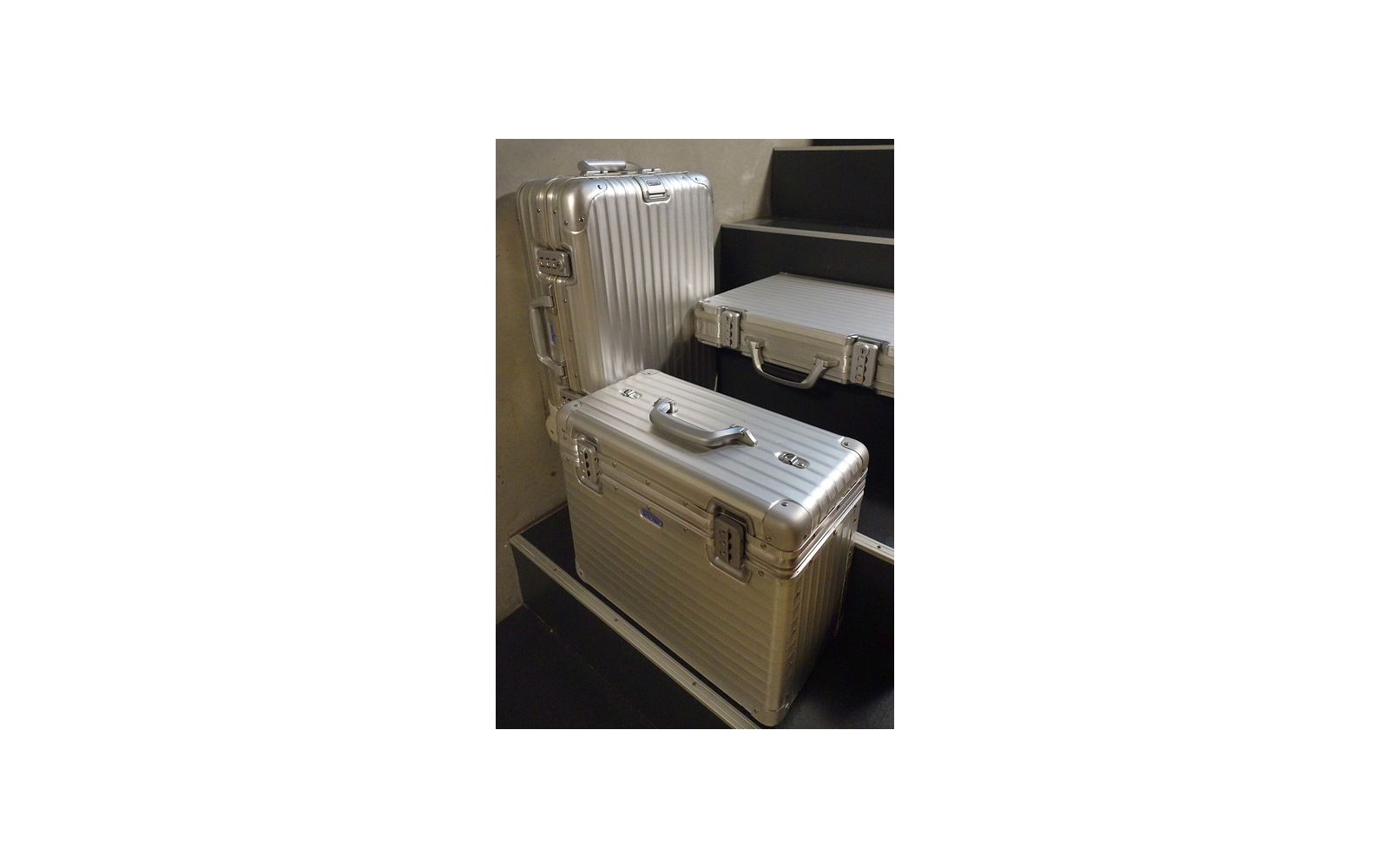
RIMOWA made luggage legible by turning grooved aluminum, wheel behavior, repair, durability, travel wear, and workshop heritage into a case people can identify from across a terminal.

Editorial mark RIMOWA editorial wordmark treatment
Archive visual Premium editorial archive still-life of a RIMOWA grooved aluminum luggage case with source-mark card, suitcase corner, wheel, handle, repair card, service note, Cologne map, heritage tag, and material swatches
Editorial RIMOWA wordmark treatment paired with The Brand Archive rights-safe grooved aluminum luggage visual.

Short Answer

RIMOWA Service Route Case is a brand system case about RIMOWA in 1898-present. RIMOWA made the suitcase surface carry the brand. A product brand is stronger when the category object is recognizable without a logo. RIMOWA made grooves, aluminum, travel wear, repairability, and service expectations become the brand code.

Case map

Read the case by decision risk.

Key Takeaways

  • RIMOWA traces its roots to Cologne in 1898.
  • The brand is closely associated with grooved aluminum luggage.
  • The surface pattern works as recognition because it is structural before it is decorative.
  • Repair and service help justify the luggage as a long-term travel object.
  • The operator lesson is to make the durable product cue visible at the moment customers compare alternatives.

The Decision Context

Luggage is judged brutally. It is dragged, checked, lifted, dented, repaired, and seen in public among many similar objects.

RIMOWA's brand system works because the object itself is hard to miss. The grooved surface turns a travel case into a moving recognition device.

Grooves Became The Code

The aluminum grooves do several jobs at once. They imply structure, catch light, show wear, and make the case readable from a distance.

That matters in a category where a logo can be hidden, scraped, covered, or ignored. The product surface carries memory before the name needs to.

Durability Needed Service

Premium travel goods cannot stop at promising toughness. They also have to answer what happens after damage. Wheels, handles, locks, dents, and repairs become part of the ownership story.

That is why service matters to the brand. A case that travels for years must feel supported after the purchase.

The Archive Reading

RIMOWA belongs in the archive because it shows how industrial surface language can become brand memory. The groove is not a campaign idea. It is the product speaking.

For operators, the lesson is to make the repeated object carry the repeated promise.

Where The Strategy Can Break

RIMOWA should not be read as a clean success label. The useful question is where the brand system promise can fail in the real category: travel customers judge the brand when time, safety, comfort, baggage, booking, or recovery breaks.

The weak reading is describing national pride, premium service, or experience while skipping the operating proof behind the trip. That kind of page sounds polished but gives the reader no way to judge the decision.

The concrete failure mode is this: the route still exists, but the brand becomes a memory of delay, confusion, lost time, or service inconsistency. If the case cannot explain that risk, the brand story is not finished.

The Bad Example

A bad RIMOWA copycat would start with the visible surface: the mark, the color, the store, the app, the route, the campaign, or the public phrase. Then it would assume the surface created the result.

That is usually backwards. The surface worked only if the category proof underneath it was already strong enough: schedule reliability, route coverage, service recovery, loyalty behavior, and the handoff between promise and trip.

The page has to protect readers from that shortcut. The mistake is not ambition. The mistake is copying the artifact while leaving the constraint untouched.

What To Copy

Copy the discipline, not the costume. For RIMOWA, the discipline sits in the link between luggage / travel goods pressure, customer behavior, and the proof a buyer or user can inspect.

A useful reader should be able to point to one behavior that changed, one risk that dropped, and one cue that helped the change stick.

If those three pieces are missing, the page should not pretend the case is a repeatable playbook. It is only a brand example with missing machinery.

The Proof Trail

Start with the year or period: 1898-present. Then ask what was visible to the market at that time, what changed after the decision, and what evidence still exists now.

The source list gives the inspection trail. Use it to separate what RIMOWA says about itself from what the case page argues about the brand decision.

The proof should answer five checks: route promise, time risk, handoff quality, service recovery, loyalty proof. If the page cannot answer them, the case needs more source work before anyone treats it as a decision record.

The Decision Limit

The case should not be used as a slogan for doing the same thing. It should be used as a boundary test. The question is whether the same market pressure, customer behavior, proof surface, and timing exist before the decision gets copied.

RIMOWA gives the archive a concrete inspection point: schedule reliability, route coverage, service recovery, loyalty behavior, and the handoff between promise and trip. If a team cannot point to that proof in its own business, the comparison is weak, even when the visible asset looks similar.

The better lesson is operational. Decide what must be true before the cue, campaign, name, product, route, or experience can carry the promise. Then decide which signal would stop the move if customers reject it, ignore it, or use it in the wrong way.

A serious reader should leave with a constraint, not a mood. For RIMOWA, the constraint sits in luggage / travel goods: who is choosing, what risk they are managing, which proof they can inspect, and what would make the promise collapse under normal use.

The final check is the comparison set. Put RIMOWA beside two adjacent cases and ask what changed in each file: the cue, the behavior, the channel, the proof, the public language, or the operating burden. The answer keeps the case from becoming trivia.

This is where the archive page earns its keep. It turns a brand story into a decision memo: what changed, who had to believe it, what proof reduced the risk, what failure would expose the gap, and which nearby cases warn against copying the surface too quickly.

Operator test

Before copying RIMOWA, test the proof.

RIMOWA is useful only if the reader can see the constraint, the proof, and the failure mode. The page should make those three things inspectable.

  1. Name the real customer or market risk: travel customers judge the brand when time, safety, comfort, baggage, booking, or recovery breaks.
  2. Find the proof surface: schedule reliability, route coverage, service recovery, loyalty behavior, and the handoff between promise and trip.
  3. Separate the visible cue from the operating proof. The cue is not enough on its own.
  4. Write the bad version of the strategy: describing national pride, premium service, or experience while skipping the operating proof behind the trip.
  5. Check the failure mode: the route still exists, but the brand becomes a memory of delay, confusion, lost time, or service inconsistency.

Comparable Cases

Sources

  1. RIMOWA, About
  2. RIMOWA, Heritage
  3. RIMOWA, Client care
  4. Editorial RIMOWA wordmark treatment

People Also Ask

What happened to RIMOWA?

RIMOWA Service Route Case is a brand system case about RIMOWA in 1898-present. RIMOWA made the suitcase surface carry the brand. A product brand is stronger when the category object is recognizable without a logo. RIMOWA made grooves, aluminum, travel wear, repairability, and service expectations become the brand code.

Why is RIMOWA a brand system case?

RIMOWA is filed as a brand system case because the visible consequence sits in that decision pattern. RIMOWA made the suitcase surface carry the brand.

What can brands learn from RIMOWA?

A product brand is stronger when the category object is recognizable without a logo. RIMOWA made grooves, aluminum, travel wear, repairability, and service expectations become the brand code.

Is RIMOWA still operating?

The Brand Archive marks RIMOWA as Active / continuing. That means the brand, company, platform, product system, or parent organization is still operating, continuing, or being actively resolved.

What should RIMOWA be compared with?

Compare RIMOWA with Hermes, Porsche, Maersk to see the same decision pattern from nearby cases.