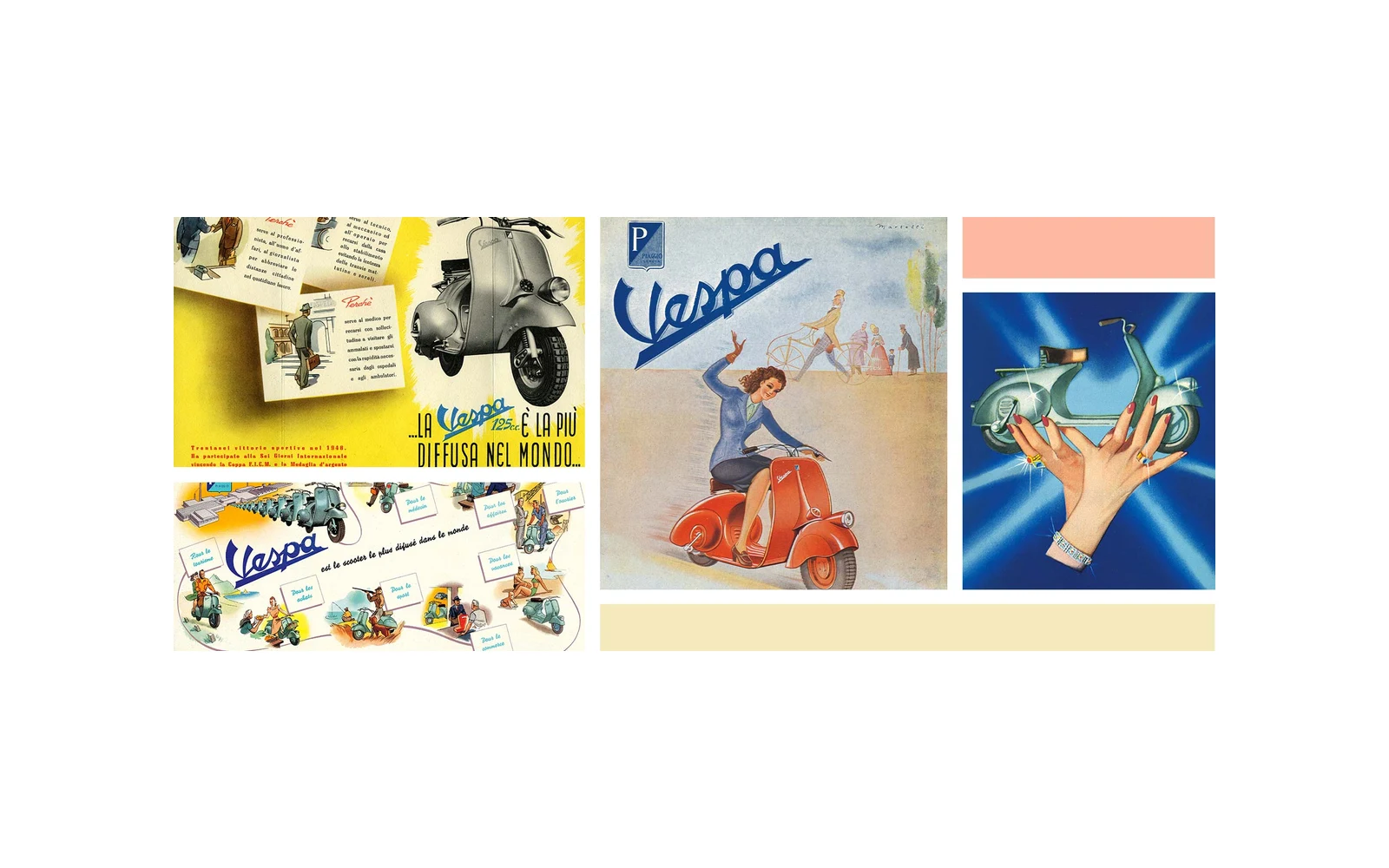
Brand System / Scooters / Urban mobility / 1946-present
Vespa and the Postwar Scooter System That Made Urban Freedom Stylish
Vespa turned pressed-steel scooter engineering, postwar Italian mobility, city practicality, cinema memory, and style into one compact freedom system.
Short Answer
Vespa and the Postwar Scooter System That Made Urban Freedom Stylish is a brand system case about Vespa in 1946-present. Vespa made practical mobility feel like style. A mobility brand can carry culture when the product solves a real constraint and then becomes easy to recognize. Vespa made smallness, access, and Italian design reinforce one another.
Key Takeaways
- Vespa traces its public debut to 1946.
- The scooter solved postwar mobility with a compact, approachable object.
- The product became memorable because its silhouette was as strong as its use case.
- Cinema and city life helped the scooter move from transport into culture.
- The operator lesson is to make utility desirable without hiding the utility.
The Decision Context
Postwar mobility needed a different object. Cars were expensive, streets were crowded, and everyday transport had to feel reachable.
Vespa worked because the scooter made that constraint visible as design: compact body, easy mounting, city use, and a shape people could remember.
The Shape Carried The Promise
The scooter did not need to explain freedom with abstract language. The object did the work: light, usable, quick, and socially readable.
That made the brand travel beyond transport. Vespa could live in street scenes, films, tourism memory, and fashion without losing the original mobility job.
The Archive Reading
Vespa belongs in the archive because it shows how a product silhouette can turn a practical answer into a cultural code.
For operators, the lesson is to let design make the constraint feel attractive.
Comparable Cases
Sources
People Also Ask
What happened to Vespa?
Vespa and the Postwar Scooter System That Made Urban Freedom Stylish is a brand system case about Vespa in 1946-present. Vespa made practical mobility feel like style. A mobility brand can carry culture when the product solves a real constraint and then becomes easy to recognize. Vespa made smallness, access, and Italian design reinforce one another.
Why is Vespa a brand system case?
Vespa is filed as a brand system case because the visible consequence sits in that decision pattern. Vespa made practical mobility feel like style.
What can brands learn from Vespa?
A mobility brand can carry culture when the product solves a real constraint and then becomes easy to recognize. Vespa made smallness, access, and Italian design reinforce one another.
Is Vespa still operating?
The Brand Archive marks Vespa as Active / continuing. That means the brand, company, platform, product system, or parent organization is still operating, continuing, or being actively resolved.
What should Vespa be compared with?
Compare Vespa with Fiat, MINI, Peugeot to see the same decision pattern from nearby cases.