Growyourbrand.net Reference notes on brand consequence May 2026
The Brand Archive

Platform Shutdown Guide

Platform and Product Shutdowns Guide

A practical guide to failed products and platform shutdowns: launch heat, adoption, retention, ecosystem proof, switching reason, and the parent brand that may survive.

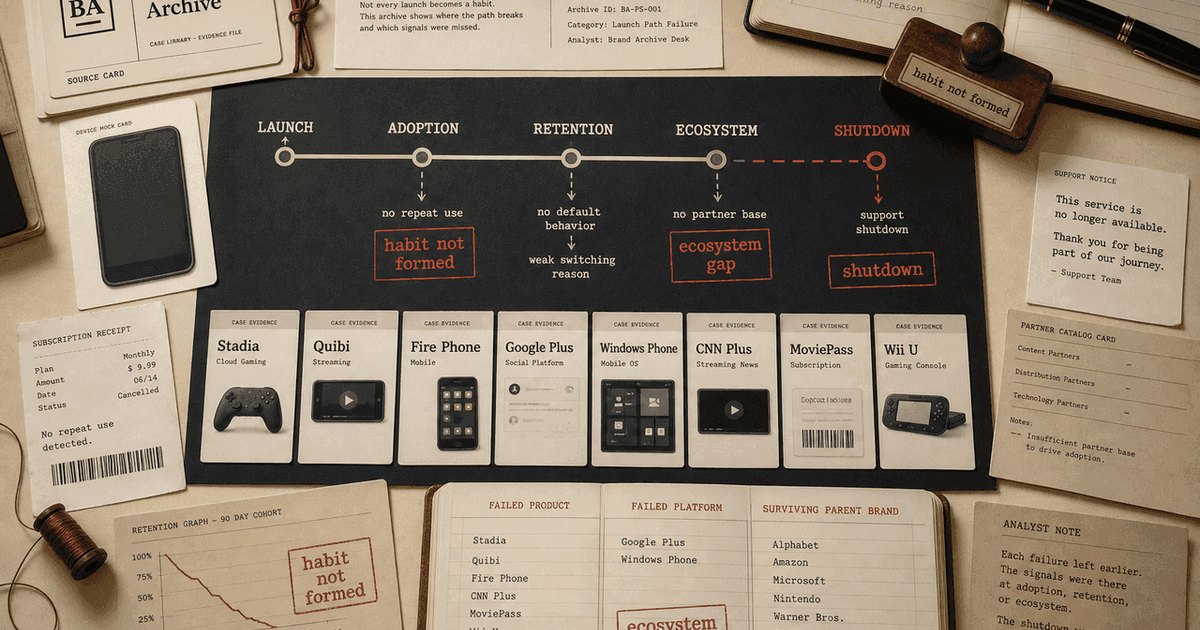
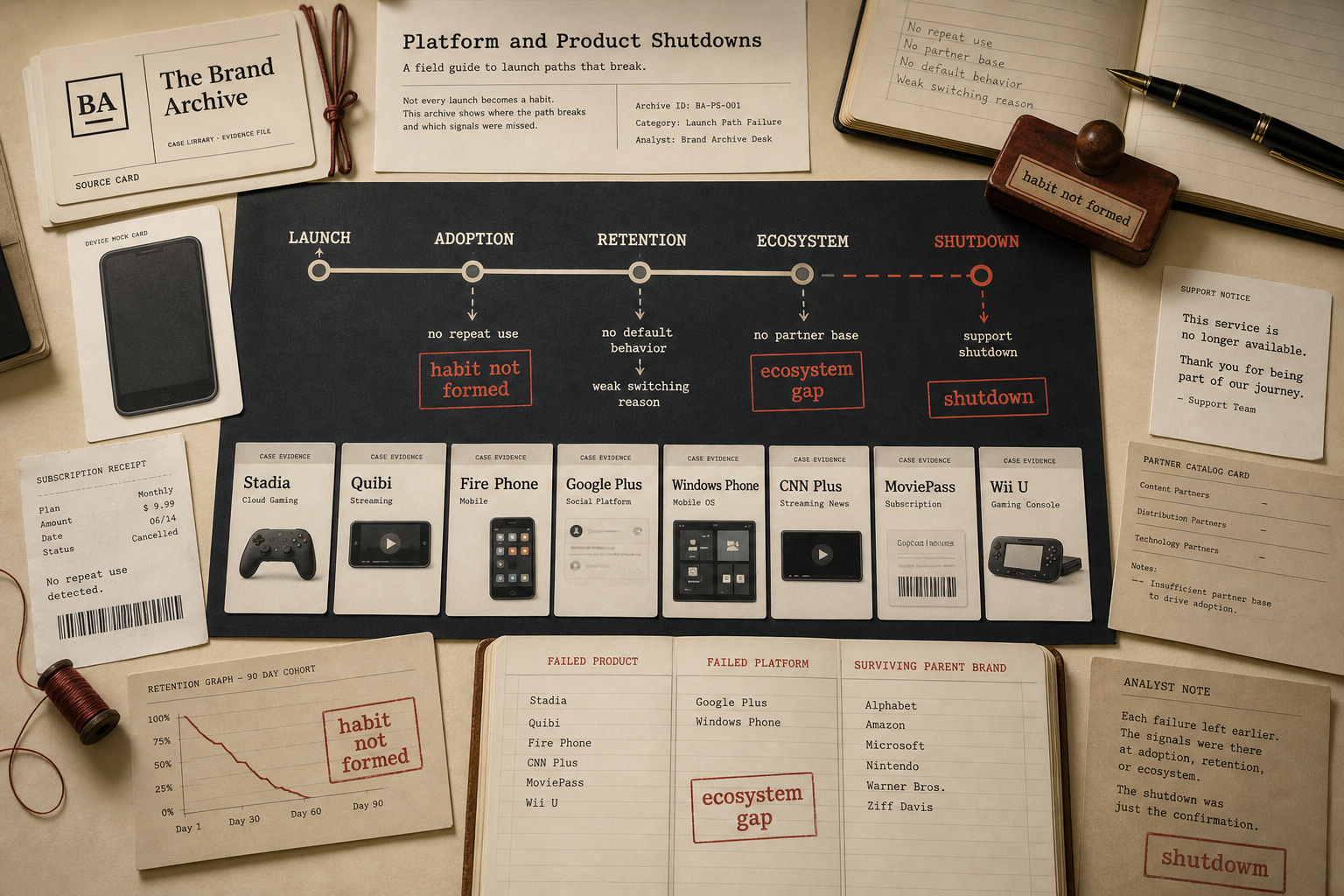
Platform and Product Shutdowns Guide archive visual

Short Answer

A shutdown is not always a failed brand. Sometimes the product never taught a habit. Sometimes the platform never formed an ecosystem. Sometimes the parent brand survives because the failed offer never became the core memory.

Shutdown Map

Separate launch attention from repeat behavior.

Theory

A product launch becomes brand memory only after repeat use.

Many launches create attention. Fewer create a habit.

The brand question is not how loud the debut was. It is whether the product became a default behavior customers and partners kept repeating.

A failed product can damage a brand when it teaches the market to doubt the company's judgment, reliability, or category clarity. It can also disappear with limited damage when customers never attached it to the parent brand's core promise.

The diagnosis should name the layer that broke. Was the offer unclear? Did retention fail? Did partners stay away? Did the economics require a scale the brand never earned? Those answers matter more than the shutdown headline.

How To Diagnose It

Read the path from launch to shutdown.

The path has stages: launch, adoption, retention, ecosystem, and either default behavior or shutdown.

A weak stage should be named before the case is used as a lesson.

Decision Patterns

Shutdowns happen at different break points.

A shutdown can come from weak clarity, weak retention, weak ecosystem, weak trust, or a better default outside the company.

The point of the guide is to name the break before turning the case into a slogan.

Bad Decisions

The mistake is reading launch noise as market proof.

Launch attention is easy to buy and easy to mistake for demand.

The shutdown file should track what happened after the first curiosity wave.

Next Guide Files

Move from shutdowns into route, memory, and value.

  1. Distribution and Channel: see how routes make or break adoption.
  2. Failed Brand Warning Signs: read the earlier habit signals.
  3. Category Creation: check whether the market learned the frame.
  4. AI-era Brand Failures: inspect retrieval confusion around new categories.
  5. Operating Proof: find the proof that would make repeat use safer.

Platform and Product Shutdowns FAQ

Is every shutdown a brand failure?

No. A shutdown may be a failed product, failed platform, failed model, or failed category move while the parent brand still survives.

What should be checked before calling a platform failed?

Check adoption, retention, partner base, content or supply, switching reason, trust, economics, and whether users formed a default habit.

Why do big companies shut down products?

Large companies shut down products when use, partner support, economics, trust, or strategic fit no longer justify continued investment.

What is the warning sign before shutdown?

A common warning sign appears when the product gets attention but does not become the normal route for the job it claimed.

Which cases help explain shutdown patterns?

Google Stadia, Quibi, Fire Phone, Google Plus, Wii U, Qwikster, Snapchat AI pressure, Yahoo, Borders, and RadioShack show different failure layers, even when not every case is a formal shutdown.