Short Answer
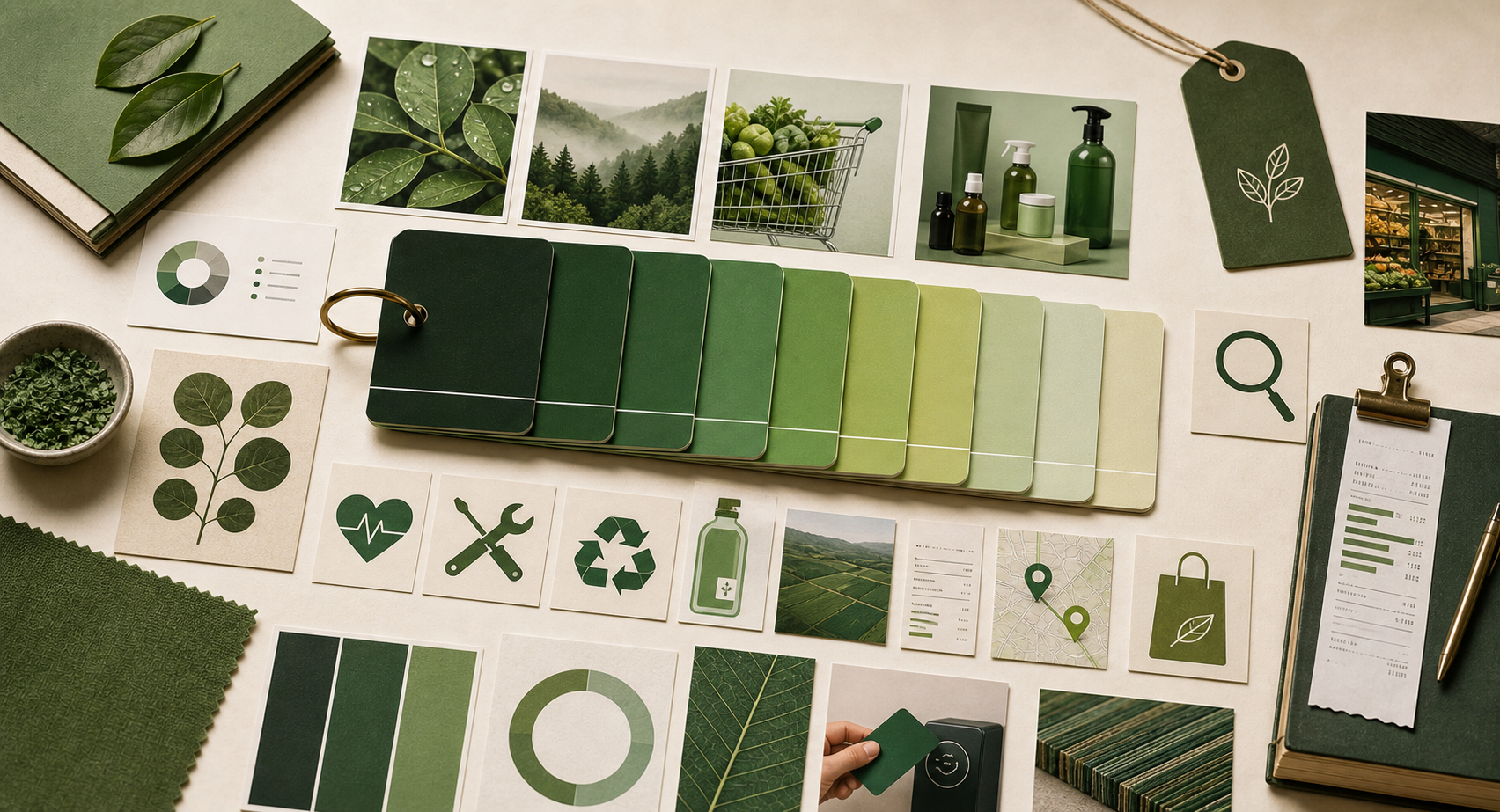
Green is a proof-heavy brand color. It can signal nature, health, money, repair, renewal, growth, or responsibility, but it becomes fragile when the business claims care faster than it can show care.
Page Map
Read green by use.
Color Meaning
Green carries care only when the operation can prove it.
Green can feel natural, financial, local, restorative, or responsible. The meaning depends on what the brand repeatedly does in public.
Green is strongest when the operation can prove care. If the company claims virtue faster than it changes behavior, the color can become evidence against it.
The color earns its place when that role repeats on real surfaces: signs, packaging, vehicles, app icons, uniforms, checkout screens, service pages, and product rituals.
Where It Works
Green changes meaning by category.
A grocery green, banking green, search green, and sustainability green each asks the market to believe a different proof story.
01
Food, nature, and store trust
Green works when the customer can see standards, freshness, sourcing, or a repeated store ritual.
02
Money, platforms, and daily habit
Green can signal access, growth, and everyday utility when the brand becomes a repeated service layer.
03
Responsibility and proof burden
When green implies virtue, the operation has to support the promise. Otherwise the color becomes a reminder of the gap.
How To Use It
Use green when the proof can survive inspection.
Green is powerful because it implies care. That is also why it can backfire.
01
Use green when care is visible.
Green is strongest when customers can inspect freshness, standards, repair, refill, access, or a tangible improvement.
02
Separate nature from money.
Green can mean food, finance, growth, or environmental care. A brand has to decide which reading it wants first.
03
Do not overclaim responsibility.
Green can turn into evidence against the brand if the business model contradicts the promise.
Green Brand Color FAQ
What does green mean in branding?
Green can signal nature, money, health, care, renewal, repair, access, or responsibility. The category decides the first reading.
Is green good for sustainable brands?
Green can help sustainable brands only when the business has proof. Without proof, green can make the claim look weaker.
Which brands use green well?
The Brand Archive examples include Starbucks, Whole Foods, Heineken, Naver, Sber, Tokopedia, Natura, and Patagonia.
When should a brand avoid green?
Avoid green when the business cannot support the care, environmental, freshness, or responsibility signal the color implies.