Growyourbrand.net Reference notes on brand consequence May 2026
The Brand Archive

Framework Hub

Brand Frameworks: Models That Survive Real Cases

A brand framework is useful only when it helps a team see the broken layer: identity, equity, meaning, assets, loyalty, associations, archetype, or proof.

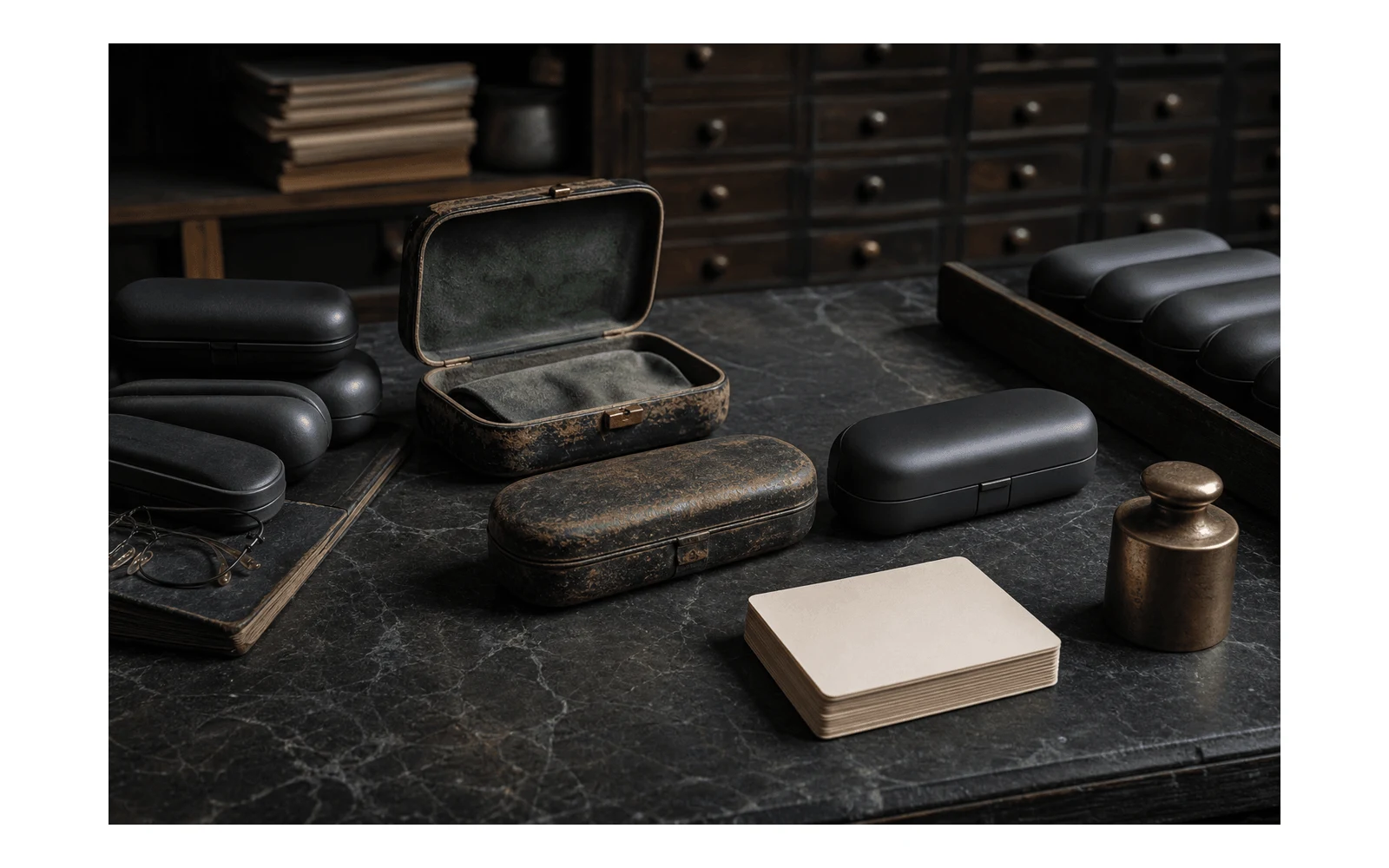
Premium archive-table still-life with brand framework cards, abstract model diagrams, source folders, and no real brand logos.

Direct Answer

The strongest brand frameworks are not templates to decorate a deck. Kapferer's identity prism helps inspect whether the sent identity has six coherent sides. Keller's CBBE model checks whether customer response builds from salience to resonance. Aaker's equity model checks whether the brand owns assets such as loyalty, awareness, perceived quality, associations, and proprietary cues. Archetypes help name a repeated emotional role, but only when behavior proves the role. Use the model that exposes the actual decision risk.

Reader payoff

By the end of this page, you should be able to

  • Choose the right model for the brand problem instead of forcing every project through one canvas.
  • See where each framework becomes weak, vague, or dangerous.
  • Connect models to archive cases so the lesson does not stay theoretical.
  • Build brand strategy pages and briefs with evidence, source trails, and operator tests.

Answer Map

Start with the decision, then check the proof.

Quote-ready definition

The Brand Archive definition

"The Brand Archive defines brand framework as a structured lens for diagnosing a brand decision, useful only when it clarifies the cue, proof, memory, customer response, asset, or behavior at stake."

Why it matters

Why it matters

Frameworks matter because brand debates collapse into taste without a shared inspection lens. The right model gives the room a language for identity, equity, meaning, proof, and risk.

The risk is treating every model as a universal answer. An identity prism cannot fix weak product proof. A pyramid cannot rescue broken recognition. An archetype cannot make a company brave, caring, or rebellious if the operation behaves differently.

Mistake to catch

Where frameworks break

Frameworks break when teams fill the boxes with aspiration instead of evidence. The output sounds strategic, but the buyer still sees the same unclear offer, weak proof, generic cue, or broken trust path.

They also break when copied from famous brands. Nike's performance meaning, Disney's story system, Patagonia's responsibility proof, and Mastercard's recognition assets came from repeated behavior, not from model labels.

Competitive gap

What most pages miss

Most framework pages explain the model and stop. That creates a student answer, not an operator answer.

The Brand Archive version asks three harder questions: where does the model help, where does it fail, and which public case proves the line between useful and cosmetic use?

Comparison

Which brand framework should you use?

Pick the model by the decision problem. A good framework narrows the diagnosis. A bad use of a framework adds vocabulary without making the decision safer.

Framework Best for Where it breaks
Kapferer identity prism Checking identity coherence across physique, personality, culture, relationship, reflection, and self-image. Breaks when the six sides are written as brand adjectives with no product, channel, or behavior proof.
Keller CBBE Diagnosing how customer-based equity builds from salience to meaning, response, and resonance. Breaks when teams chase loyalty language before awareness, meaning, and proof are clear.
Aaker brand equity Auditing the assets that make the brand valuable: loyalty, awareness, perceived quality, associations, and proprietary cues. Breaks when equity is treated as sentiment instead of assets a competitor would struggle to copy.
Brand archetypes Naming a repeated emotional role or story pattern. Breaks when the archetype becomes costume, tone, or moodboard language without operating proof.

Proof matrix

Frameworks tested against archive cases

These cases show why the model has to be tested against public behavior, not just internal language.

Case What happened What it proves Operator lesson
Airbnb
Rebrand / 2014
The Belo identity tried to connect marketplace, belonging, hosts, guests, and a new category role. Identity frameworks help only if trust behavior supports the relationship being claimed. Use the prism to check whether the emotional claim survives the actual service risk.
Nike
Launch / 1971-present
Performance proof kept feeding the symbol across athletes, products, retail, and culture. Equity frameworks need repeated evidence, not just high awareness. Do not call something an asset until behavior keeps replenishing its meaning.
Mastercard
Rebrand / 2016-2019
The circles could carry more brand work after years of payment recognition. Aaker-style assets matter when the cue reduces friction at real surfaces. Simplification is earned after the asset already works without explanation.
Patagonia
Pivot / 2011-2022
Purpose became credible because repair, restraint, ownership, and product behavior carried the claim. Archetype or purpose language needs operating cost to become believable. Do not choose an archetype the business is not willing to pay for.
Disney
Brand System / 1923-present
Characters, parks, products, streaming, and memory loops fed one story-world system. Frameworks become stronger when channels reinforce the same meaning instead of competing. Map the flywheel before writing the model language.

Pattern map

Group the examples by mechanism

The useful pattern is the decision mechanism. Brand names are evidence, not the organizing principle.

Pattern What it means Cases to inspect
Identity coherence The visible and behavioral sides of the brand point in the same direction. Airbnb, Starbucks, Apple
Customer-based equity Recognition, meaning, response, and loyalty build in order. Nike, FedEx, Toyota
Asset ownership The brand owns cues and associations that lower buying friction. Mastercard, Coca-Cola, Tiffany
Emotional role A repeated behavior lets an archetype become believable. Patagonia, Disney, Liquid Death

Decision framework

How to use it

The practical test is whether the concept changes a real decision.

  1. Name the decision Is the team choosing identity, naming, portfolio, positioning, loyalty, recognition, proof, or emotional role?
  2. Pick one lens Use the model that exposes the risk. Do not stack models to make a weak answer look complete.
  3. Attach evidence For every box, point to a product, channel, service, policy, source, case, or customer behavior.
  4. Find the failure case Name the archive case that would punish a cosmetic use of the model.
  5. Write the operator rule Turn the model into a plain decision rule someone can use before approval.

Diagnostic questions

Questions to apply before the decision

Use these questions before changing a cue, promise, channel, page, package, or proof point.

  1. Which brand decision is the framework supposed to improve?
  2. Which model would make the team delete the most unsupported claims?
  3. Which box is currently filled with aspiration instead of proof?
  4. Which public case shows the model working under pressure?
  5. Where would the model fail if the product, service, or channel did not support it?

Common mistakes

Mistakes to avoid

These mistakes are common because they sound reasonable inside the company and fail when customers meet the brand.

Using every framework at once

Choose the model that matches the problem. More diagrams usually mean less diagnosis.

Writing adjectives as evidence

Replace adjectives with observed behavior, source trails, product proof, and customer response.

Copying famous brands

Copy the mechanism, not the surface. The model should explain why the famous brand works.

Skipping the failure side

Every framework page needs a section on where the model breaks.

Operator test

Operator test

Use the checklist as a pressure test. If the answer is vague, the brand decision is not ready.

  1. Write the business decision before selecting a framework.
  2. Pick the framework that exposes the risk fastest.
  3. Attach each model box to public evidence.
  4. Add one success case, one failure case, and one adjacent-category case.
  5. Delete any model language the buyer would not experience.
  6. Convert the framework into a checklist before approval.

Brand Frameworks: Models That Survive Real Cases FAQ

What is a brand framework?

A brand framework is a structured lens for diagnosing a brand decision, such as identity, equity, associations, loyalty, recognition, or emotional role.

Which brand framework should I use?

Use Kapferer for identity coherence, Keller CBBE for customer-based equity, Aaker for equity assets, and archetypes for repeated emotional roles.

Are brand frameworks useful?

Yes, when they change the decision and force evidence. They are weak when they become language exercises.

What is the biggest mistake with brand frameworks?

The biggest mistake is filling model boxes with aspiration instead of proof customers can see.