Direct Answer
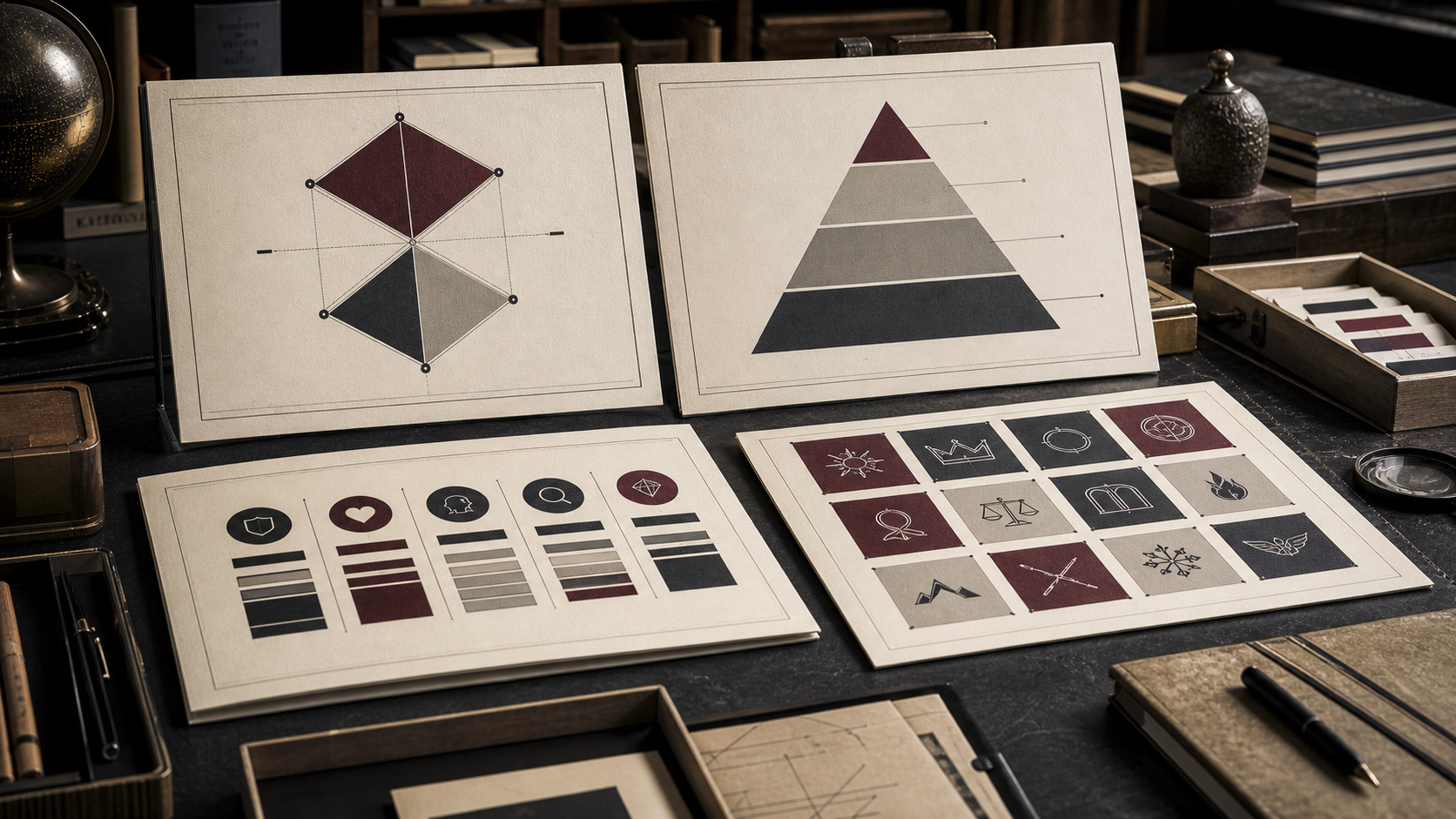
Kapferer's brand identity prism helps teams inspect whether a brand identity is coherent across six sides: physique, personality, culture, relationship, reflection, and self-image. Use it when identity feels fragmented or when a rebrand is about to make a larger promise. The prism is weak when teams fill it with nice adjectives and cannot point to product behavior, service behavior, category proof, or customer experience.
Reader payoff
By the end of this page, you should be able to
- Understand what the six prism sides are for.
- Know when to use the prism before a rebrand, identity system, or positioning shift.
- Spot the common fake-prism output before it becomes public copy.
Answer Map
Start with the decision, then check the proof.
Quote-ready definition
The Brand Archive definition
"The Brand Archive defines Kapferer brand identity prism as a six-sided brand identity model that checks physique, personality, culture, relationship, reflection, and self-image as one coherent identity system."
Why it matters
Why it matters
The prism matters because identity is not just how a brand looks. It is the whole identity the company sends and the customer reads.
When one side of the prism contradicts another, the brand asks people to hold a confusing story: premium look with cheap behavior, purpose language with no tradeoff, friendly tone with hostile service, or community language without community proof.
Mistake to catch
Where the prism breaks
The prism breaks when the six sides become adjective storage: bold, human, premium, innovative, authentic. Those words do not prove identity.
It also breaks when reflection and self-image are guessed from the boardroom. The customer side has to be checked against behavior, search language, reviews, usage, and real buying moments.
Comparison
The six sides need public evidence
Use the table to separate terms that often get collapsed together.
| Prism side | What to check | Bad use |
|---|---|---|
| Physique | The visible and tangible cues: product, mark, color, package, interface, place. | Listing design traits with no buying-surface test. |
| Personality | The voice and behavior people repeatedly meet. | Choosing a tone the service team or product never lives. |
| Culture | The operating belief and internal behavior behind the identity. | Writing values that cost the business nothing. |
| Relationship | The role the brand plays with customers. | Claiming partnership while hiding support, pricing, or recovery paths. |
| Reflection | The customer image the brand projects. | Inventing an audience stereotype instead of reading real demand. |
| Self-image | How customers feel about themselves when using the brand. | Guessing identity benefit without evidence from use. |
Proof matrix
Archive proof
Each row states what happened, what the case proves, and what an operator should learn before copying the surface.
| Case | What happened | What it proves | Operator lesson |
|---|---|---|---|
| Airbnb Rebrand / 2014 |
The identity tried to turn lodging into belonging while the marketplace still carried trust risk. | The prism is useful when relationship and self-image are tested against real service risk. | Do not write belonging unless the host, guest, payment, review, and recovery system supports it. |
| Starbucks Rebrand / 2011 |
The siren could simplify because store ritual, color, cup, and place memory already carried the identity. | Physique becomes stronger when repeated customer behavior gives it memory. | Check the repeated surface before removing words or detail. |
| Patagonia Pivot / 2011-2022 |
Purpose stayed credible because repair, restraint, ownership, and product use carried the culture side. | Culture is not a statement. It is behavior the public can inspect. | Do not put a value in the prism unless the business pays some cost for it. |
| Gap Rebrand / 2010 |
A cleaner mark did not solve the identity problem customers actually recognized. | Changing physique alone can damage recognition when other prism sides are not being repaired. | Do not treat one prism side as the whole identity. |
Decision framework
How to use it
The practical test is whether the concept changes a real decision.
- Fill each side with evidence Write the source, surface, behavior, or customer proof beside every prism answer.
- Find contradictions Which side makes a promise another side cannot keep?
- Test customer-side claims Reflection and self-image require demand evidence, not internal imagination.
- Protect recognition If physique changes, name the cue that stays stable through the transition.
Diagnostic questions
Questions to apply before the decision
Use these questions before changing a cue, promise, channel, page, package, or proof point.
- Which prism side is carrying the actual brand problem?
- Which side is written in adjectives instead of evidence?
- What would a customer, search result, review, or product surface say differently?
- What case warns against changing one side while leaving the contradiction untouched?
Common mistakes
Mistakes to avoid
These mistakes are common because they sound reasonable inside the company and fail when customers meet the brand.
Making the prism a moodboard
Attach each side to a surface, behavior, source, or customer moment.
Guessing the customer mirror
Use search terms, reviews, usage, sales notes, and support language before writing reflection or self-image.
Ignoring contradictions
A prism is useful because it catches contradictions, not because it makes a page look strategic.
Operator test
Operator test
Use the checklist as a pressure test. If the answer is vague, the brand decision is not ready.
- Write the six sides in plain language.
- Add evidence beside every side.
- Mark any side that contradicts product, service, channel, or proof.
- Choose the one contradiction to fix first.
- Use one success case and one warning case before approving identity work.
Source trail
Public discussion and trust research checked for this page.
- Jean-Noel Kapferer, The New Strategic Brand Management
Used as the source trail for the identity prism. The archive page translates the model into public brand-decision checks rather than treating the prism as a decorative workshop slide.
Related Files
Keep the answer inside the archive.
Kapferer Brand Identity Prism: How to Use It Without Faking Strategy FAQ
What is Kapferer's brand identity prism?
It is a six-sided model for checking brand identity across physique, personality, culture, relationship, reflection, and self-image.
When should I use the brand identity prism?
Use it when an identity feels fragmented, a rebrand is being planned, or the brand promise is larger than the proof currently visible.
Where does the brand identity prism fail?
It fails when teams fill the six sides with adjectives and no evidence from product, service, customer behavior, or public proof.