Growyourbrand.net Reference notes on brand consequence May 2026
The Brand Archive

Definition

What Is Brand Strategy?

Brand strategy is the decision system behind position, proof, recognition, trust, category, customer behavior, and refusal.

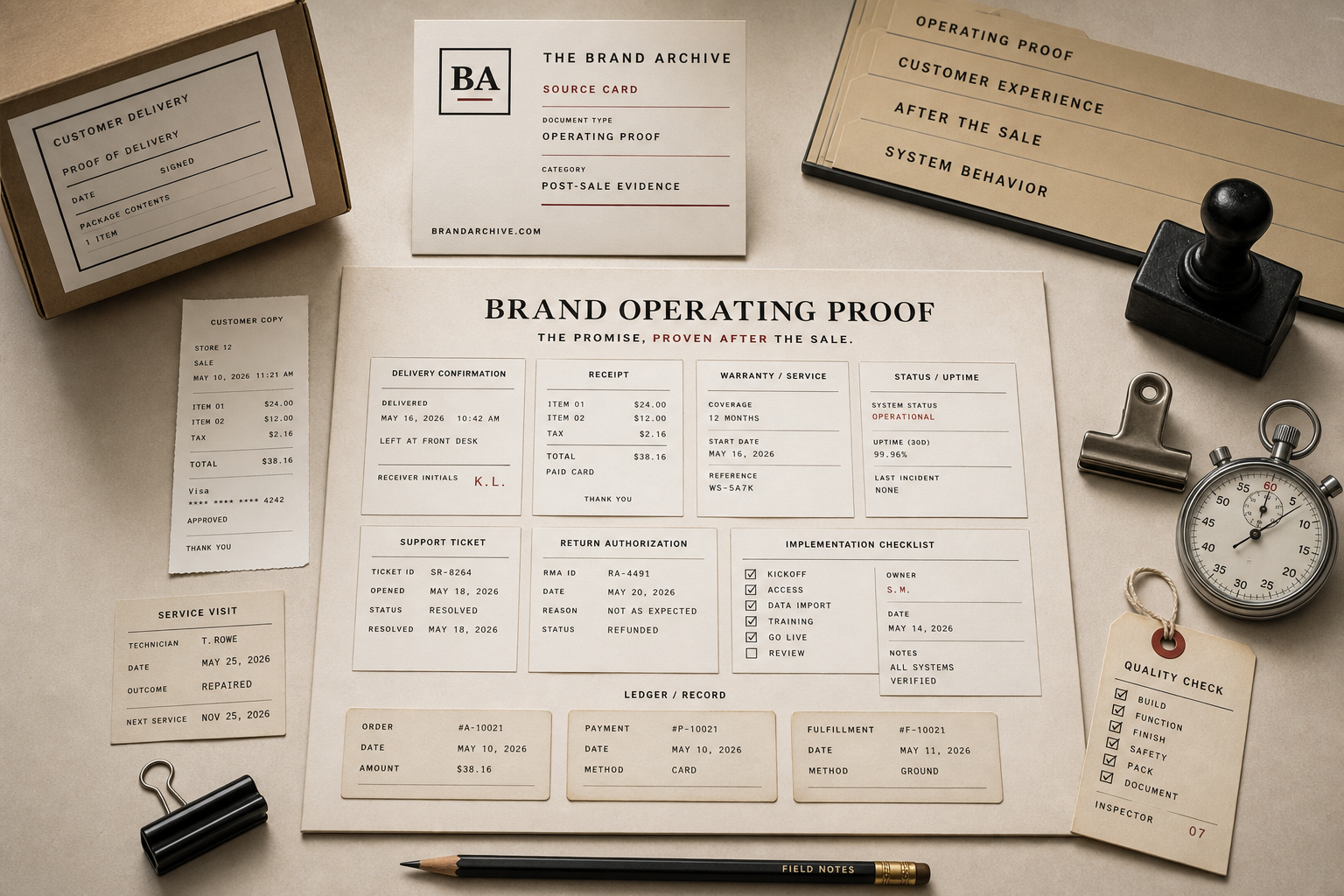
What Is Brand Strategy? archive visual

Direct Answer

Brand strategy decides where the brand should sit in the market, what the company can prove, which assets should carry memory, which behaviors should be repeated, and which choices the brand should refuse. A useful brand strategy template has eight boxes: customer problem, comparison, position, proof, recognition cues, behavior to earn, channel or surface, and refusal. If one box is vague, the strategy is not ready for a campaign, rebrand, website, or agency brief.

Reader payoff

By the end of this page, you should be able to

  • Fill a brand strategy template without turning it into adjectives.
  • Separate position, proof, cue, behavior, channel, and refusal.
  • Use real cases to check whether the strategy can survive customer behavior.
  • Decide whether the problem is strategy, messaging, proof, product, offer, or distribution.

Answer Map

Use the answer, then fill the template.

Quote-ready definition

The Brand Archive definition

"The Brand Archive defines brand strategy as the set of choices that decides what a brand should be known for, what proof must support it, which cues must repeat, and which customer behavior the business needs to earn."

Why it matters

Why it matters

A brand strategy matters when the business has to choose. It decides what to emphasize, what to ignore, what to preserve, what to change, what category language to use, what proof the market should see first, and which tempting ideas should be rejected.

Mistake to catch

The expensive mistake

The weak version treats strategy as positioning language or a slide template. The useful version connects the position to product, proof, service, channel, price, category, memory, refusal, and customer habit.

Comparison

Strategy is not the same as a slogan

Competitor pages often list components. The useful distinction is whether the decision changes proof, cues, and behavior.

Strategy layer Useful question Case-backed pressure test
Customer problem What expensive problem is the buyer trying to solve? Stripe narrowed the buyer and the infrastructure layer before broadening the brand.
Comparison What alternative should the customer compare against? Volvo made safety a physical comparison, not a tagline.
Proof What can the company show repeatedly? Toyota reliability came from production behavior.
Cue What should repeat until it becomes memory? Nike and Mastercard show marks that kept receiving proof.
Behavior What customer habit should the brand earn? Costco and FedEx made repeat use legible.
Refusal What should the brand avoid? WeWork shows the cost of a story that outruns operating proof.

Case-backed examples

Archive proof

Each example points to a public Brand Archive file. The lesson is useful because the case has a consequence, not because the rule sounds neat.

01

Stripe

A narrow buyer and a narrow layer created a broad infrastructure brand.

Brand System / 2010 / 2011-present

02

Volvo

Safety worked because it had product proof.

Trust System / 1959-present

03

Costco

Membership, selection, and price math carried one position.

Trust / 1983-present

04

Toyota

Reliability came from a production system, not a claim.

Trust / 1950s-present

05

Patagonia

Purpose stayed strategic because operating choices backed the claim.

Pivot / 2011-2022

06

Liquid Death

The strategy changed the comparison for water by borrowing entertainment cues.

Launch / 2019

07

FedEx

The promise was strategic because time made it measurable.

Trust / 1973-present

08

New Coke

Research did not protect the strategy from customer memory.

Failure / 1985

09

WeWork

The story outran the proof and the market changed how it read the brand.

Disaster / 2016-2024

Decision framework

How to use it

The practical test is whether the concept changes a real decision.

  1. 1. Customer problem Write the buyer problem in one sentence. If it sounds like an internal ambition, rewrite it.
  2. 2. Comparison Name the alternative the customer will use if the brand fails to make the choice easier.
  3. 3. Position Write the market position as a choice, not as a personality phrase.
  4. 4. Proof Name the evidence that makes the position believable in product, service, channel, price, operation, or public source trail.
  5. 5. Cue Choose the recognition assets that should repeat: name, mark, color, phrase, package, page pattern, product behavior, or service moment.
  6. 6. Behavior Name the customer action the strategy must earn: search, trial, repeat purchase, referral, upgrade, retention, or trust under risk.
  7. 7. Surface Choose where the strategy has to appear first: homepage, product, checkout, packaging, sales deck, support, marketplace, reviews, or answer engines.
  8. 8. Refusal Name what the brand will not chase, say, signal, discount, copy, or promise.

Common mistakes

Mistakes to avoid

These mistakes are common because they sound reasonable inside the company and fail when customers meet the brand.

Filling the template with adjectives

Replace words like bold, premium, friendly, and modern with proof customers can inspect.

Choosing a position without a comparison

A position has no pressure until the alternative is named.

Skipping refusal

A strategy that refuses nothing becomes a list of wishes.

Treating brand strategy as a marketing calendar

Marketing routes demand; brand strategy decides what demand should remember and trust.

Ignoring the operating model

Toyota, FedEx, Costco, and WeWork separate strategy that survives real behavior from strategy that only sounds coherent internally.

Operator test

Operator test

Use the checklist as a pressure test. If the answer is vague, the brand decision is not ready.

  1. Fill the eight boxes: customer problem, comparison, position, proof, cue, behavior, surface, and refusal.
  2. Delete any claim that cannot point to product, service, channel, price, operation, source trail, or customer behavior.
  3. Name the recognition assets that should be protected before any redesign or campaign.
  4. Write the first page, package, pitch, support script, or search result where the strategy must become visible.
  5. Choose one behavior that proves the strategy is working and one metric that would prove it is failing.
  6. Run the strategy against at least three archive cases: one that worked, one that failed, and one that changed public memory.

What Is Brand Strategy? FAQ

What does brand strategy include?

Brand strategy includes customer problem, comparison, position, proof, recognition assets, category frame, trust system, customer behavior, surface priority, measurement, and the choices the brand refuses.

What should a brand strategy template include?

A useful brand strategy template should include eight required boxes: customer problem, comparison, position, proof, recognition cues, behavior to earn, priority surface, and refusal. Optional sections can add audience, category language, source trail, metrics, and launch risks.

Can I use this as a brand strategy template?

Yes, use the decision framework on this page as a worksheet. Fill each box with a concrete answer, then delete any claim that cannot be proved in product, service, channel, source trail, or customer behavior.

Is brand strategy the same as marketing strategy?

No. Brand strategy decides the memory and proof system. Marketing strategy decides how demand is reached, converted, and measured.

What is a good brand strategy test?

Ask what the brand should be remembered for, what proof supports it, and what customer behavior would confirm it.

What is a bad brand strategy template answer?

A bad answer uses adjectives, vague audience labels, competitor imitation, or campaign ideas without naming proof, customer behavior, refusal, and the surface where the strategy must become visible.