Grow Your Brand Branding guides from Grow Your Brand 2026-07-04
Grow Your Brand Plain brand guides for clearer words, stronger proof, and cleaner decisions.

Branding guide · Consistency

Consistency means the same promise survives every surface.

Brand consistency is not making everything look identical. It is keeping the cue, claim, proof, and behavior aligned when the buyer moves from search to page, package, store, delivery, support, and repeat purchase.

Keep the cue stable. Name, color, mark, type, and image behavior need rules people can apply.
Match the claim. The message should not promise a standard the product or service cannot keep.
Audit the handoff. Most inconsistency appears between teams, channels, launches, and support moments.
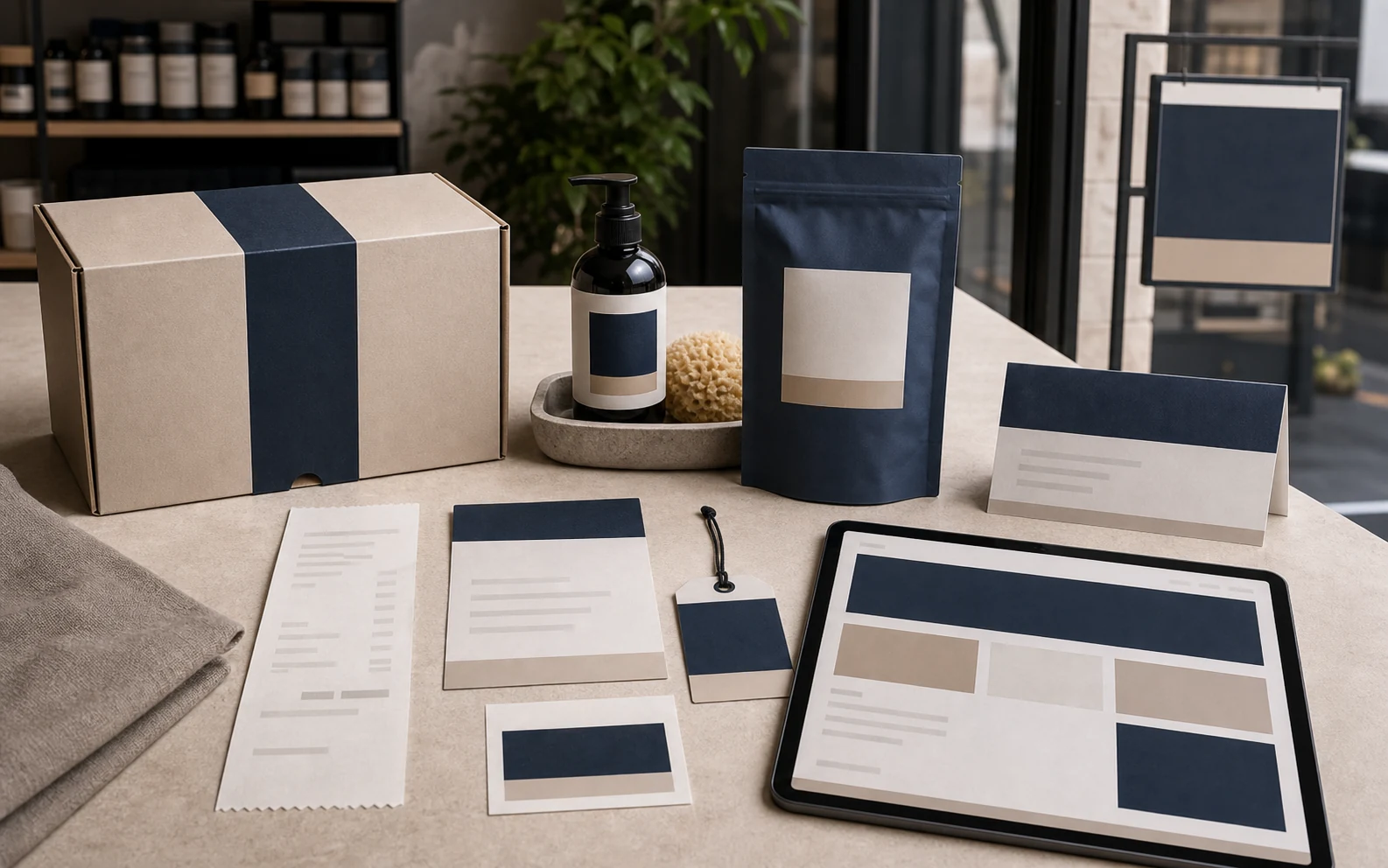
Brand consistency system with unbranded package, receipt fragment, support reply card, delivery label, sign panel, service artifact, tablet page surface, and product tag.

Brand Consistency

cue · claim · proof · behavior

The brand feels stronger when the same decision shows up across the surfaces buyers actually use.
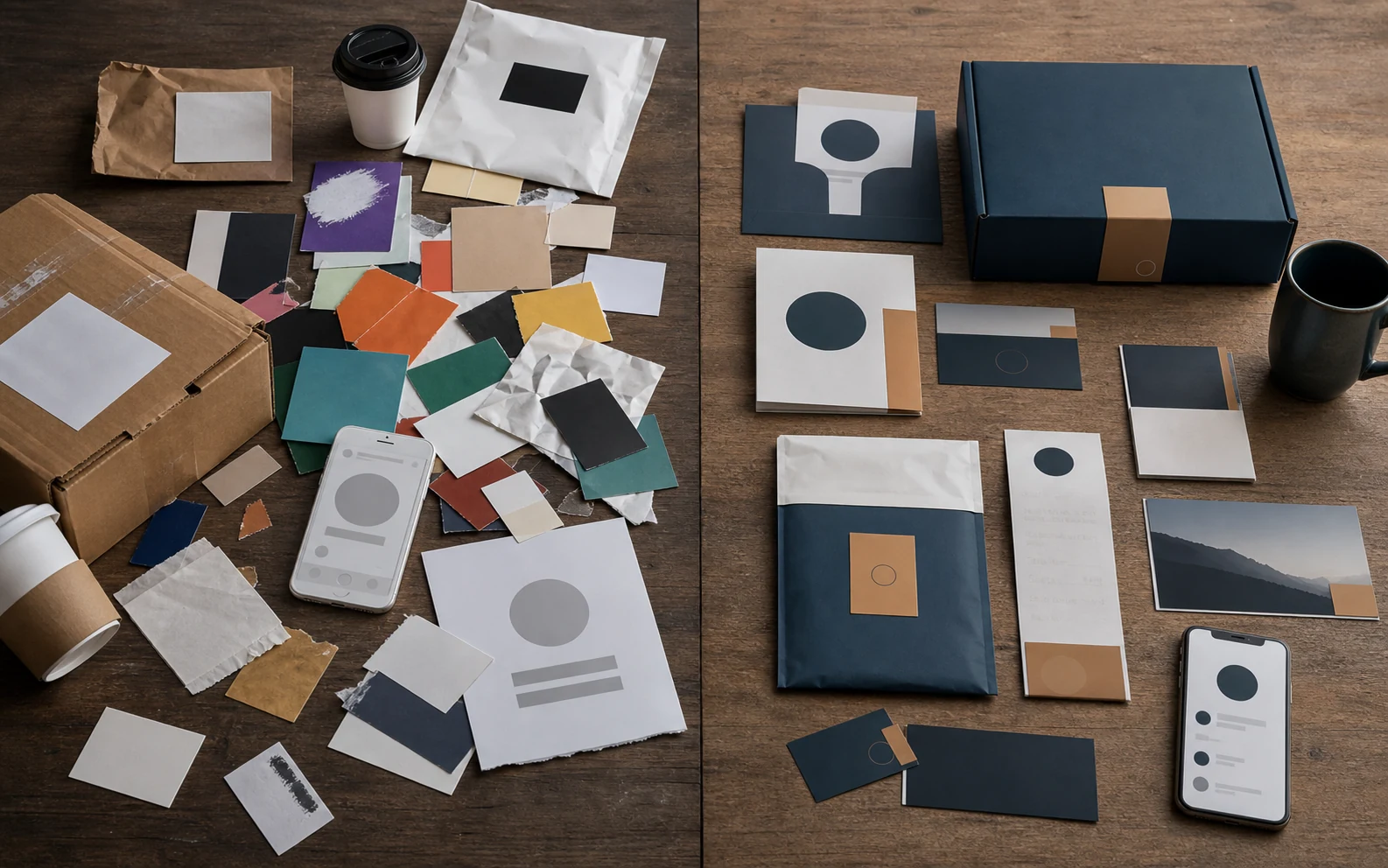
Brand consistency drift visual with a messy unbranded touchpoint pile beside a controlled package, email card, receipt, support card, and website card system.
Consistency fails quietly: one off-brand email, one mismatched landing page, one unsupported claim, one support moment that contradicts the promise.
01

What brand consistency means.

The same brand logic appears everywhere. A buyer should not meet one promise in search, another in sales, and a third in support.
The system stays flexible without drifting. Different channels can have different jobs while keeping the same cue, tone, claim, and proof standard.
The brand becomes easier to trust. Repeated alignment lowers the work a buyer has to do to recognize and believe the brand.
02

Consistency checks.

Do the audit by surface, not by taste.

Name

Is the brand called the same thing?

Search, ads, sales decks, invoices, support, and product UI should not create naming variants.

Visual cue

Are color, mark, type, and image rules stable?

Small visual drift becomes a recognition tax across many surfaces.

Message

Does the promise stay the same?

A brand loses trust when campaigns, pages, and sales teams sell different expectations.

Voice

Does the tone fit the same brand?

Tone can adapt, but the brand should not sound like a different company in each channel.

Proof

Can every claim point to evidence?

Consistency includes proof discipline alongside design rules.

Service

Does behavior match the promise?

Support, shipping, returns, onboarding, and recovery are brand surfaces.

Governance

Who owns exceptions?

Without an owner, every urgent launch creates its own brand rule.

Refresh

What can change safely?

A system should define which cues are locked and which can flex.

03

Where consistency breaks.

Most breaks happen where responsibility changes hands.

Break point
What to inspect
Damage
Proof route
Search to landing page
Name, promise, visual cue, category
The buyer wonders if they reached the right brand
Brand Touchpoints.
Ad to product
Claim, offer, availability, price logic
The message feels inflated
Brand Promise Examples.
Package to support
Tone, service language, recovery behavior
The promise collapses after purchase
Brand Voice.
Retail to digital
Color, mark, image style, product language
Recognition works in one channel only
Brand Guidelines.
New campaign to core brand
Temporary look, slogan, cue, source
A campaign teaches a memory the brand will abandon
Slogan Examples.
04

Before you call the brand consistent.

Proceed when
  • The same name, promise, and cue system appear across major surfaces.
  • The rules cover design, copy, imagery, proof, and service behavior.
  • Teams know which assets are locked and which can flex.
  • Claims have source-backed proof or visible operating behavior.
  • The system still works in campaigns, support, sales, and product.
Hold when
  • Consistency means only a logo and color file.
  • Every channel rewrites the promise.
  • Support behavior contradicts marketing language.
  • Exceptions are handled by taste instead of rule.
  • The system needs a designer present to keep it intact.
05

Use this for your brand.

Private brand work

Pressure-test the decision before buyers do.

If a name, color, mark, message, voice, or page is starting to affect sales or trust, get the public-facing decision checked before rollout makes it harder to change.

Private work Request private brand work Use this when a live brand decision needs outside pressure before launch, redesign, or sales review.
06