Grow Your Brand Branding guides from Grow Your Brand 2026-07-04
Grow Your Brand Plain brand guides for clearer words, stronger proof, and cleaner decisions.

Branding guide · Difference

Differentiation is the reason the buyer can defend the choice.

A brand is different when the buyer can name the better fit, the tradeoff, and the proof. Styling alone creates contrast. Useful differentiation changes the comparison.

Name the alternative. Difference is meaningless until the competing choice is visible.
Choose the tradeoff. The brand should be better for someone because it chooses against something else.
Attach proof. The claim needs product, service, price, origin, access, speed, or behavior behind it.
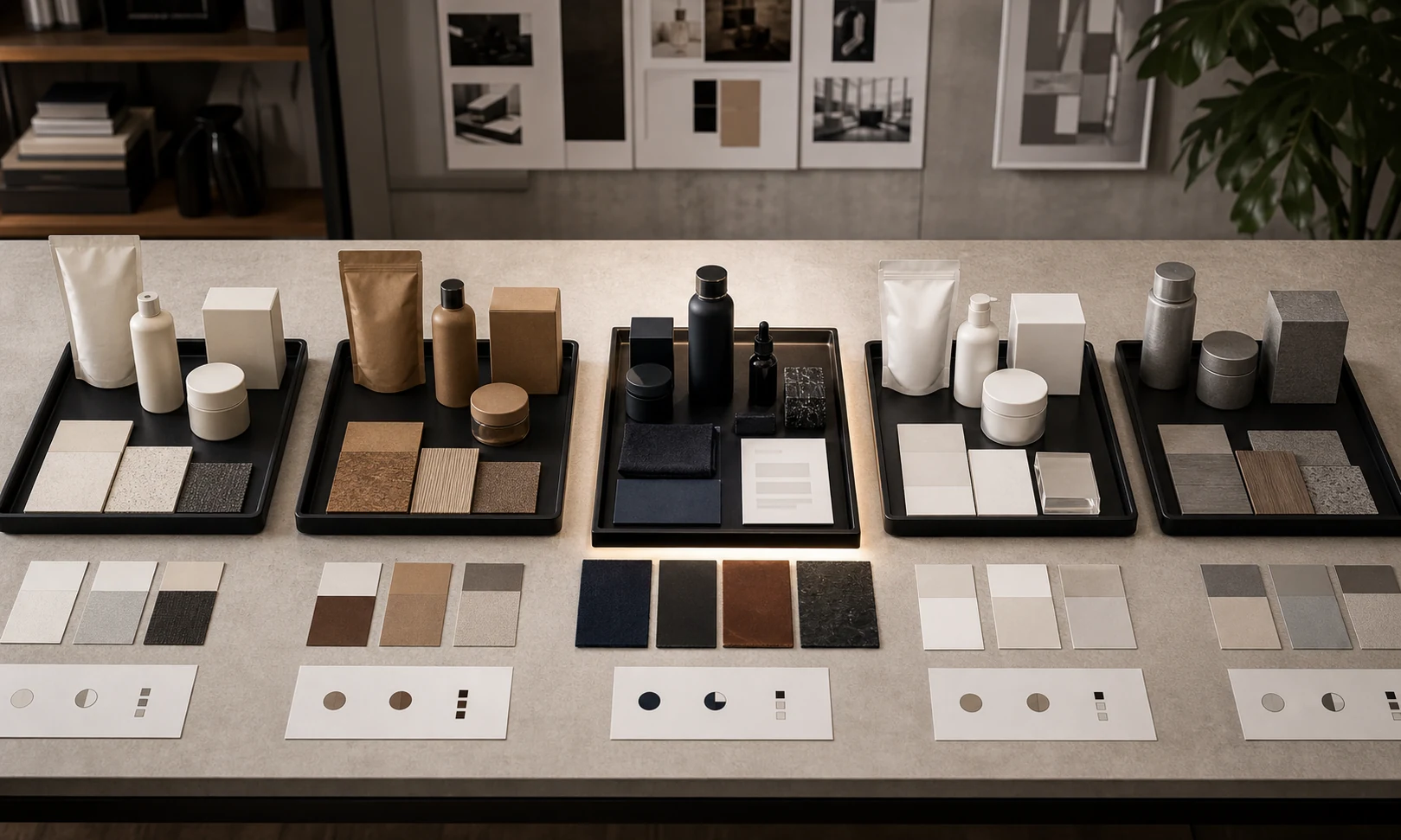
Brand differentiation choice table with unbranded product alternatives, material samples, empty tags, and a selected proof tray.

Brand Differentiation

alternative · tradeoff · proof · choice

A real difference helps the buyer say why this brand, not the nearest substitute.
Brand differentiation comparison surface with unbranded alternatives, selected tray, product sample, service artifact, delivery card, and material proof objects.
A brand should not need loud design to be different. The surface should reveal the choice, tradeoff, and proof.
01

What brand differentiation means.

It starts with the alternative. The brand has to be different from a real substitute, not from an abstract average.
It chooses a buyer and a tradeoff. Clear brands are often worse for some buyers because they are better for the right one.
It shows up in behavior. The difference has to appear in product, service, price, channel, packaging, operations, or support.
02

Differentiation checks.

A difference should change the comparison a buyer makes.

Buyer

Who gets a better fit?

Name the person, moment, need, or constraint that makes the brand useful.

Alternative

What is the nearest substitute?

Compare against what buyers actually choose, not the competitor list in a deck.

Tradeoff

What does the brand refuse?

A brand that tries to be everything usually gives buyers no reason to care.

Proof

What makes it believable?

The difference has to point to visible product, service, channel, source, or behavior.

Surface

Where does it show up?

If the difference cannot be seen on a sales page, shelf, quote, demo, or support moment, it stays abstract.

Language

Can a buyer repeat it?

A useful difference can be said in plain words by someone outside the company.

Durability

Can it last?

A campaign difference fades. A behavior difference can compound.

Risk

What if competitors copy it?

The more copyable the claim, the more proof and repetition it needs.

03

Common differentiation routes.

Different does not always mean louder.

Route
What changes
Weak version
Proof route
Access
The brand makes a product easier to buy or use
Convenience as a vague claim
Costco membership value and warehouse behavior.
Trust
The brand lowers perceived risk
Trust language without recovery proof
Volvo safety memory as a trust difference.
Status
The brand carries social proof or scarcity
Premium styling without earned demand
Rolex status, scarcity, and product memory.
System
The brand connects products, service, and channel
A bundle with no clear logic
Apple connected-product system.
Focus
The brand serves a sharper use case
Niche language with no buyer moment
HOKA product silhouette and running-use focus.
04

Before you claim a difference.

Proceed when
  • The nearest alternative is named.
  • The brand is better for a visible buyer or buying moment.
  • The difference creates a real tradeoff.
  • The proof can be inspected on public surfaces.
  • A customer could repeat the difference without the internal deck.
Hold when
  • The claim is only a tone, look, or adjective.
  • Every competitor could say the same thing.
  • The difference depends on a trend word.
  • The product or service does not support the claim.
  • The brand cannot say what it gives up.
05

Use this for your brand.

Private brand work

Pressure-test the decision before buyers do.

If a name, color, mark, message, voice, or page is starting to affect sales or trust, get the public-facing decision checked before rollout makes it harder to change.

Private work Request private brand work Use this when a live brand decision needs outside pressure before launch, redesign, or sales review.
06