Grow Your Brand Branding guides from Grow Your Brand 2026-07-04
Grow Your Brand Plain brand guides for clearer words, stronger proof, and cleaner decisions.

Branding guide · Proof

A brand claim is weak until the buyer can inspect the proof.

Proof points are the facts, behaviors, surfaces, and source material that make a brand promise believable. They stop messaging from floating above the business.
Name the claim. A proof point has to answer one promise, not decorate the page.
Choose inspectable evidence. Use product behavior, service reality, source material, operating proof, or public surfaces.
Put proof near the decision. Evidence works better where the buyer is deciding, doubting, comparing, or asking for risk reduction.
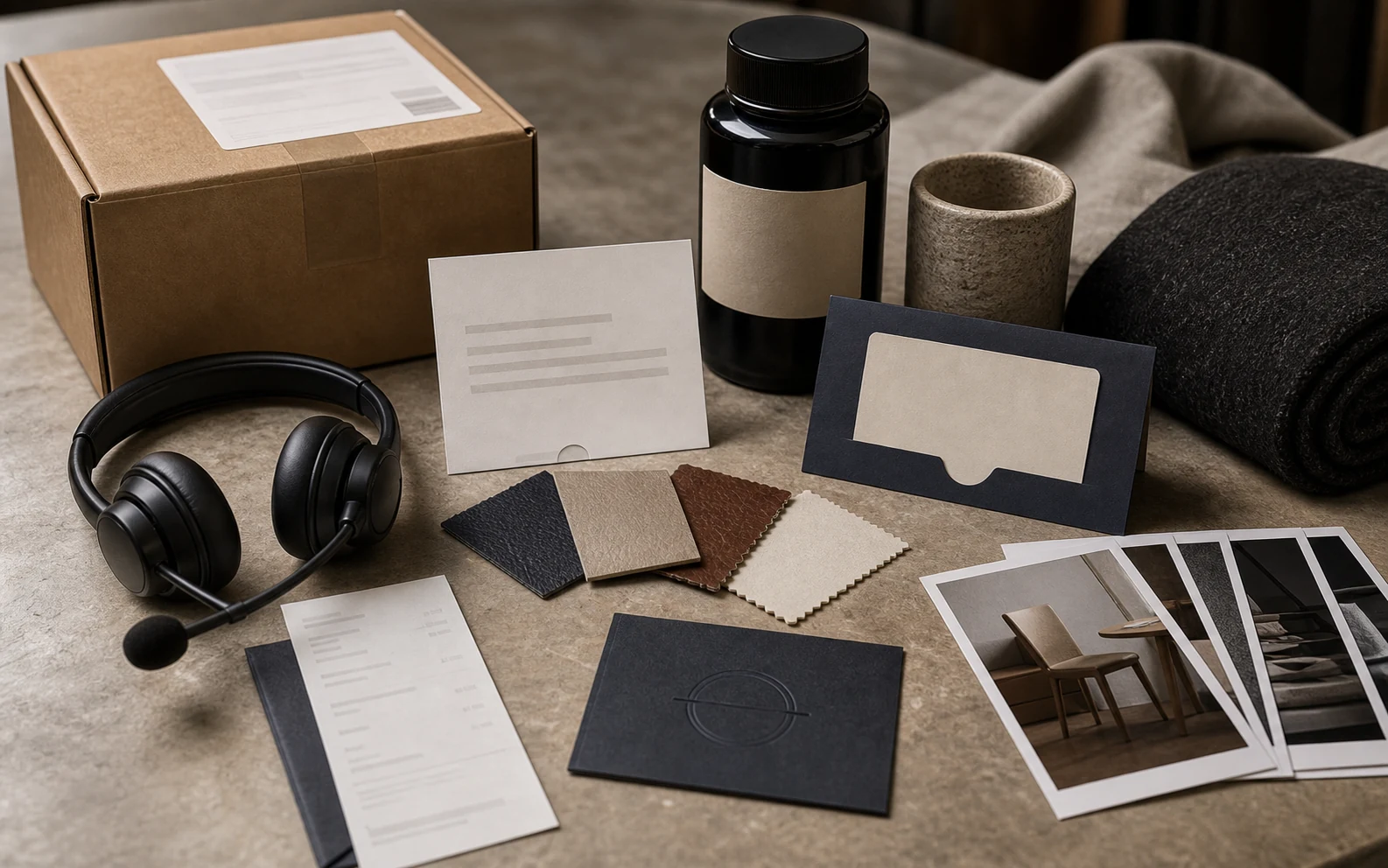
Brand proof point evidence table with product detail sample, material swatches, delivery box, service recovery card, support headset, receipt fragment, and source photos.

Brand Proof Points

claim · evidence · surface · trust

The best proof point is specific enough to inspect and close enough to the claim to matter.
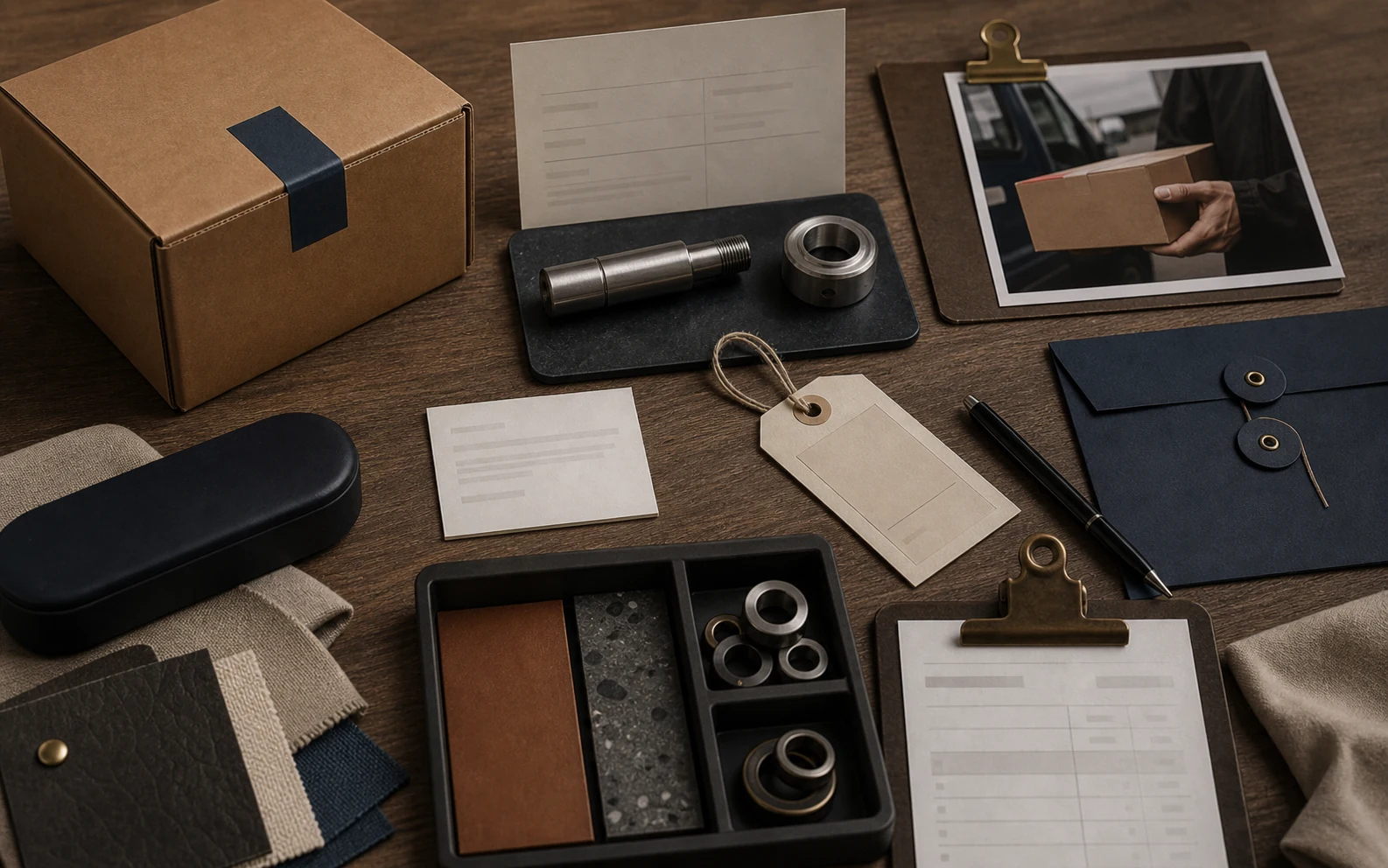
Brand proof point surface with delivery record card, product component detail, support note card, material sample tray, quality inspection tag, packaging sample, and source photo.
Proof belongs on real surfaces: page, package, demo, receipt, store, support reply, delivery, and product detail.
01

What brand proof points are.

Proof points connect claims to reality. They show why a buyer should believe the promise instead of treating it as marketing language.
Proof points can be facts or behavior. Evidence can come from product features, service standards, customer outcomes, source material, operations, origin, access, or repeated public surfaces.
Proof points reduce buyer risk. They help a buyer defend the decision to themselves, a team, a partner, or a budget owner.
02

Proof point checks.

Do not add proof because a page looks empty. Add proof where belief is weak.

Claim fit

What promise does this prove?

If the evidence does not answer the claim, it becomes noise.

Specificity

Can the buyer inspect it?

Names, surfaces, product behavior, service moments, and source links beat broad confidence language.

Proximity

Is proof near the doubt?

Put evidence beside the claim, comparison, objection, price, or risk moment.

Freshness

Is the proof current enough?

Outdated evidence can weaken a claim when the offer has changed.

Source

Where did it come from?

Use public source pages, product surfaces, support standards, filings, documentation, or visible operations.

Surface

Where will it appear?

Proof has to work on web pages, sales materials, packaging, demos, proposals, and support.

Owner

Who maintains it?

Unowned proof decays into stale numbers, old screenshots, and untrue claims.

Boundary

What does it not prove?

Strong proof is honest about the claim it supports and the claim it cannot support.

03

Proof point types.

Different promises need different evidence.

Promise type
Best proof
Weak proof
Proof route
Reliability
Operating behavior, uptime, product history, support recovery
Trust adjectives
Toyota, FedEx, Volvo.
Access or value
Price logic, membership rule, store model, product range
Cheap language with no system
Costco membership and value proof.
Premium status
Craft, scarcity, ritual, service, resale or ownership behavior
Luxury styling alone
Rolex product and ownership ritual.
Speed or performance
Product demonstration, use case, service time, technical surface
Fast as a slogan
FedEx service-time proof.
Connected-product system
Products, accounts, services, tools, and switching cost
A feature list
Apple hardware, software, store, and service proof.
04

Before you publish a proof point.

Proceed when
  • The proof answers a specific claim.
  • The evidence is visible, source-backed, or behavior-backed.
  • The proof appears near the decision it supports.
  • Someone owns freshness and accuracy.
  • The proof can survive a skeptical buyer reading it closely.
Hold when
  • The proof is a vague adjective.
  • The evidence is old, unverifiable, or disconnected from the claim.
  • The proof only fills space.
  • The number or claim may change without an owner.
  • The page needs proof because the promise is too broad.
05

Use this for your brand.

Private brand work

Pressure-test the decision before buyers do.

If a name, color, mark, message, voice, or page is starting to affect sales or trust, get the public-facing decision checked before rollout makes it harder to change.

Private work Request private brand work Use this when a live brand decision needs outside pressure before launch, redesign, or sales review.
06