Short Answer
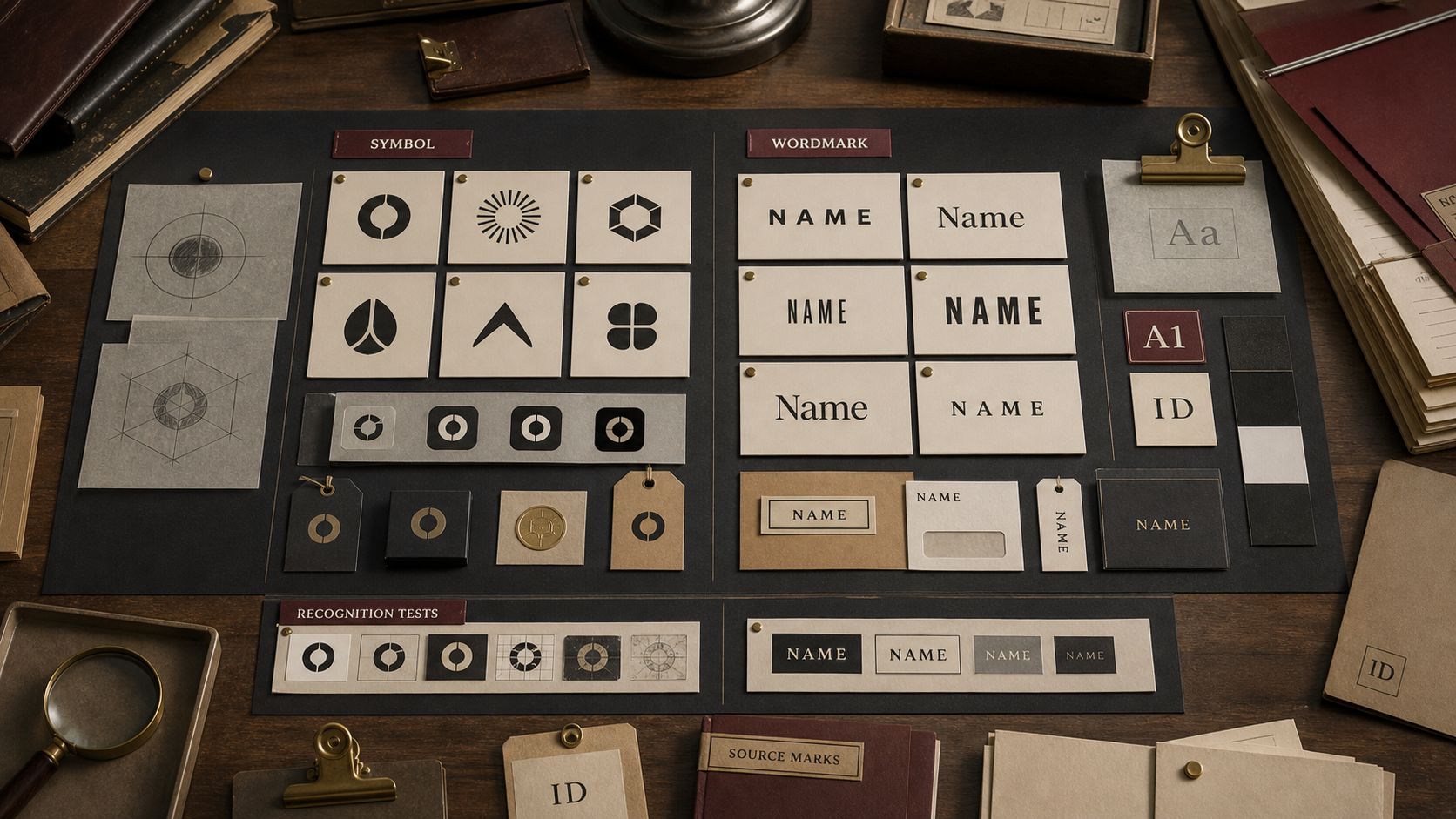
A logo symbol and a wordmark solve different memory problems. A symbol helps when people already know what to attach to it. A wordmark helps when the name still needs to teach category, pronunciation, seriousness, or trust.
Mark Map
Choose the mark by memory job.
Theory
A mark is a memory tool before it is a style object.
The weak question is whether the logo looks modern. The stronger question is what people can remember, find, say, search, and trust after one glance.
Symbols, wordmarks, and combination marks can all work. They fail when the company asks the mark to carry memory the market has not learned yet.
A symbol can travel across borders, jerseys, app icons, packaging, and product surfaces with very little language. That speed is earned. It depends on repetition and proof.
A wordmark keeps the name visible. That matters when the name is new, hard to pronounce, easy to confuse, or still tied to a promise customers need to understand.
How To Choose
Choose the mark by what the market still needs to learn.
A brand can simplify when the cue has been trained. Before that, reduction can make the brand harder to find.
The first test is not beauty. The first test is whether recognition survives the real surface.
01
Start with the recognition cue.
Find the cue customers already use: name, shape, color, letter, package, sign, app tile, uniform, or product form. Do not remove it until another cue can carry the same memory.
02
Choose the mark by surface.
A stadium sign, app icon, delivery truck, bank card, product label, favicon, and invoice ask different things from the identity. The best answer may be a system, not one file.
03
Let the name work while the market is learning.
New and unclear brands usually need text. A symbol can shorten the signal later, after people know what the mark points to.
Decision Patterns
Symbols, wordmarks, and combination marks carry different burdens.
A symbol can be fast. A wordmark can teach. A combination mark can let the two train each other.
The right choice depends on how much memory the market already has.
01
Use a symbol when recognition is already earned.
A symbol can be fast, portable, and language-light. It is dangerous when customers still need the name to understand what they are seeing.
02
Use a wordmark when the name still has to work.
Text is not a downgrade. A wordmark can teach pronunciation, category, origin, tone, and seriousness while the market is still forming memory.
03
Be careful when you remove the cue people use.
A logo change can look cleaner inside the company and weaker in the real buying moment. The test is not taste. The test is whether recognition survives.
Bad Decisions
Logo changes fail when they clean away the useful cue.
The company sees the new mark inside a deck. Customers meet it in a feed, shelf, store, app, package, or invoice.
That gap is where many identity changes break.
01
The symbol arrives before meaning.
A clean abstract mark can feel sophisticated in the brand deck and invisible in the market. If people still need the name, the symbol is asking too much.
02
The wordmark becomes too generic.
Plain type can work when the business has strong proof. It fails when reduction makes the name easier to ignore, misread, or confuse.
03
The system forgets small surfaces.
Marks often fail on the surfaces that look least glamorous: receipts, favicons, labels, cards, forms, package sides, and support pages.
Logo vs Wordmark FAQ
Should a new brand use a symbol or a wordmark?
Most new brands should keep the name visible. A symbol becomes safer after the market already knows what the mark means.
When can a brand remove its name from the logo?
A brand can reduce the name when the symbol already carries enough recognition across real surfaces: product, store, app, package, payment, or media.
Is a wordmark weaker than a symbol?
No. A wordmark can be the strongest memory tool when pronunciation, search, category, or trust still need help.
What is the biggest logo redesign risk?
The biggest risk is removing the cue customers were using. The new mark may look cleaner and still make the brand harder to find.
What should a combination mark do?
A combination mark should let the name and symbol train each other. Over time, the symbol can carry more work if the name has taught the market what to remember.