Brand System / Automotive / Performance Luxury / 1986-present
Acura Precision Crafted Performance Case
Acura tied its 1986 Legend and Integra launch, Precision Crafted Performance, customer satisfaction, racing proof, and NSX halo into a Japanese performance-luxury lane.
Short Answer
Acura Precision Crafted Performance Case is a brand system case about Acura in 1986-present. Acura used precision as a performance promise, not as cold technical language. A new luxury brand can win when product behavior, dealer confidence, racing proof, and halo engineering carry the badge before heritage exists.
Key Takeaways
- Acura says it launched in America on March 27, 1986, as the first Japanese luxury car brand.
- Acura says the brand launched with the Legend sedan and Integra.
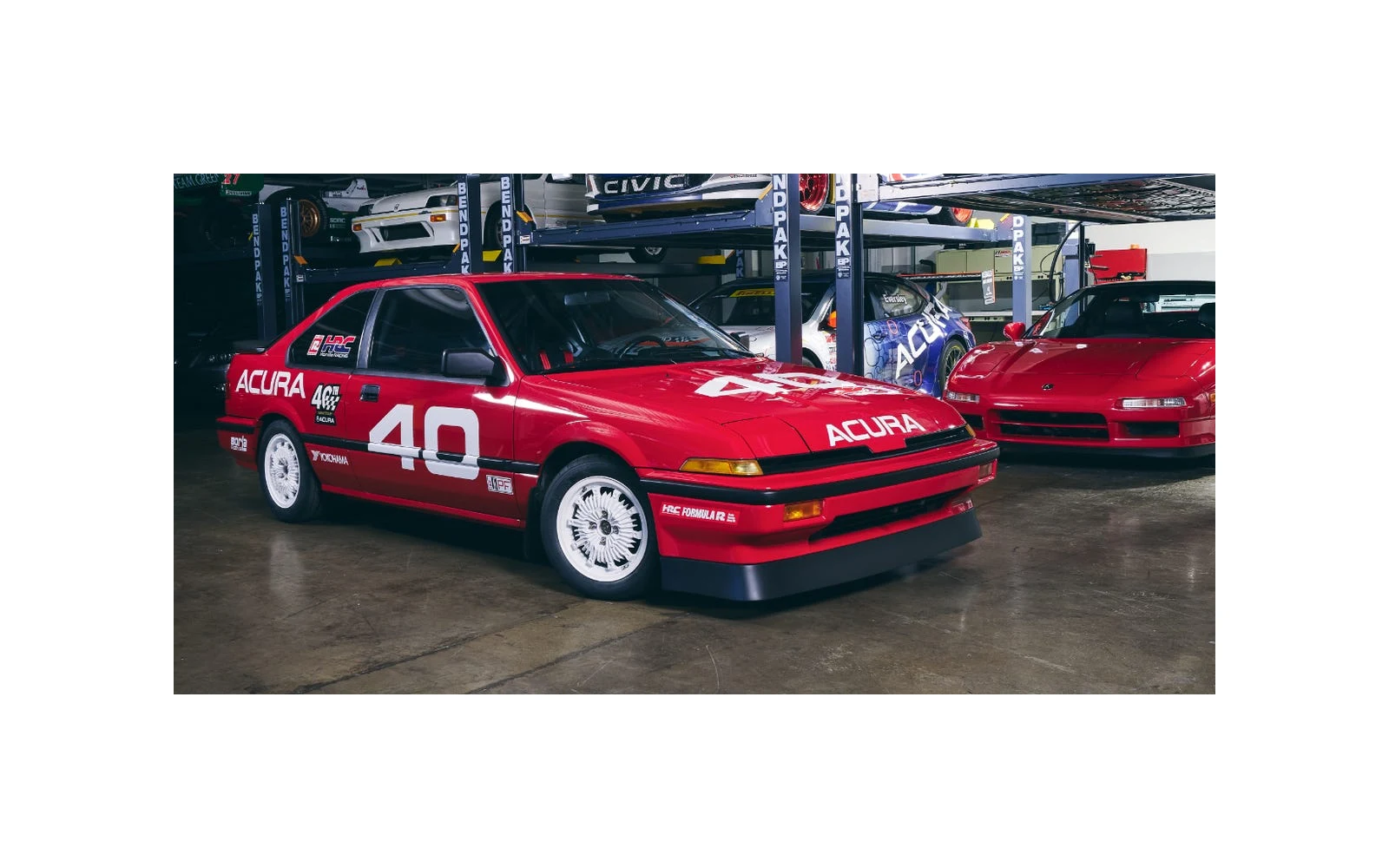
- Acura says Integra racing won IMSA International Sedan Series Manufacturers' and Drivers' Championships from 1987 to 1990.
- The NSX later gave Acura a performance halo with a stronger proof point than launch advertising alone could carry.
- The decision lesson is that precision needs a physical edge. Customers should find it in the product before they read it in the line.
The Decision Context
Acura entered the U.S. luxury market without old-world status. It had to give a new badge credibility quickly.
The brand's answer was direct: reliable engineering, driver response, a clear dealer experience, and a launch pair that covered upscale sedan and sporty compact.
The Launch Had Two Jobs
Acura says it launched in America on March 27, 1986, as the first Japanese luxury car brand. The first two models were the Legend sedan and the Integra.
That mix mattered. Legend gave the new badge a grown-up luxury entry. Integra gave it driver energy. Together, they turned Precision Crafted Performance into a product range instead of a slogan.
Performance Needed Public Proof
Acura says the Comptech Integra No. 48 won consecutive IMSA International Sedan Series Manufacturers' and Drivers' Championships from 1987 to 1990. That gave the new brand proof soon after launch.
The later NSX proved the same point at a higher level. Acura could claim precision because the cars gave buyers a mechanical reason to believe it.
The Archive Reading
Acura is useful as a new-premium-brand case because it built status from engineering behavior. Precision became a useful word because the products had a driving edge.
The operating lesson is simple. If the brand promise is control, build enough product evidence that control becomes exciting under use.
Where The Strategy Can Break
Acura should not be read as a clean success label. The useful question is where the brand system promise can fail in the real category: the buyer pays for identity, taste, care, status, or belonging and notices when the proof turns thin.
The weak reading is borrowing language about aspiration or lifestyle while avoiding the product, fit, material, channel, and use ritual. That kind of page sounds polished but gives the reader no way to judge the decision.
The concrete failure mode is this: the brand looks recognizable but the object stops giving the buyer a clear reason to choose it. If the case cannot explain that risk, the brand story is not finished.
The Bad Example
A bad Acura copycat would start with the visible surface: the mark, the color, the store, the app, the route, the campaign, or the public phrase. Then it would assume the surface created the result.
That is usually backwards. The surface worked only if the category proof underneath it was already strong enough: fit, material, store behavior, ritual, status cue, community signal, and whether the object keeps its meaning after purchase.
The page has to protect readers from that shortcut. The mistake is not ambition. The mistake is copying the artifact while leaving the constraint untouched.
What To Copy
Copy the discipline, not the costume. For Acura, the discipline sits in the link between automotive / performance luxury pressure, customer behavior, and the proof a buyer or user can inspect.
A useful reader should be able to point to one behavior that changed, one risk that dropped, and one cue that helped the change stick.
If those three pieces are missing, the page should not pretend the case is a repeatable playbook. It is only a brand example with missing machinery.
The Proof Trail
Start with the year or period: 1986-present. Then ask what was visible to the market at that time, what changed after the decision, and what evidence still exists now.
The source list gives the inspection trail. Use it to separate what Acura says about itself from what the case page argues about the brand decision.
The proof should answer five checks: product cue, use ritual, channel behavior, status or care signal, substitution risk. If the page cannot answer them, the case needs more source work before anyone treats it as a decision record.
The Decision Limit
The case should not be used as a slogan for doing the same thing. It should be used as a boundary test. The question is whether the same market pressure, customer behavior, proof surface, and timing exist before the decision gets copied.
Acura gives the archive a concrete inspection point: fit, material, store behavior, ritual, status cue, community signal, and whether the object keeps its meaning after purchase. If a team cannot point to that proof in its own business, the comparison is weak, even when the visible asset looks similar.
The better lesson is operational. Decide what must be true before the cue, campaign, name, product, route, or experience can carry the promise. Then decide which signal would stop the move if customers reject it, ignore it, or use it in the wrong way.
A serious reader should leave with a constraint, not a mood. For Acura, the constraint sits in automotive / performance luxury: who is choosing, what risk they are managing, which proof they can inspect, and what would make the promise collapse under normal use.
The final check is the comparison set. Put Acura beside two adjacent cases and ask what changed in each file: the cue, the behavior, the channel, the proof, the public language, or the operating burden. The answer keeps the case from becoming trivia.
This is where the archive page earns its keep. It turns a brand story into a decision memo: what changed, who had to believe it, what proof reduced the risk, what failure would expose the gap, and which nearby cases warn against copying the surface too quickly.
Comparable Cases
Sources
- Acura, 40 years of Precision Crafted Performance
- Acura Information Center, Integra history
- Road & Track, Acura first-generation Integra tribute build
- Autoweek, historically accurate Acura Integra track drive
- Wired, Acura NSX review and technical context
- Acura, current Type S performance line
- Editorial Acura wordmark treatment
People Also Ask
What happened to Acura?
Acura Precision Crafted Performance Case is a brand system case about Acura in 1986-present. Acura used precision as a performance promise, not as cold technical language. A new luxury brand can win when product behavior, dealer confidence, racing proof, and halo engineering carry the badge before heritage exists.
Why is Acura a brand system case?
Acura is filed as a brand system case because the visible consequence sits in that decision pattern. Acura used precision as a performance promise, not as cold technical language.
What can brands learn from Acura?
A new luxury brand can win when product behavior, dealer confidence, racing proof, and halo engineering carry the badge before heritage exists.
Is Acura still operating?
The Brand Archive marks Acura as Active / continuing. That means the brand, company, platform, product system, or parent organization is still operating, continuing, or being actively resolved.
What should Acura be compared with?
Compare Acura with Lexus, INFINITI, McLaren to see the same decision pattern from nearby cases.