Direct Answer
Good brand guidelines are not a design museum. They tell people how to preserve recognition in use: logo, wordmark, color, type, spacing, voice, imagery, proof language, accessibility, product surfaces, and forbidden misuse.
Answer Map
Read the answer, then inspect the proof.
Quote-ready definition
The Brand Archive definition
"The Brand Archive defines brand guidelines as the rules that protect how a brand's name, mark, color, type, voice, proof, imagery, and usage cues stay recognizable across real public surfaces."
Why it matters
Why it matters
Guidelines matter because brands break in ordinary places: thumbnails, invoices, support pages, packaging, signs, decks, social avatars, uniforms, app screens, and partner use.
Common mistake
What people get wrong
The weak guideline file over-describes personality and under-specifies use. The strong file protects the cue where recognition is at risk.
Comparison
A guideline page should protect use, not taste
Competitor pages often list famous PDFs. GYB should show what the guideline is protecting in the market.
| Guideline layer | What it protects | Archive examples |
|---|---|---|
| Logo and symbol rules | Recognition at small size, distance, partner use, and motion. | Mastercard, Nike, Starbucks |
| Color rules | Shelf, interface, packaging, ownership ritual, and category contrast. | Tiffany, Cadbury, DHL |
| Type and layout rules | Readable use across boring public surfaces. | IBM, FedEx, Stripe |
| Voice rules | Category language and limits, not a personality mood board. | Oatly, Old Spice, Liquid Death |
| Proof language | Claims the company can support under scrutiny. | Volvo, Patagonia, Toyota |
Case-backed examples
Archive proof
Each example points to a public Brand Archive file. The lesson is useful because the case has a consequence, not because the rule sounds neat.
01
Mastercard
Guidelines protect when a symbol can stand without words.
Mastercard
Rebrand / 2016-2019
02
IBM
Letters and rules became enterprise trust objects.
IBM
Brand System / 1972-present
03
Tiffany
Color rules protect a ritual, not a mood.
Tiffany & Co.
Brand System / 1845 / 1886-present
04
Nike
A mark needs repeated performance context.
Nike
Launch / 1971-present
05
Oatly
Voice and packaging language helped train category memory.
Oatly
Launch / 1990s-present
06
Starbucks
Guidelines can simplify a mark only after the market has learned it.
Starbucks
Rebrand / 2011
07
FedEx
A wordmark and service cue should stay close to the operating promise.
FedEx
Trust / 1973-present
08
Gap
Bad guideline decisions can erase a cue the public still uses.
Gap
Rebrand / 2010
Decision framework
How to use it
The practical test is whether the concept changes a real decision.
- Inventory the cue Name the mark, color, type, voice, proof phrase, or surface that customers already use.
- Define the surface Write rules for real places: app, package, invoice, ad, partner deck, support, storefront, and search.
- Show misuse Useful guidelines show what breaks recognition and why.
- Attach proof Claims and language rules should match evidence the brand can support.
- Test boring use If the rule fails on small, dull, partner-owned surfaces, it is not durable.
Common mistakes
Mistakes to avoid
These mistakes are common because they sound reasonable inside the company and fail when customers meet the brand.
Making guidelines decorative
Rules should protect memory, not just visual taste.
Ignoring non-design users
Writers, support teams, partners, vendors, and systems also use the brand.
Leaving proof language vague
A brand claim needs limits and evidence, especially in trust-heavy categories.
Showing only ideal use
Bad use examples matter because real brands break in ordinary places.
Operator test
Operator test
Use the checklist as a pressure test. If the answer is vague, the brand decision is not ready.
- Show correct and incorrect mark use.
- Define color by job and surface.
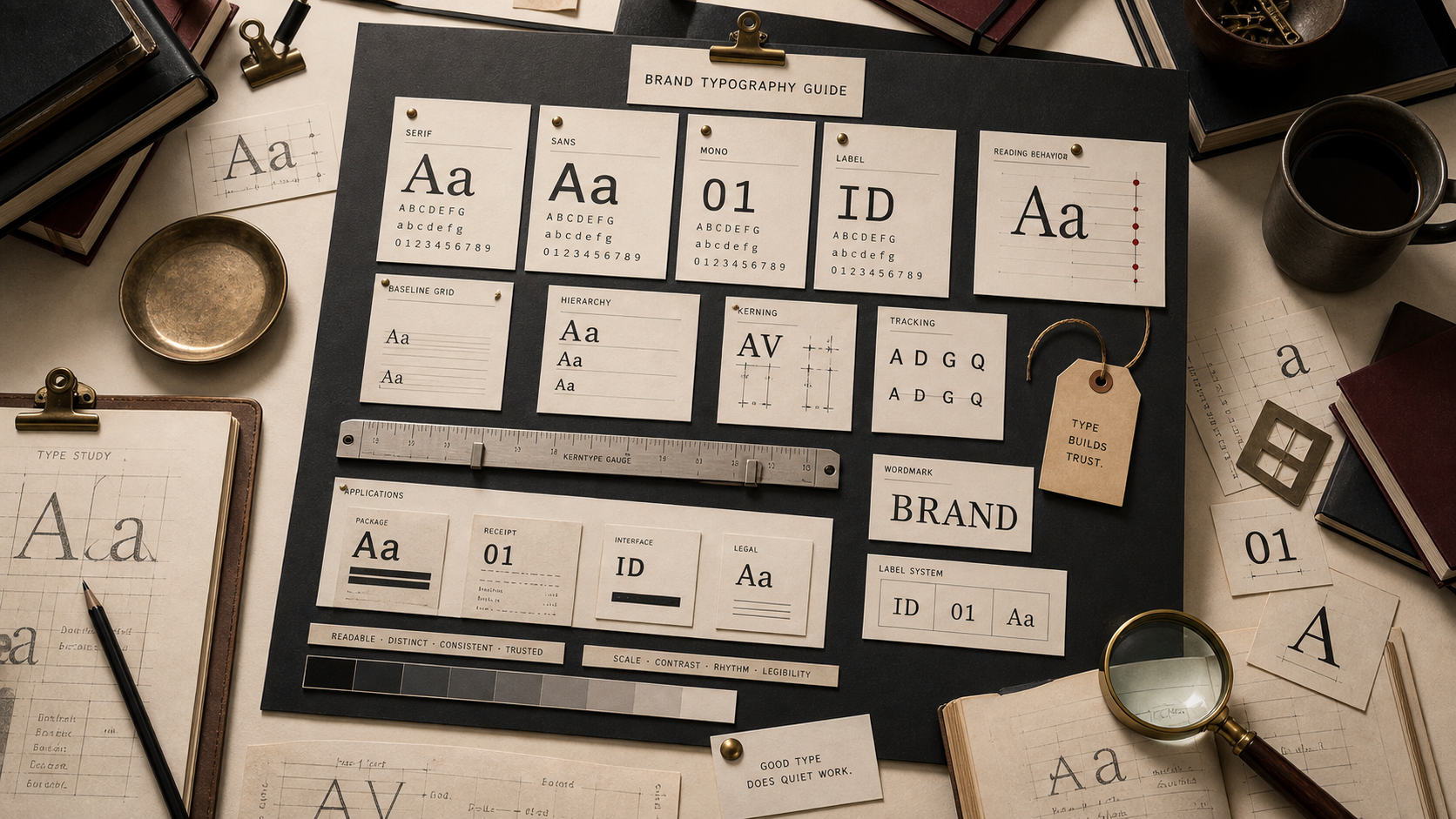
- Define typography for reading, not taste.
- Write voice rules with examples and limits.
- Define proof language the brand can support.
- Test guidelines on small, boring, and partner-owned surfaces.
Related Files
Keep the answer inside the archive.
Brand Guidelines Examples FAQ
What should brand guidelines include?
They should include mark use, color, type, voice, imagery, proof language, accessibility, examples, misuse rules, and surface-specific guidance.
Are brand guidelines only for designers?
No. They protect how the brand is used by employees, partners, writers, support teams, vendors, and systems.
What makes brand guidelines useful?
They are useful when they prevent recognition loss on real surfaces.