Decision Type
Comebacks
Recovery decisions made after dilution, crisis, decline, or category pressure.
Short Answer
Comebacks rarely begin with noise. They begin with restraint, control, and a decision about which part of the brand still deserves to be protected.
Shelf Rule
Compare the decision, not the mood.
Comebacks rarely begin with noise. They begin with restraint, control, and a decision about which part of the brand still deserves to be protected. The page is a shelf inside the archive, not a ranking and not a recommendation list.
Reader Use
Use Comebacks when...
- You need examples grouped by what the decision teaches, not by brand fame.
- You want to move from a category shelf into a concept hub, lesson, or guide.
- You need a proof case before changing a signal, promise, product route, or recovery plan.
Pattern Map
Comebacks pattern map
Use the page by pattern first. The case list comes after the reader knows what to compare.
| Pattern |
What to compare |
Cases to inspect |
| Proof changed first |
The recovery worked because product, service, or operating proof changed before the story. |
Domino's, Apple, CD Projekt Red, Nintendo Switch |
| Old asset made current |
The comeback reused a known cue with a sharper current role. |
Old Spice |
| Control returned |
Distribution, product, governance, or focus got tighter after drift. |
Domino's, Apple, Burberry, LEGO |
Top Cases
Comebacks proof cases
These files are shown first because they connect to concept hubs, source-backed depth, or several archive lanes.
| Case |
What happened |
What it teaches |
Next path |
Domino's Comeback / 2009 |
The recovery decision converted criticism into a public operating reset, making accountability part of the brand signal. |
Accountability can become a brand asset when the company changes the operating reality underneath it. |
Brand Audit Checklist |
Apple Comeback / 1997-1998 |
Apple's late-1990s recovery worked because the brand promise, product simplification, direct selling, and iMac proof all pointed at the same idea. |
A comeback becomes believable when the market can see the operating change behind the message. |
What Is Branding |
Burberry Comeback / 2000s |
The comeback required more than a new campaign. |
Luxury recovery often starts with subtraction. |
Examples of Successful Rebrands |
Old Spice Comeback / 2010 |
Old Spice did not escape old-brand perception by denying age. |
A comeback can work when the brand finds a tone that makes its baggage useful instead of hiding it. |
Humor in Emotional Branding |
LEGO Comeback / 2000s |
The turnaround was less a reinvention than a return to the structure that made the system work. |
Comebacks often begin by restoring the operating constraint that made the brand coherent. |
Nostalgia in Emotional Branding |
CD Projekt Red Comeback / 2020-2025 |
Cyberpunk 2077 damaged CD Projekt Red's fan-trust advantage at launch, then became a recovery case through refunds, public patch work, next-gen repair, Update 2. |
Fan trust is not repaired by apology alone. |
Brand Lessons |
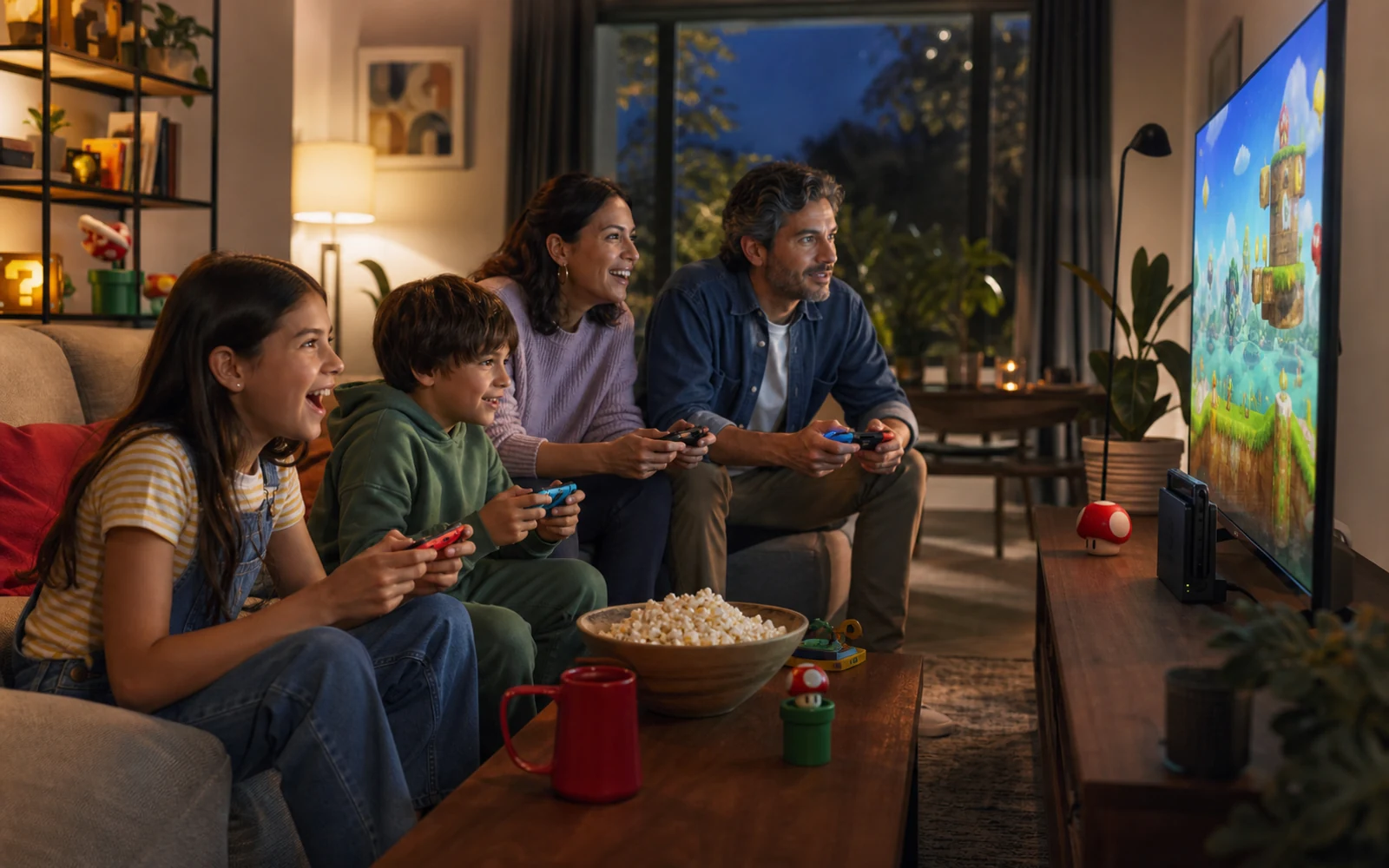
Nintendo Switch Comeback / 2017 |
After Wii U blurred the product idea, Switch made the proposition physical, visible, and easy to repeat: one device that moved with the player. |
A comeback after confusion should simplify the promise until the product demonstrates the strategy by itself. |
Brand Lessons |
Zoom Comeback / 2020 |
Zoom's pandemic surge created a trust crisis, then forced the company to make security and privacy a visible part of the brand. |
Hypergrowth turns operational gaps into brand gaps. |
Brand Lessons |
Cases
Apple / 1997-1998
Apple's late-1990s recovery worked because the brand promise, product simplification, direct selling, and iMac proof all pointed at the same idea.
Burberry / 2000s
The comeback required more than a new campaign. It required distribution restraint, symbol control, and a clearer boundary around the check.
CD Projekt Red / 2020-2025
Cyberpunk 2077 damaged CD Projekt Red's fan-trust advantage at launch, then became a recovery case through refunds, public patch work, next-gen repair, Update 2.0, Phantom Liberty, and durable sales.
Domino's / 2009
The recovery decision converted criticism into a public operating reset, making accountability part of the brand signal.
LEGO / 2000s
The turnaround was less a reinvention than a return to the structure that made the system work.
Nintendo Switch / 2017
After Wii U blurred the product idea, Switch made the proposition physical, visible, and easy to repeat: one device that moved with the player.
Old Spice / 2010
Old Spice did not escape old-brand perception by denying age. It used comic confidence to make inherited masculinity feel newly performative.
Zoom / 2020
Zoom's pandemic surge created a trust crisis, then forced the company to make security and privacy a visible part of the brand.
Comebacks FAQ
What makes a case a comebacks file?
It belongs here when the primary decision pattern matches the comebacks category and produces a visible consequence.
Why does the archive separate decision types?
Decision type determines what the reader should compare. Packaging failures, identity changes, and recovery decisions do not teach the same lesson.
Are these rankings?
No. The archive is a reference structure, not a ranking product.