Decision Type
Brand Failures
Decisions that damaged recognition, trust, market share, or continuity.
Short Answer
Failures in this archive are not treated as spectacle. They are decision records. Each case asks what changed, which asset was misunderstood, and what consequence followed.
Shelf Rule
Compare the decision, not the mood.
Failures in this archive are not treated as spectacle. They are decision records. Each case asks what changed, which asset was misunderstood, and what consequence followed. The page is a shelf inside the archive, not a ranking and not a recommendation list.
Reader Use
Use Brand Failures when...
- You need examples grouped by what the decision teaches, not by brand fame.
- You want to move from a category shelf into a concept hub, lesson, or guide.
- You need a proof case before changing a signal, promise, product route, or recovery plan.
Pattern Map
Brand Failures pattern map
Use the page by pattern first. The case list comes after the reader knows what to compare.
| Pattern |
What to compare |
Cases to inspect |
| Recognition break |
A useful cue changes or disappears before replacement memory exists. |
Tropicana, Barneys New York, Blockbuster, Coca-Cola |
| Trust collapse |
The promise fails at the risk point customers cared about. |
JCPenney, Google Plus, Google Stadia, Sears |
| Habit loss |
A behavior the market learned stops matching the product, route, or price system. |
JCPenney, Blockbuster, Quibi, Zune |
Top Cases
Brand Failures proof cases
These files are shown first because they connect to concept hubs, source-backed depth, or several archive lanes.
| Case |
What happened |
What it teaches |
Next path |
Tropicana
Failure / 2009 |
The redesign case sits at the center of recognition equity: when the asset is visual memory, improvement starts by protecting the cue shoppers already use. |
The decision lesson is procedural: identify the visual elements that carry retrieval before judging what looks current. |
Brand Audit Checklist |
Barneys New York
Failure / 1923-2019 / licensed brand asset |
Barneys New York built luxury retail memory through curation, taste, service, discovery, windows, and store theater, then lost the U. |
A retailer can build enormous taste authority and still fail if the current store system cannot keep earning the trip, the margin, and the buyer relationship. |
Brand Memory Can Outlive the Business |
JCPenney
Failure / 2012 |
The fair-and-square pricing reset changed the customer contract faster than the business could rebuild trust around it. |
Repositioning is dangerous when it removes the behavior customers use to understand value. |
Brand Audit Checklist |
Coca-Cola
Failure / 1985 |
The product test measured preference. |
A brand can hold value that does not appear in product testing. |
Failed Brand Strategy Examples |
Blockbuster
Failure / 1985-2014 |
Blockbuster turned the Friday-night rental trip into mass retail memory, then lost the habit when digital distribution made the store visit, late fee, and physical queue feel obsolete. |
A retail habit is powerful until a new system removes the reason for the habit. |
Customer Habits Move Before Brands Die |
Quibi
Failure / 2020 |
Quibi launched with money, talent, and a clear mobile-first idea, then shut down after six months because the market did not build the daily paid short-video habit the service needed. |
A category idea is not proven by launch budget. |
Customer Habits Move Before Brands Die |
Zune
Failure / 2006-2015 |
Zune joined hardware, marketplace, music pass, sharing, and media software into one portable-music bet, then lost the customer habit before the service layer was folded into Xbox Music an... |
A better product story cannot win by itself when the customer has already built the daily habit somewhere else. |
Customer Habits Move Before Brands Die |
Amazon Fire Phone
Failure / 2014-2015 |
Fire Phone tried to make the smartphone a shopping and Amazon-service device, but hardware features could not overcome price, carrier, app ecosystem, and reason-to-switch friction. |
A product tied to a powerful parent brand still has to win the category's real switching test. |
Platform Brands Need Ecosystem Gravity |
Cases
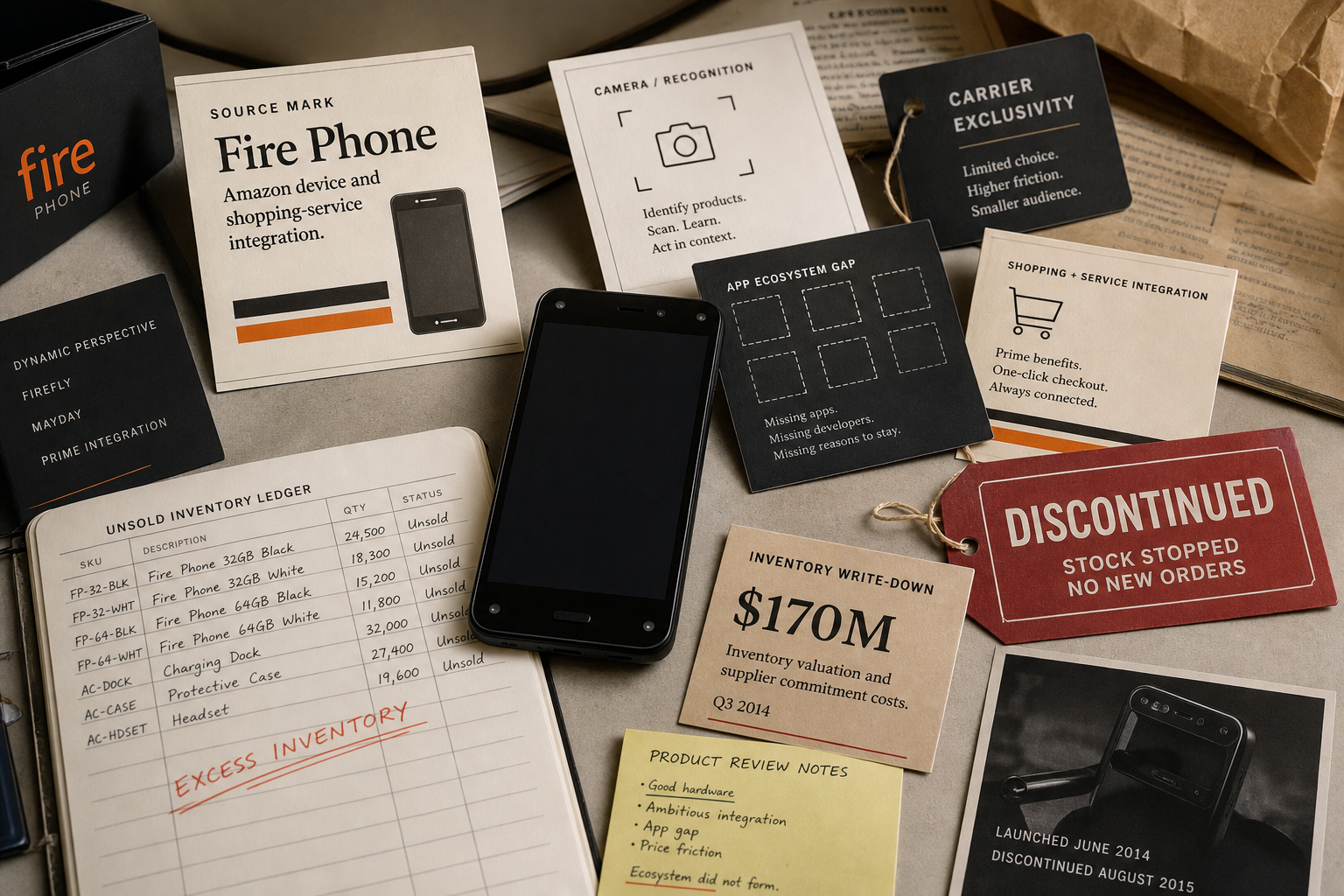
Amazon Fire Phone / 2014-2015
Fire Phone tried to make the smartphone a shopping and Amazon-service device, but hardware features could not overcome price, carrier, app ecosystem, and reason-to-switch friction.
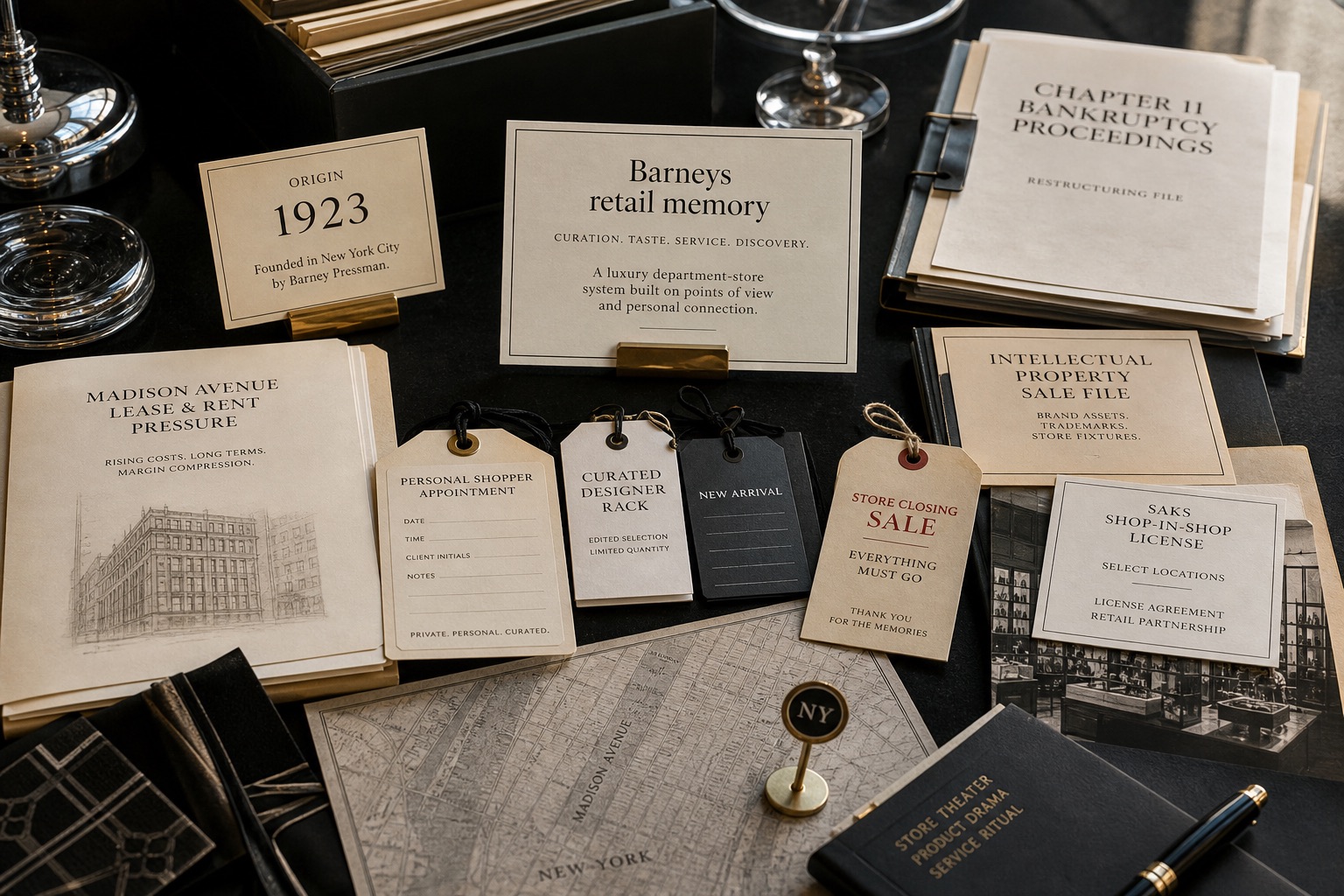
Barneys New York / 1923-2019 / licensed brand asset
Barneys New York built luxury retail memory through curation, taste, service, discovery, windows, and store theater, then lost the U.S. store system while the name survived as intellectual property and licensing.
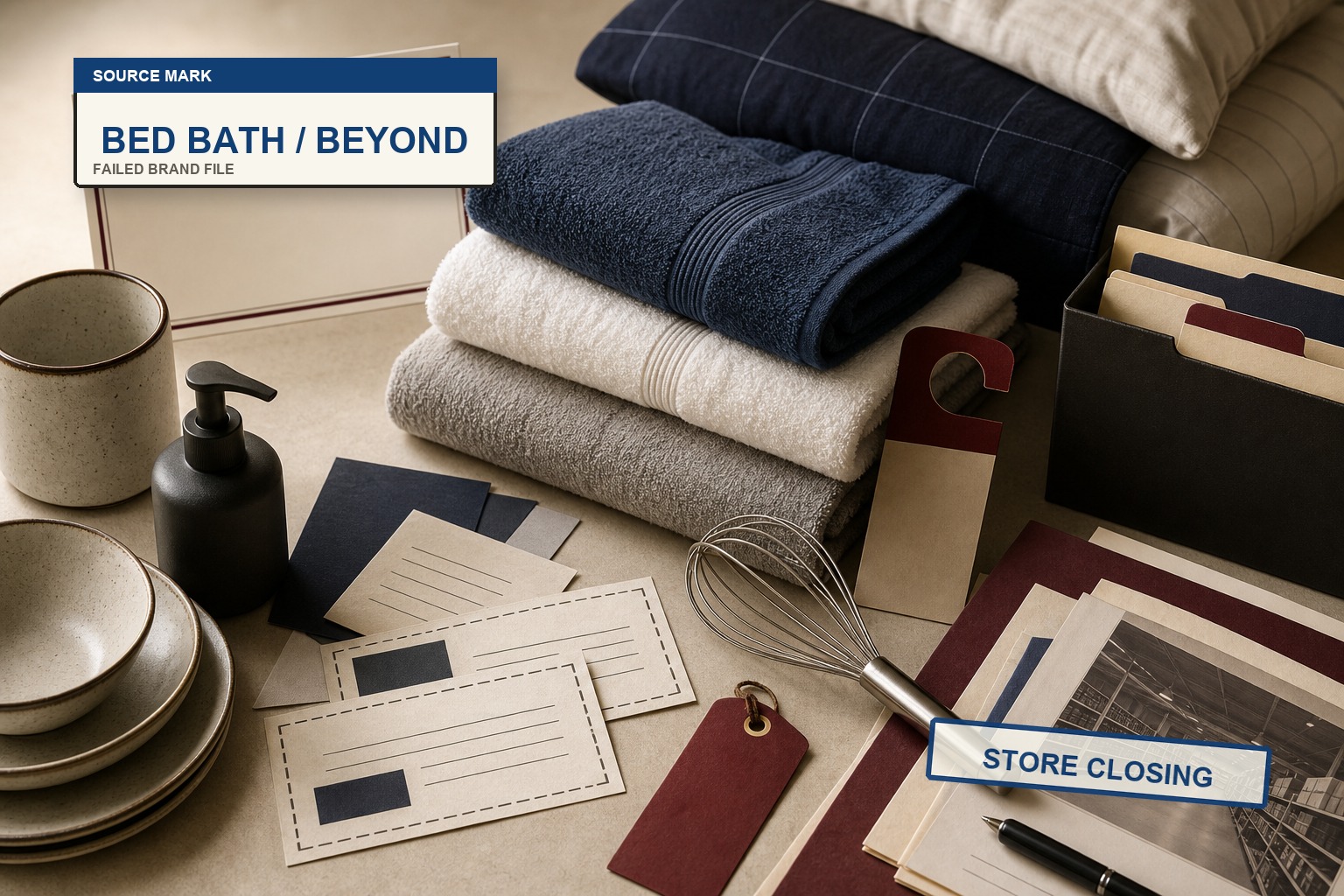
Bed Bath & Beyond / 1971-2023
Bed Bath & Beyond trained shoppers to expect deep choice and a coupon in hand, then collapsed when that old bargain ritual could not carry weak stores, digital lag, debt, and exhausted turnaround attempts.
Blockbuster / 1985-2014
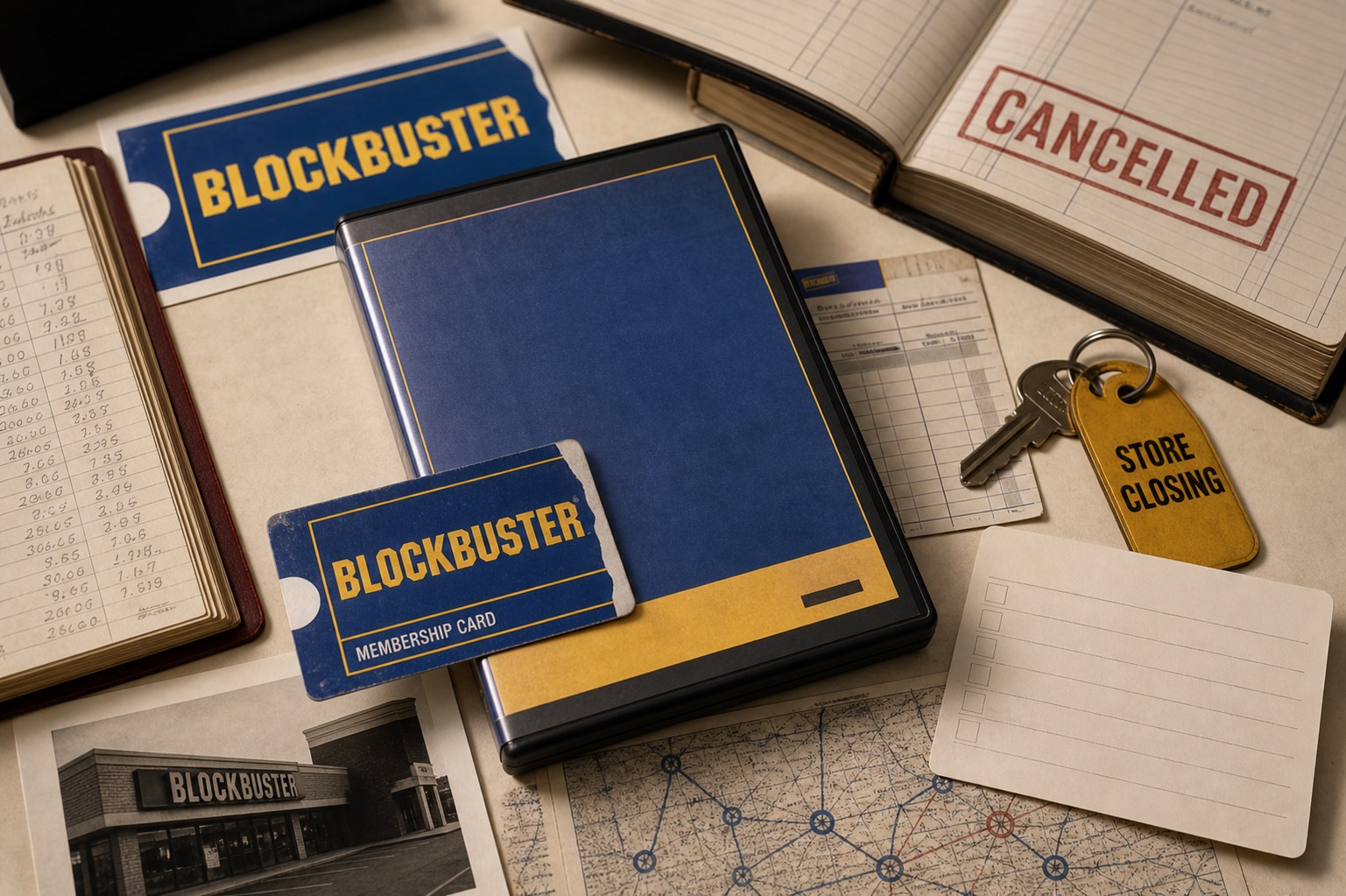
Blockbuster turned the Friday-night rental trip into mass retail memory, then lost the habit when digital distribution made the store visit, late fee, and physical queue feel obsolete.

Borders / 1971-2011
Borders made big-box book browsing feel abundant, but the chain could not adapt fast enough as ecommerce, e-readers, debt, and store economics changed how readers bought books.
British Airways / 1997-2001
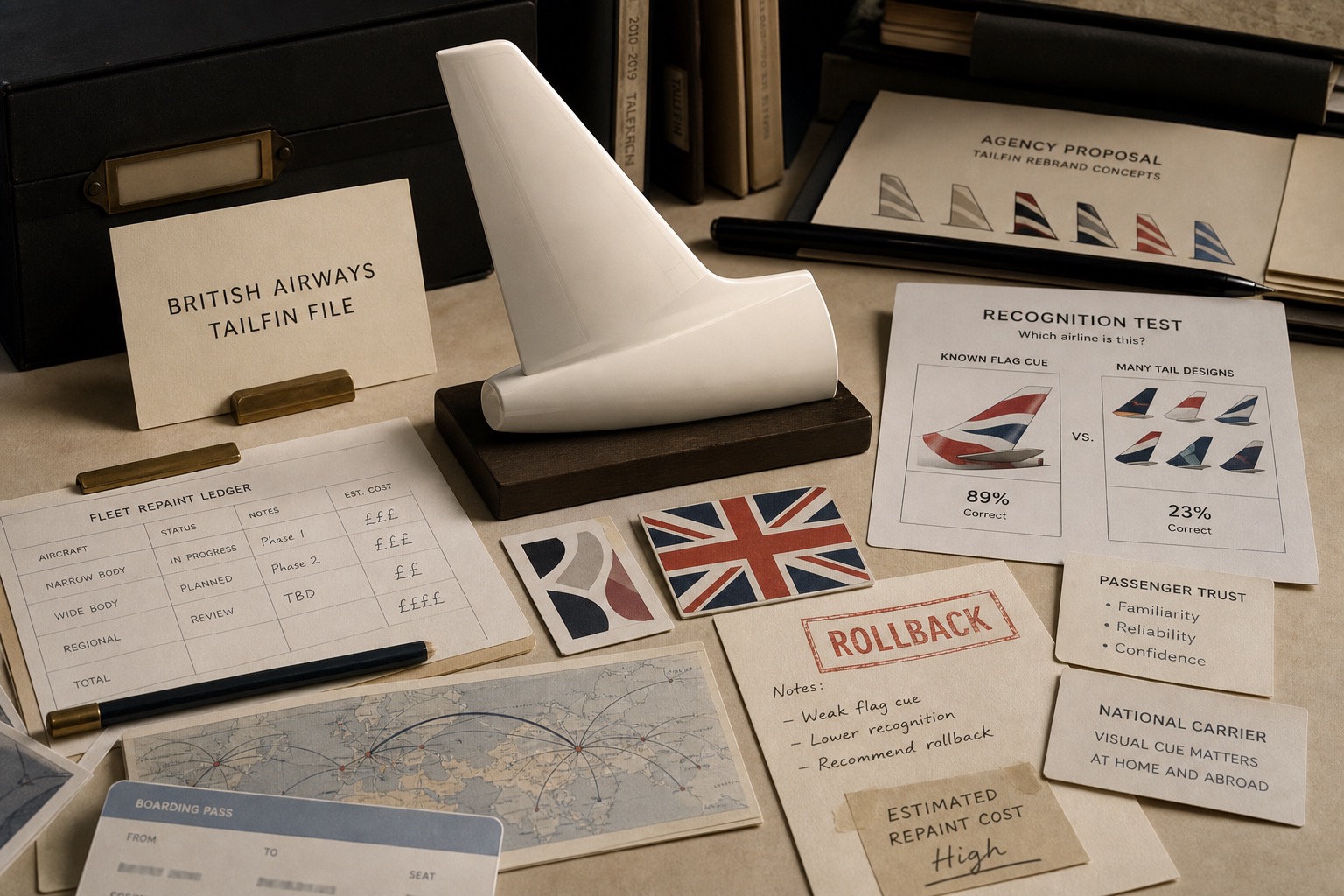
British Airways' tailfin program is a rebrand-proposal warning because the creative idea weakened a recognition cue that passengers, press, and the public already understood.
Circuit City / 1949-2009
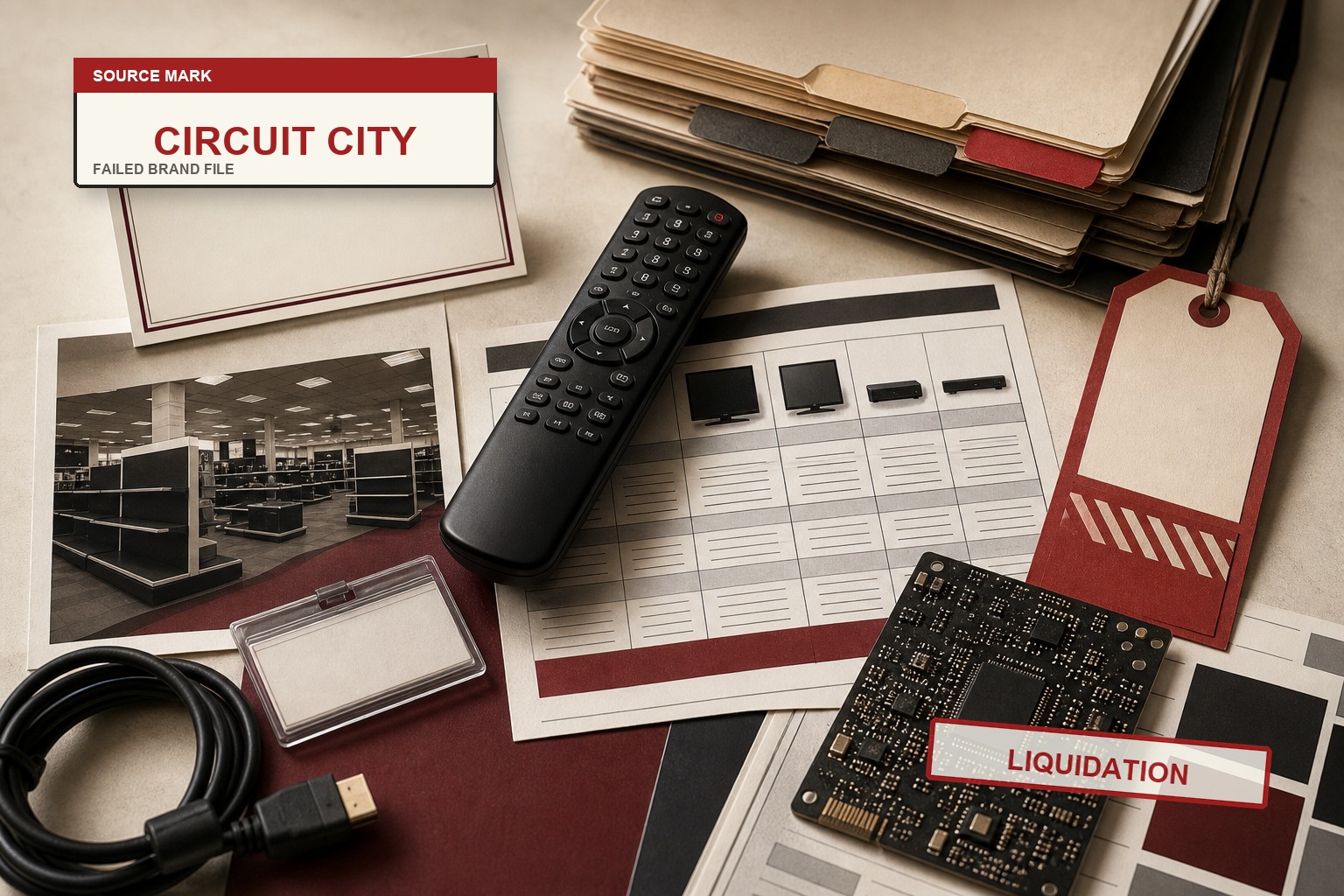
Circuit City once made consumer electronics feel like a dedicated comparison trip, then liquidated after weak execution, vendor pressure, store problems, and recession-era demand exposed a retail model losing ground to better operators and online research.
Coca-Cola / 2011
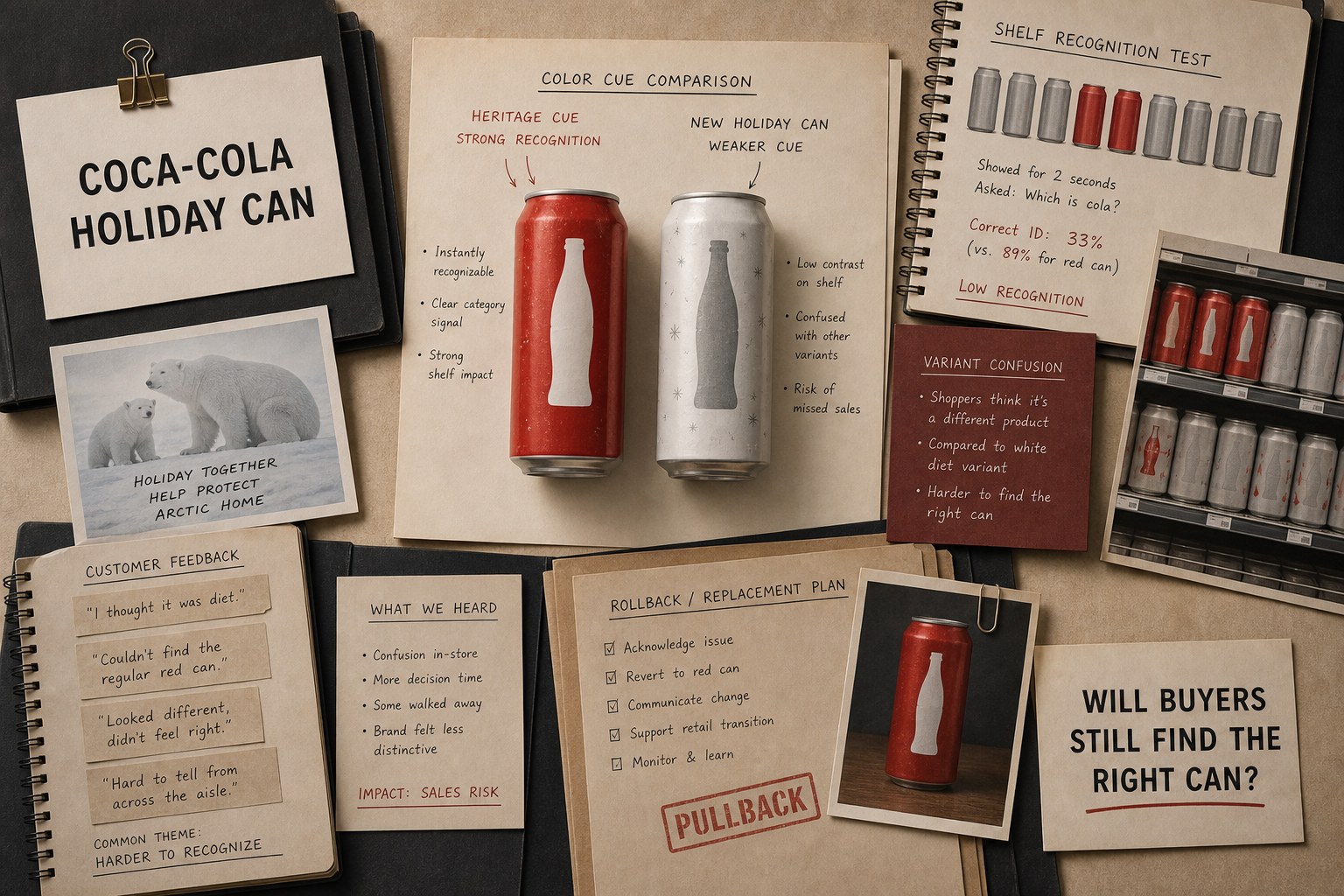
Coca-Cola's white holiday can showed why packaging color is not seasonal decoration when buyers use the color to separate the original product from nearby variants.
Coca-Cola / 1985
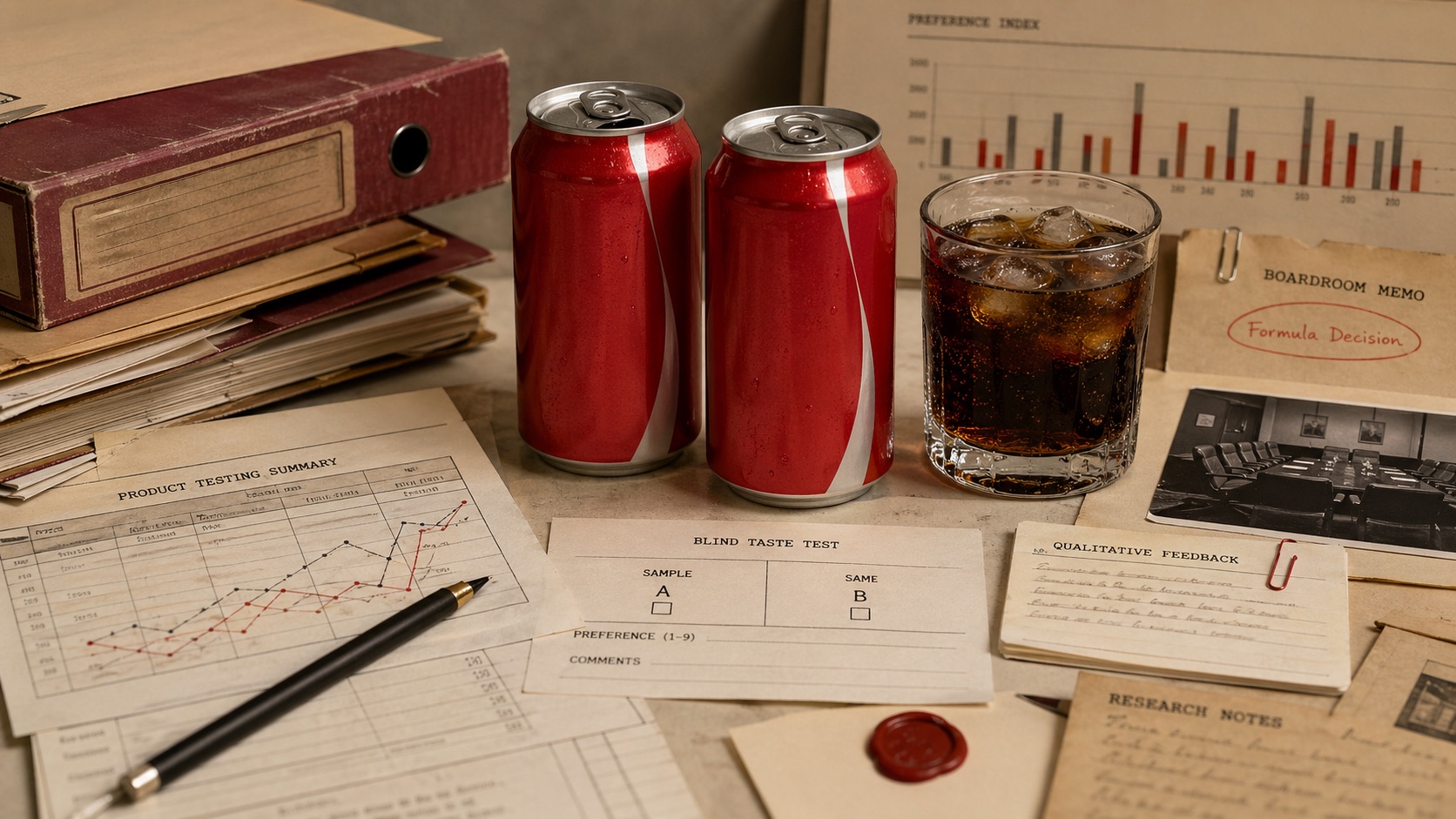
The product test measured preference. The market response revealed ownership, ritual, and identity sitting underneath the formula decision.
Consignia / Royal Mail / 2001-2002
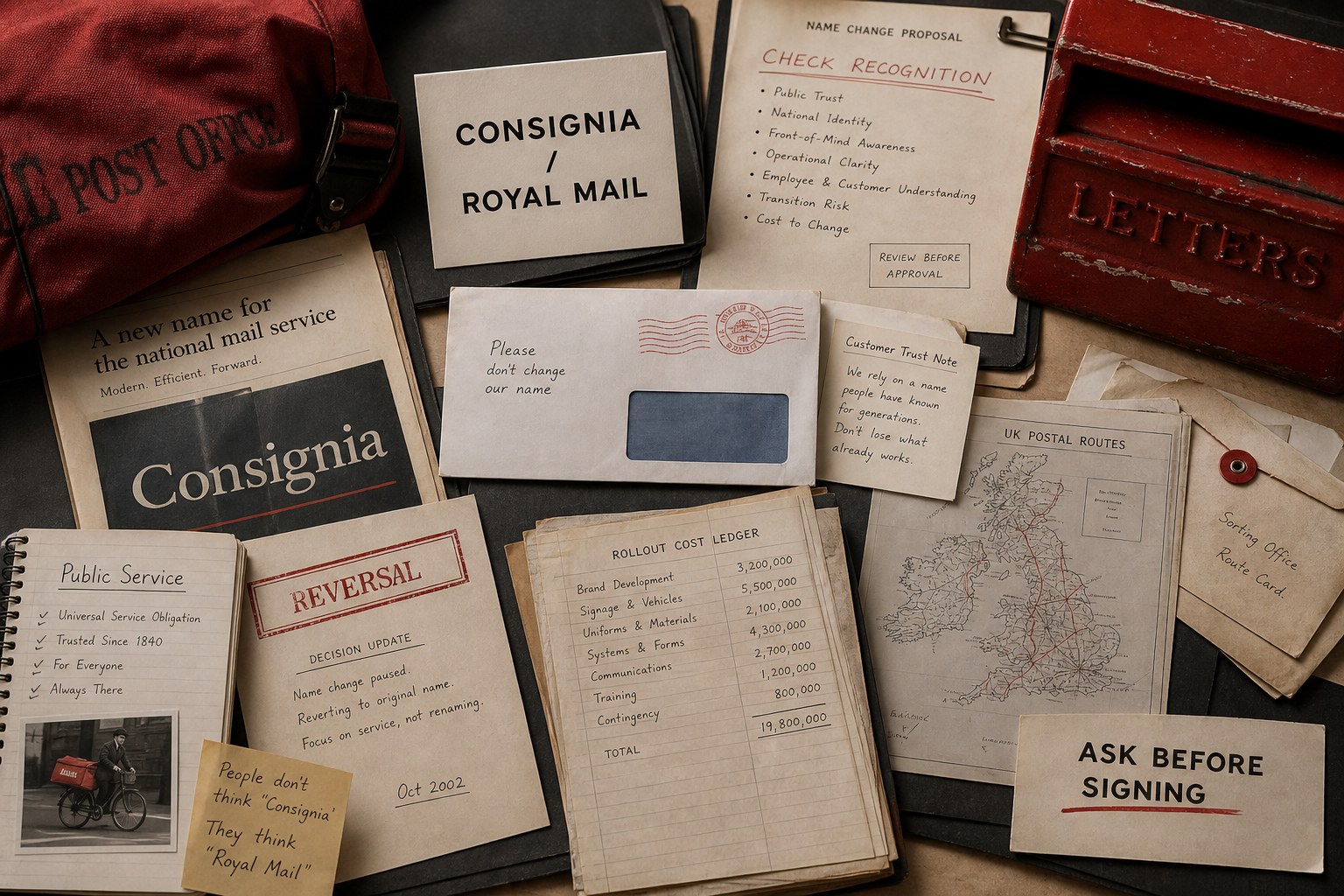
The Consignia rename failed because a public-service brand approved a new corporate name before proving that recognition, trust, employee use, and customer language would move with it.
Crystal Pepsi / 1992-1994
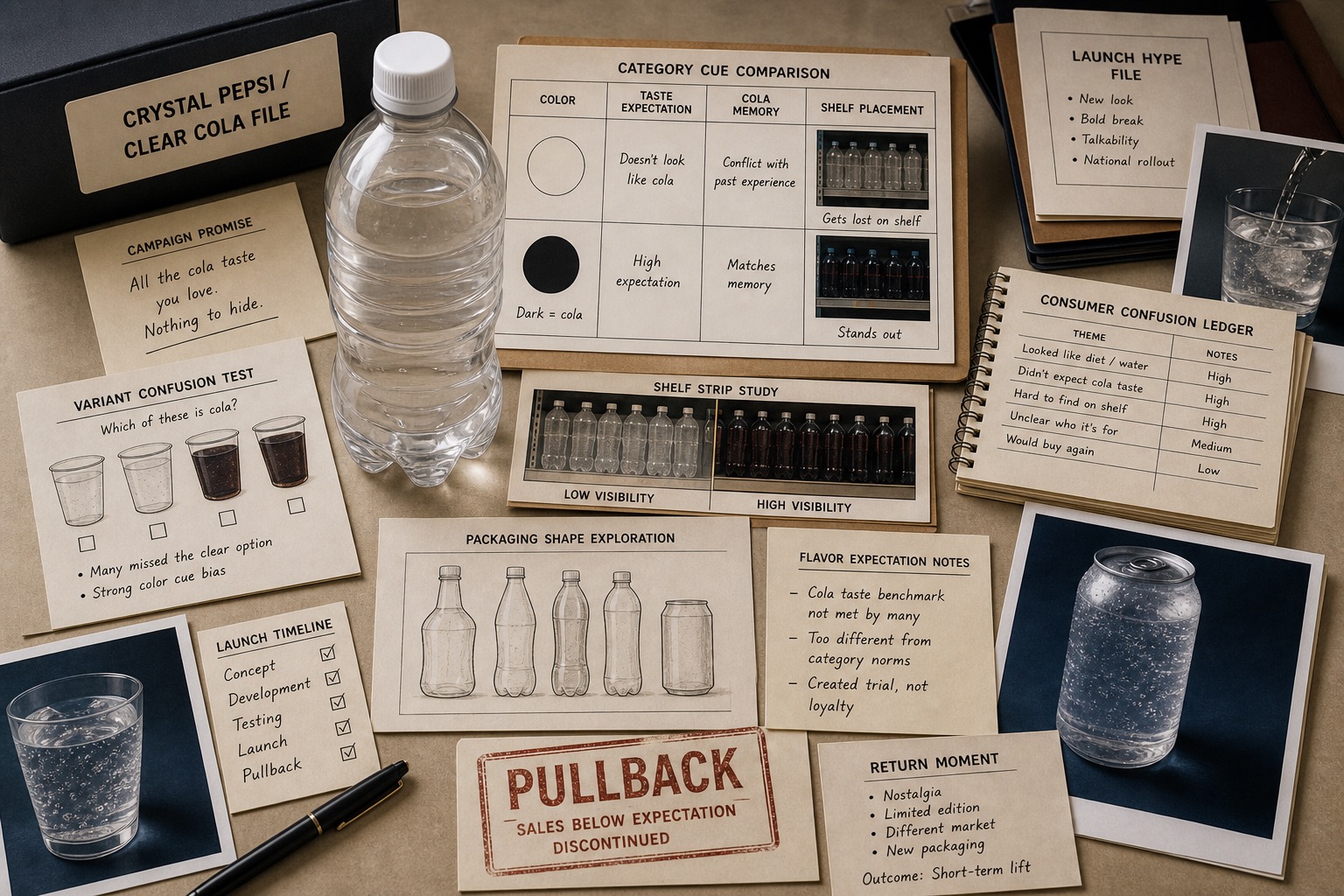
Crystal Pepsi is a color-recognition case because the clear product asked buyers to accept cola without the dark visual cue that helped set taste expectation.
Digg / 2010
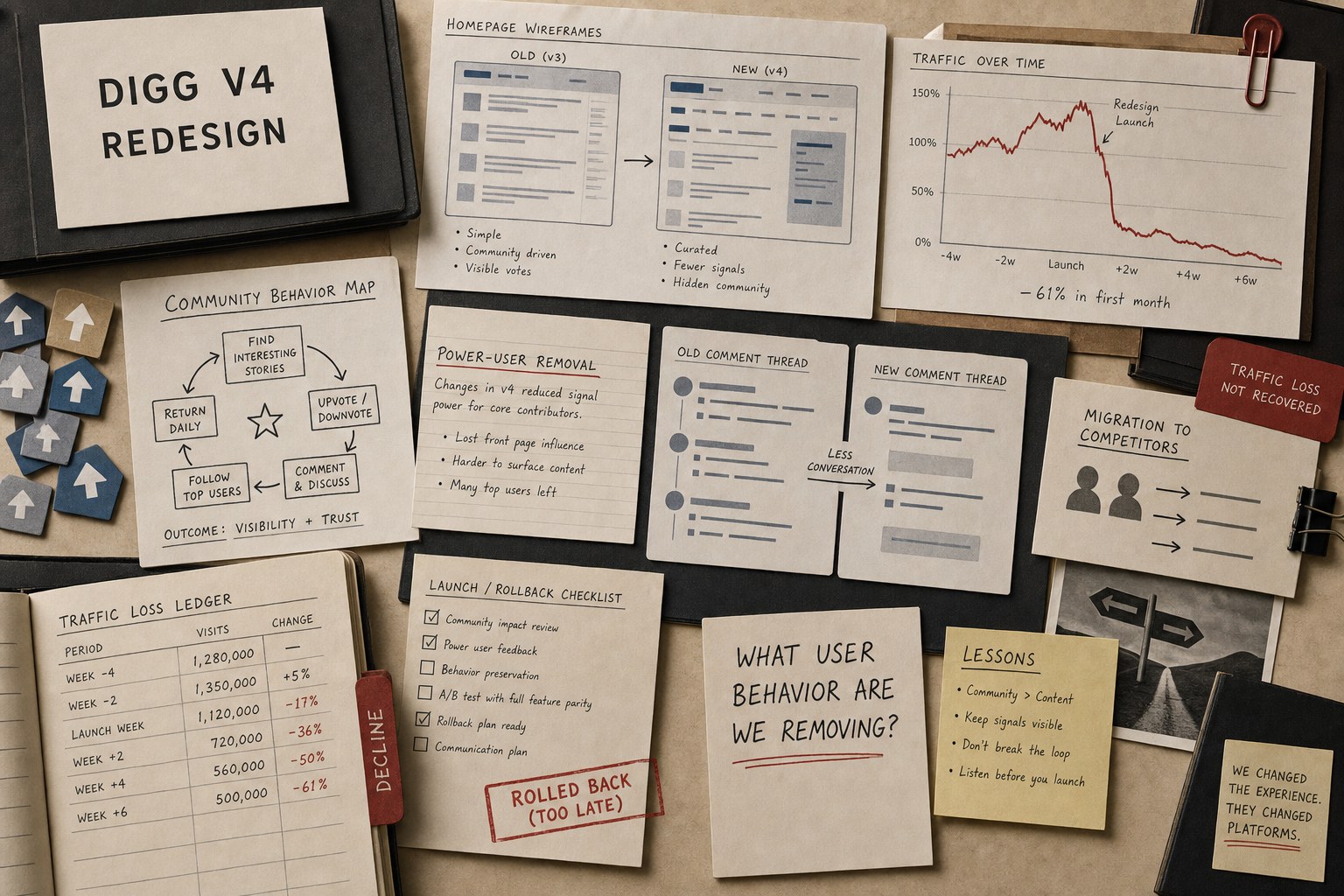
Digg V4 failed as a redesign lesson because it changed the behavior that made the platform valuable: voting, community status, submission flow, and user ownership of the front page.
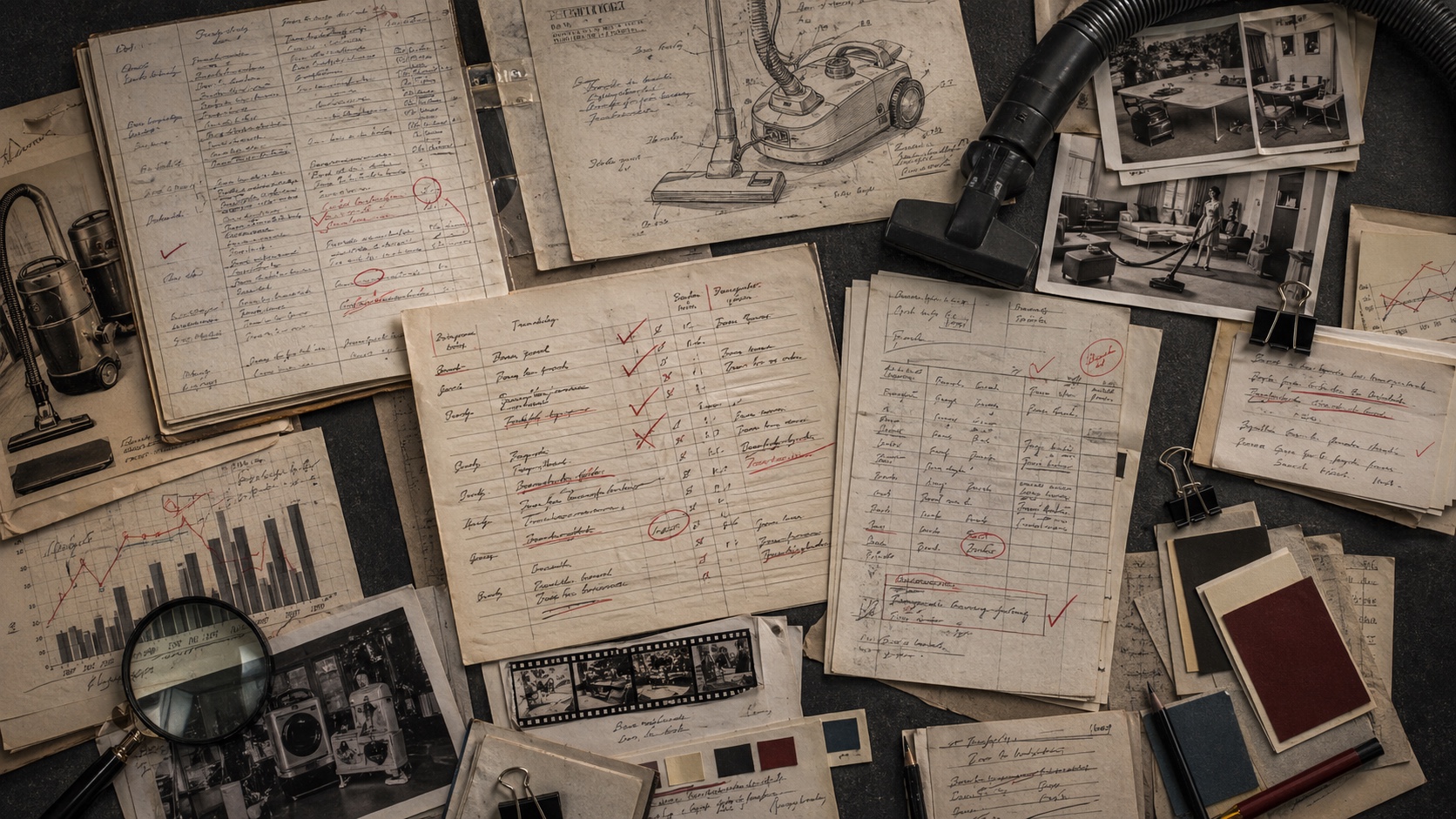
Electrolux / 1960s
The famous vacuum line is often treated as a translation failure. The better lesson is about how slogan folklore can outlive the campaign itself.
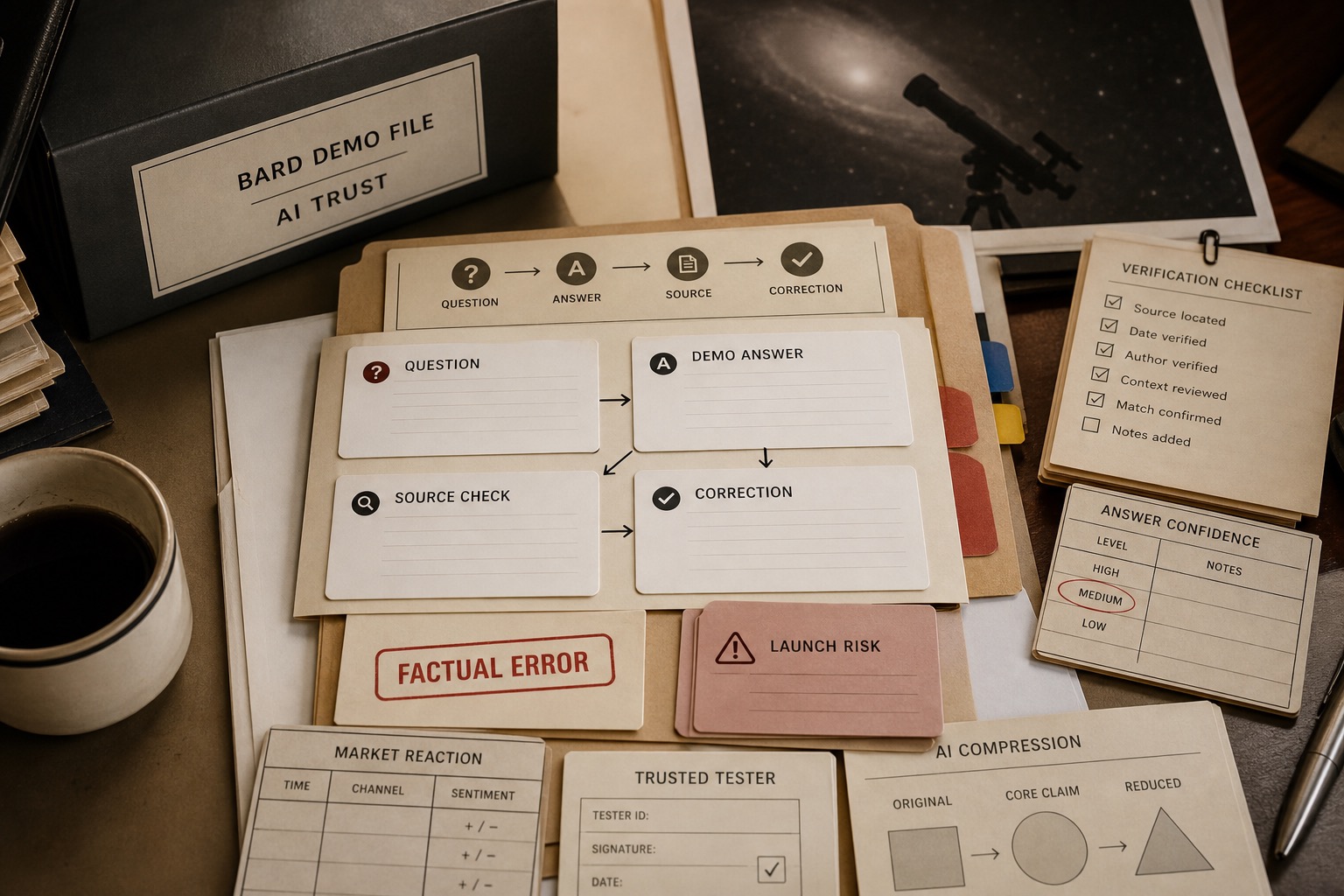
Google Bard / 2023
Google Bard's launch demo error is an AI-compression warning because a single public mistake gave the market an easier summary than the product promise.
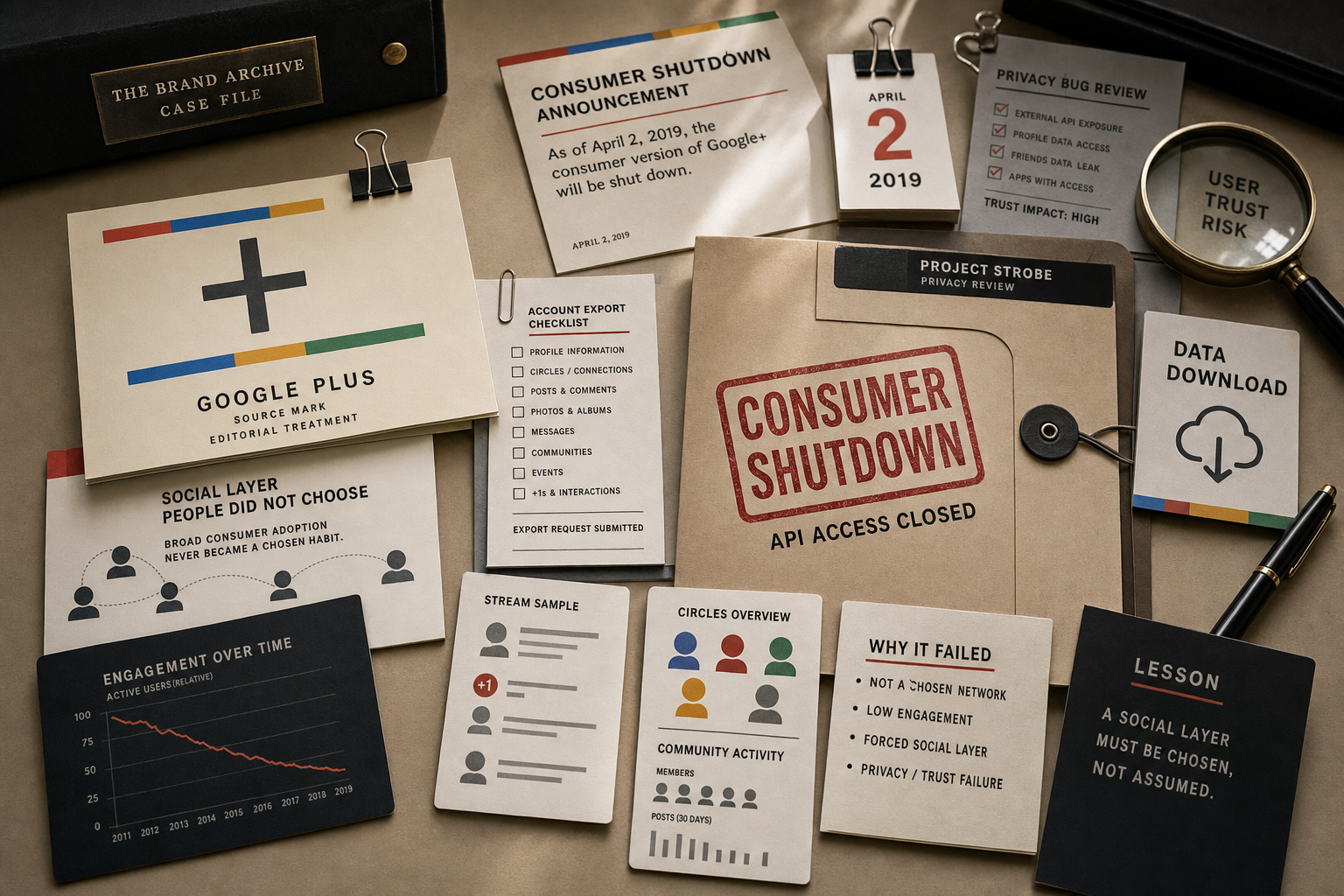
Google Plus / 2011-2019
Google Plus tried to become a social layer across Google, but consumer adoption never became a chosen habit and privacy pressure helped turn the service into a shutdown file.
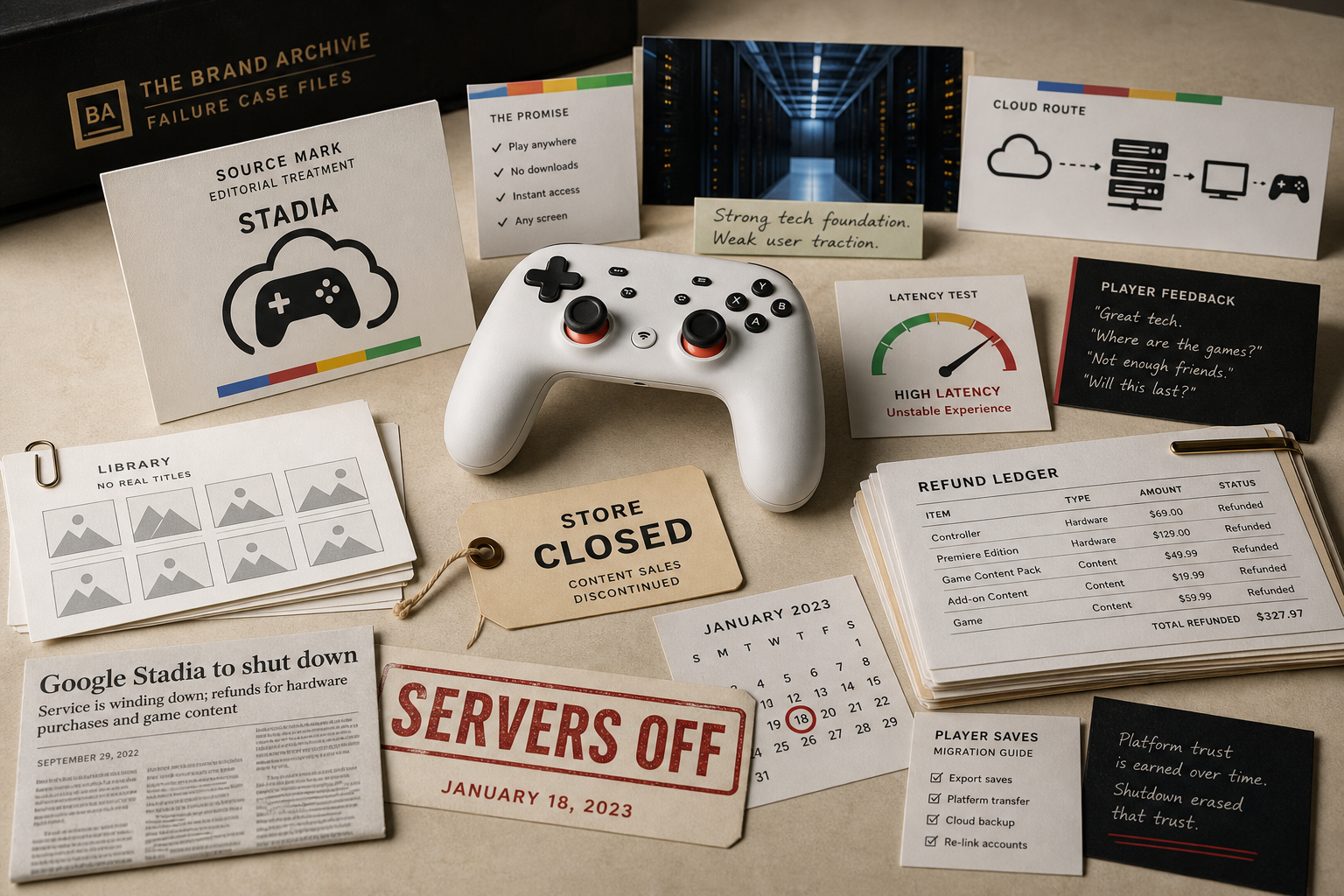
Google Stadia / 2019-2023
Stadia made cloud gaming technically visible, but Google shut the service down after it failed to gain enough user traction, turning refunds and server shutdown into the brand memory.
HealthCare.gov / 2013
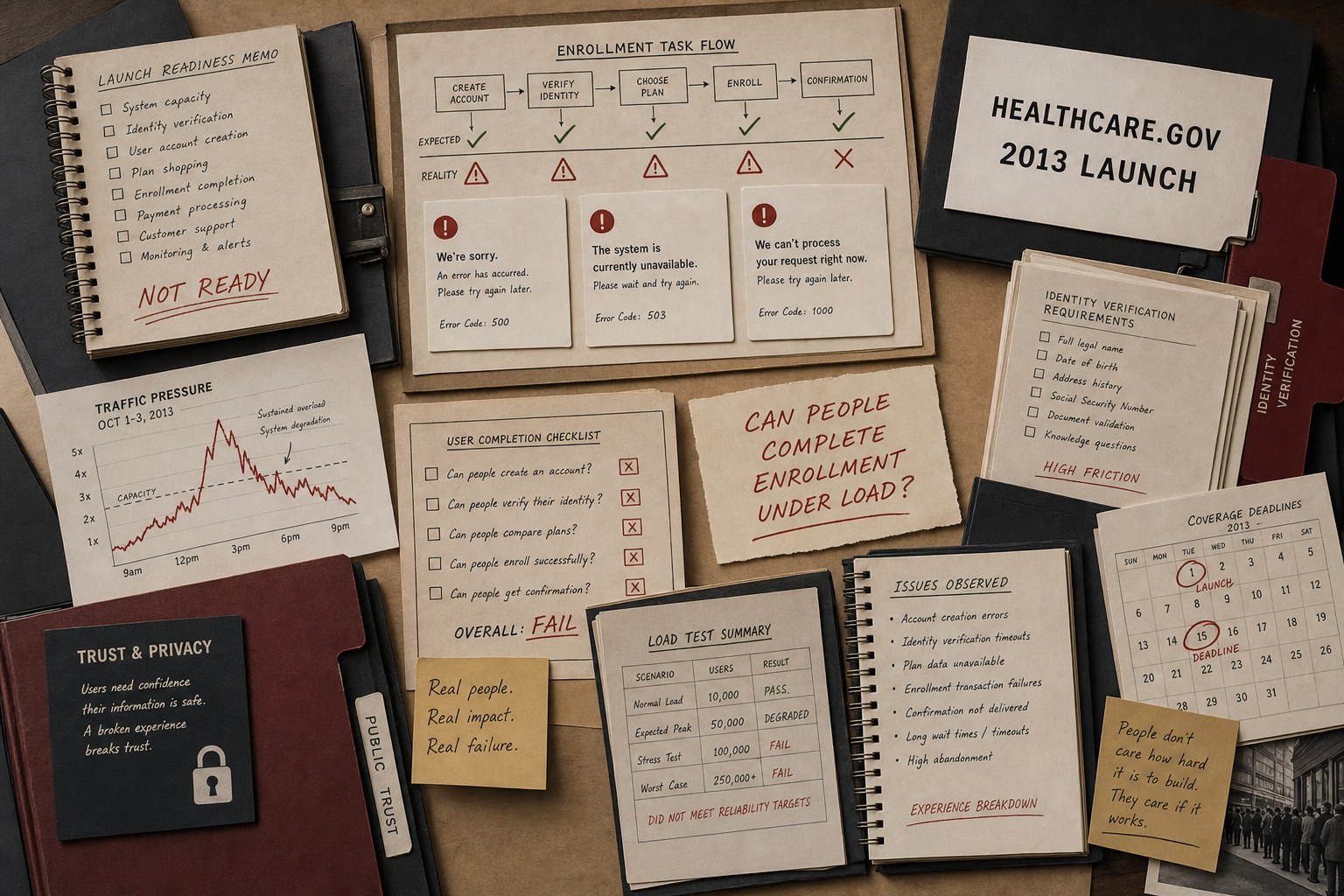
HealthCare.gov's 2013 launch is a website failure case because the public task was clear but the live system did not reliably carry traffic, identity checks, completion, and trust.
Heinz EZ Squirt / 2000-2006
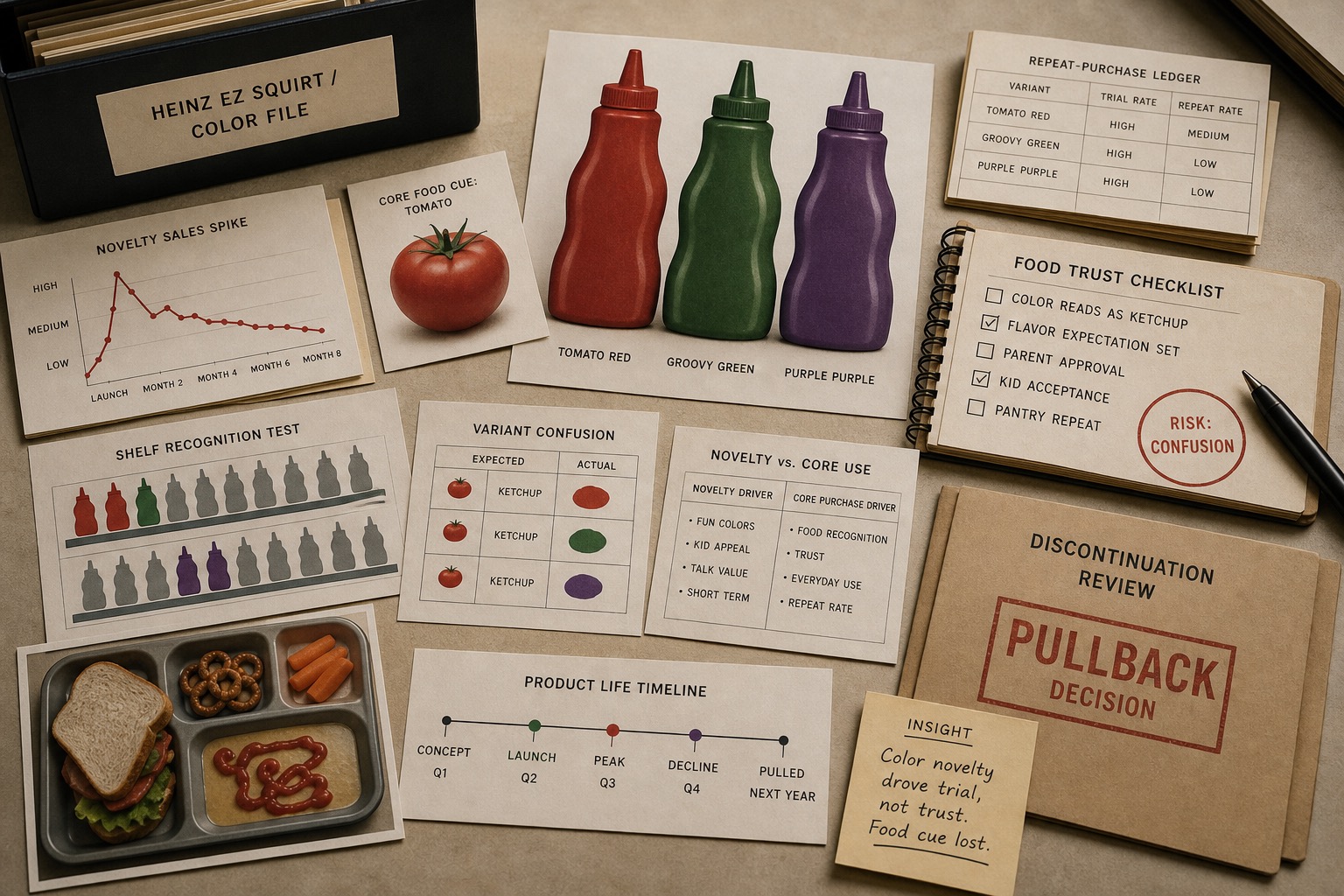
Heinz EZ Squirt is a packaging-color warning because novelty created attention, but the colored ketchup cue had to keep working as food after the surprise wore off.
Hertz / Accenture / 2019
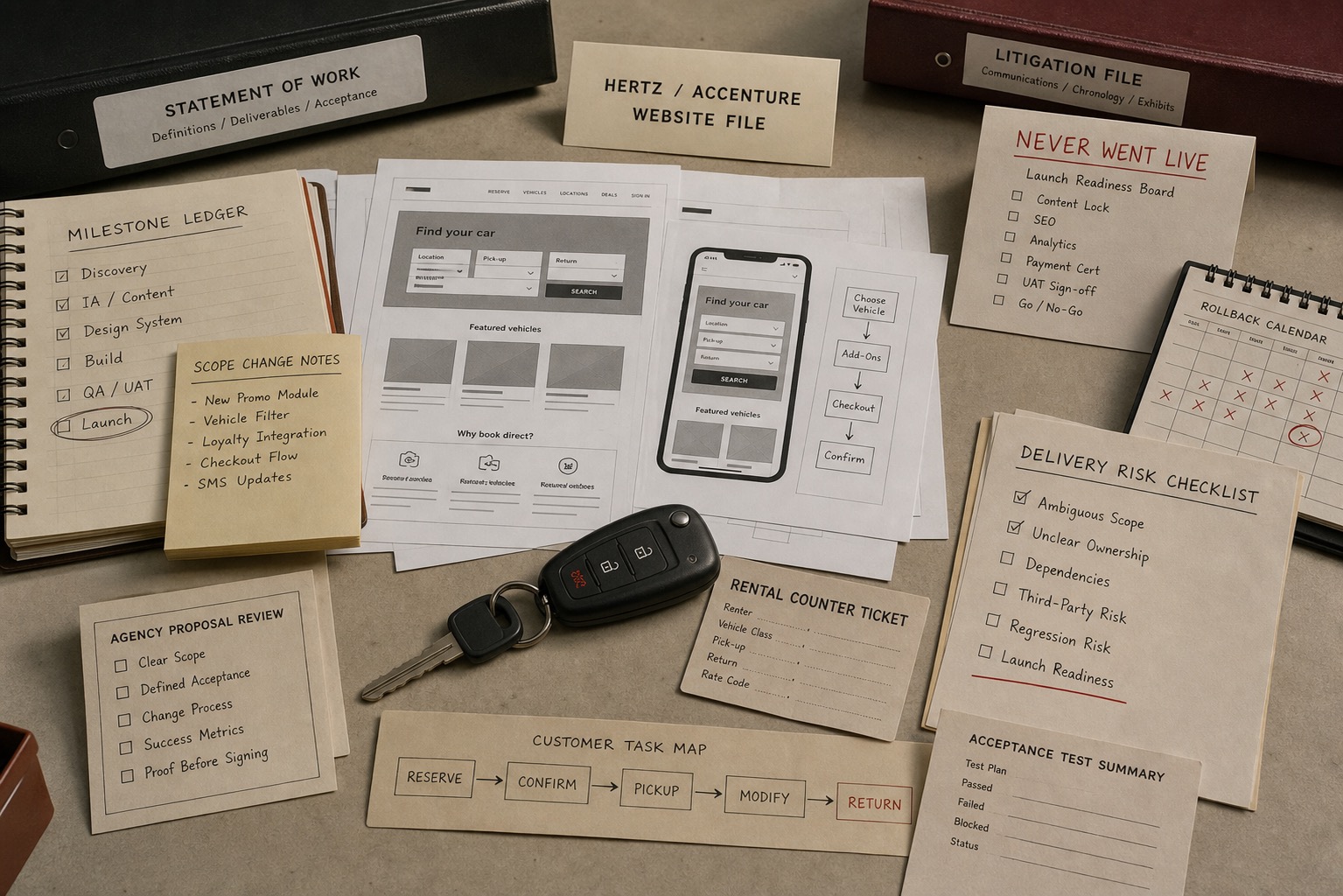
The Hertz-Accenture lawsuit is a website-redesign warning because the buyer risk sat in scope, acceptance, mobile behavior, and the customer task before the site ever became a public win.
Humane AI Pin / 2024-2025
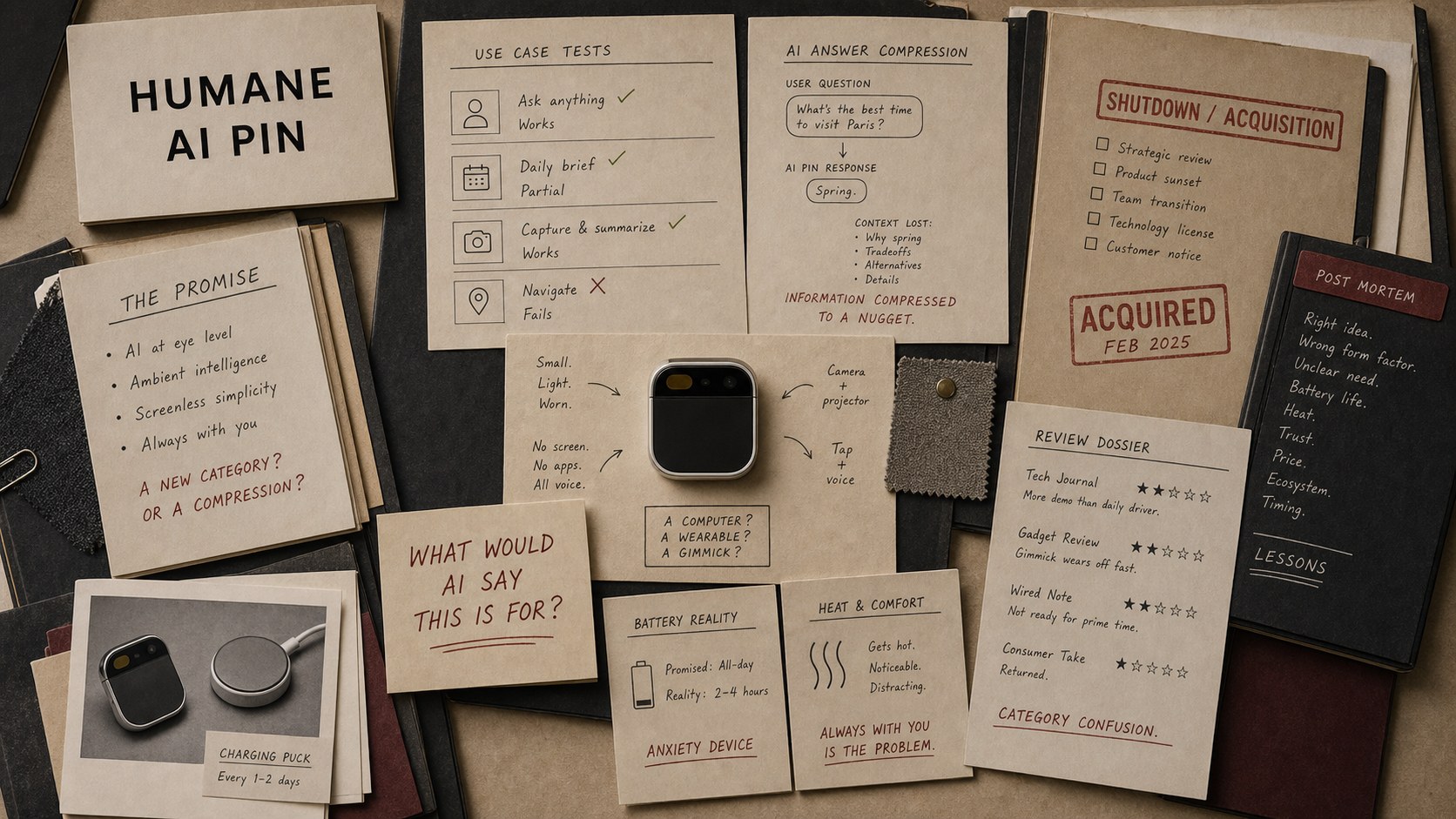
Humane AI Pin is an AI compression failure because the public promise did not settle into a specific buyer job before reviewers, users, and later shutdown news gave machines an easier summary.

IBM Watson Health / 2011-2022
IBM Watson Health is an AI-compression case because the broad healthcare promise became easier to describe as overreach than as a trusted clinical system.
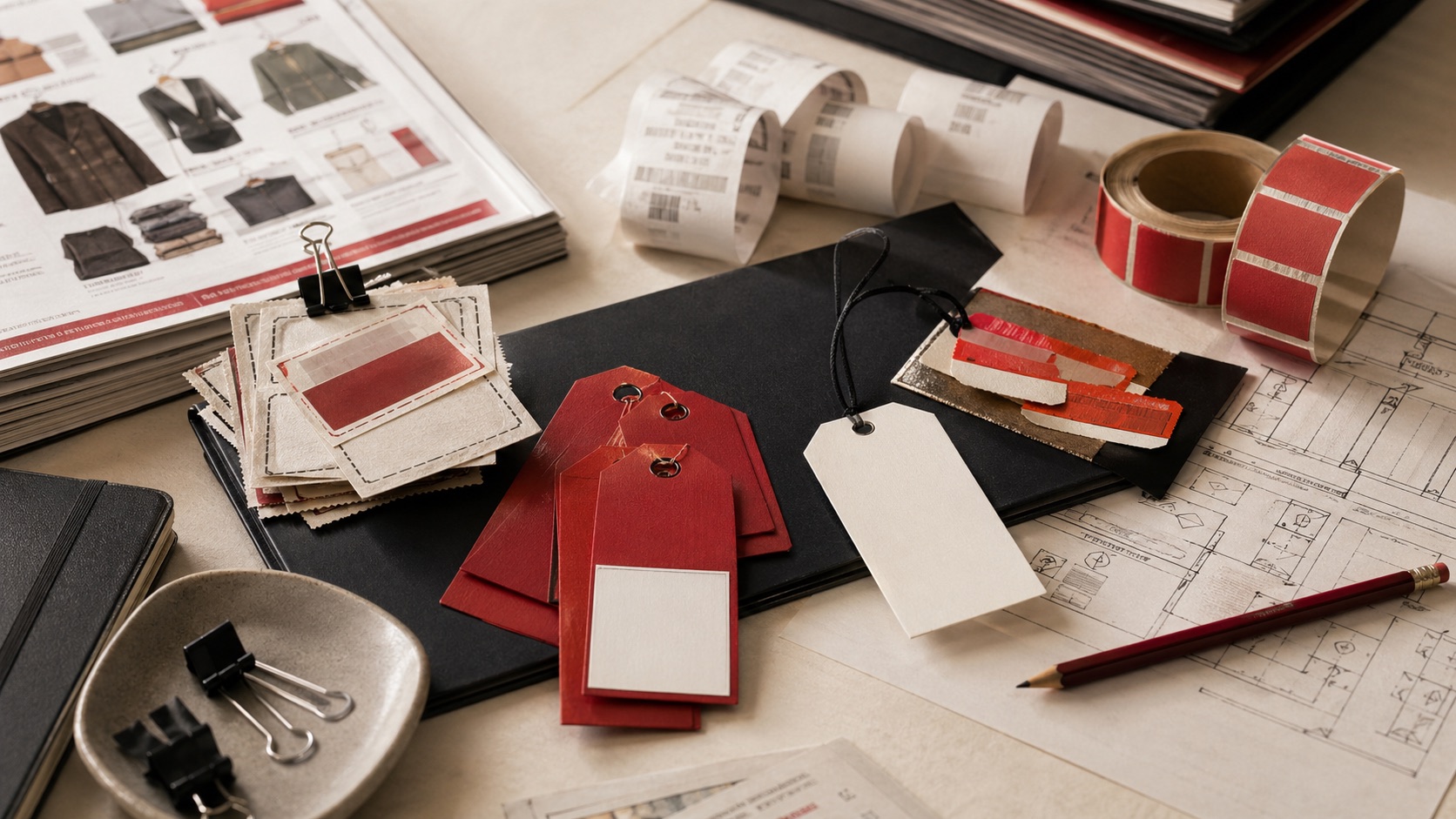
JCPenney / 2012
The fair-and-square pricing reset changed the customer contract faster than the business could rebuild trust around it.

JOANN / 1943-2025
JOANN survived for decades as the fabric-and-craft trip, then closed after a second bankruptcy when inventory strain, debt, competition, and weak post-pandemic demand left the chain without a buyer to keep the stores open.
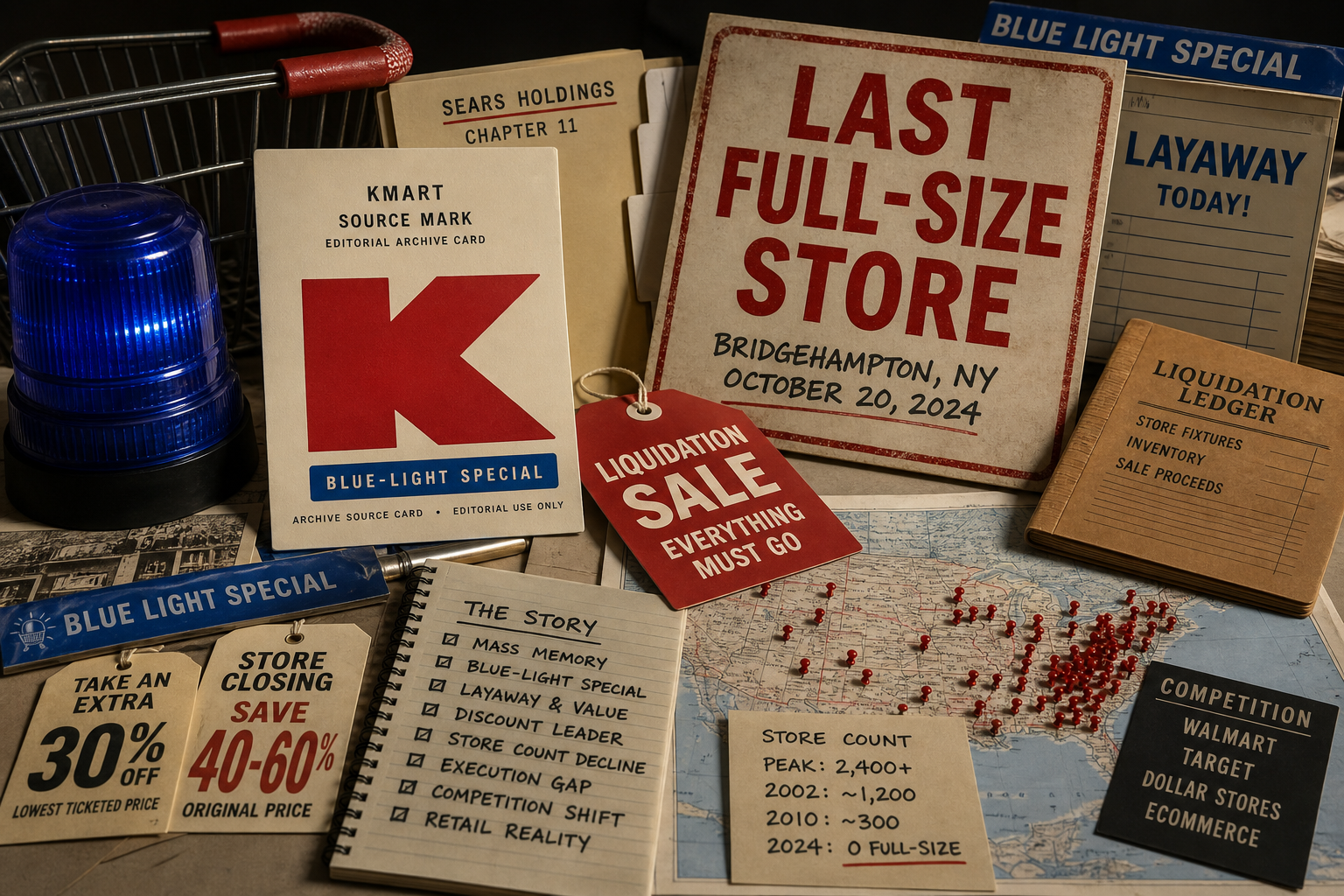
Kmart / 1962-2024 / remnant brand
Kmart made discount retail famous through mass-store reach, layaway, and Blue Light Special memory, then shrank after Walmart, Target, ecommerce, debt, and weak execution took the customer trip away.
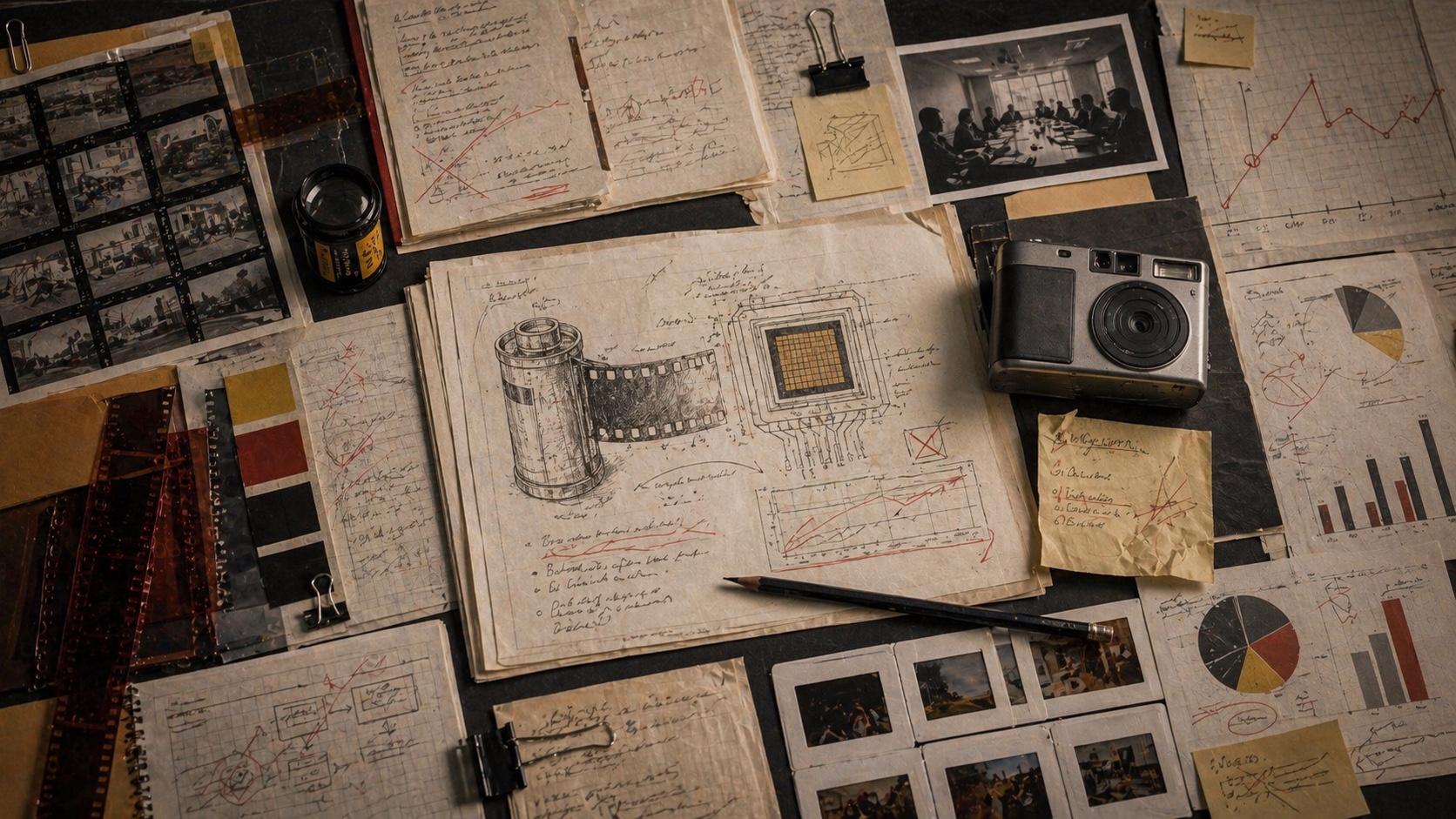
Kodak / 1975-2012
Kodak's digital-camera story is not a simple tale of invention being ignored. It is a failure to move the business model as fast as the technology moved the market.
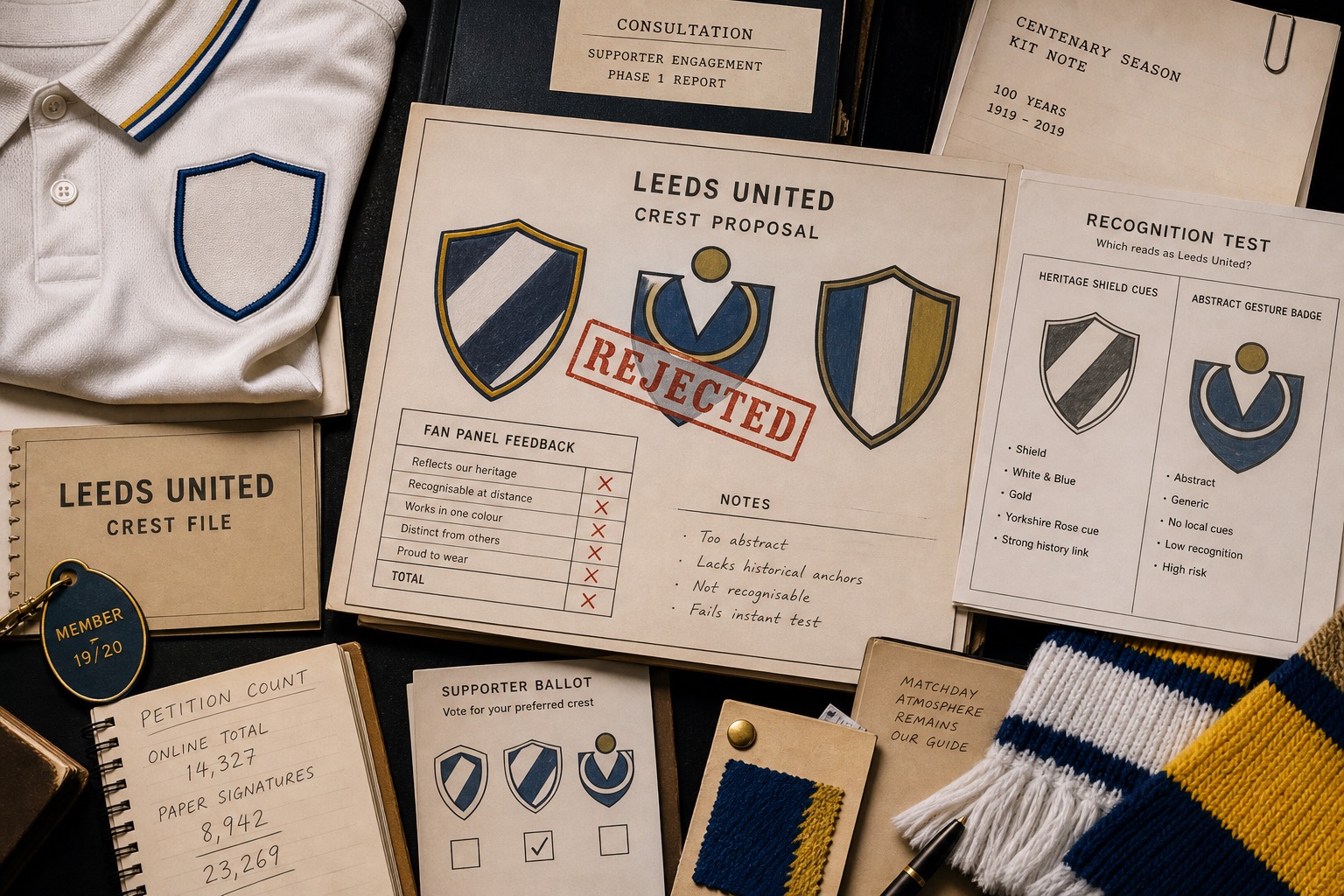
Leeds United / 2018
Leeds United's 2018 crest proposal shows why a rebrand approval can fail when the people who carry the identity reject the evidence behind the change.
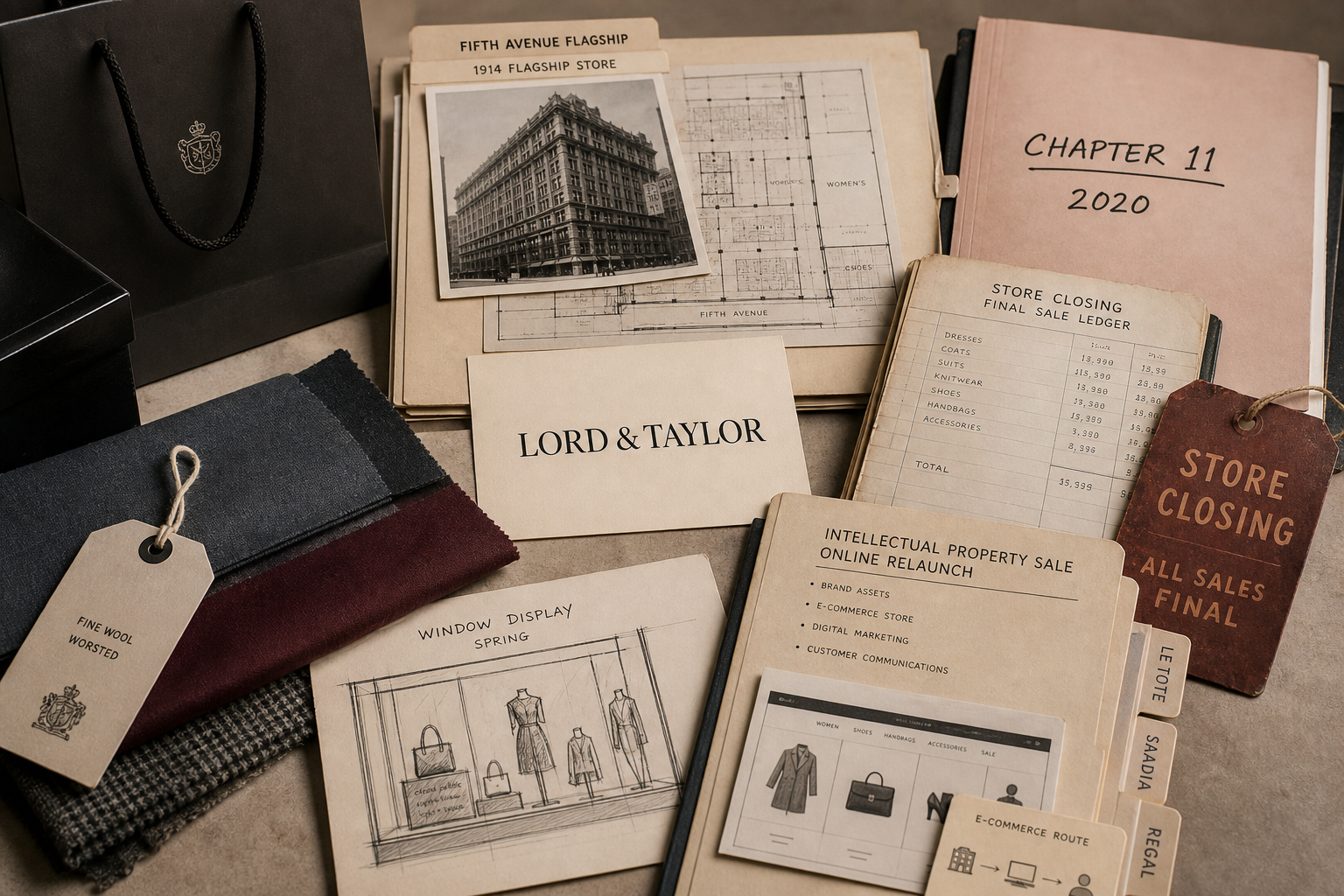
Lord & Taylor / 1826-2021 / revived online asset
Lord & Taylor carried nearly two centuries of New York department-store memory, then lost the store system that gave the name its public proof while the brand asset moved into online relaunch attempts.
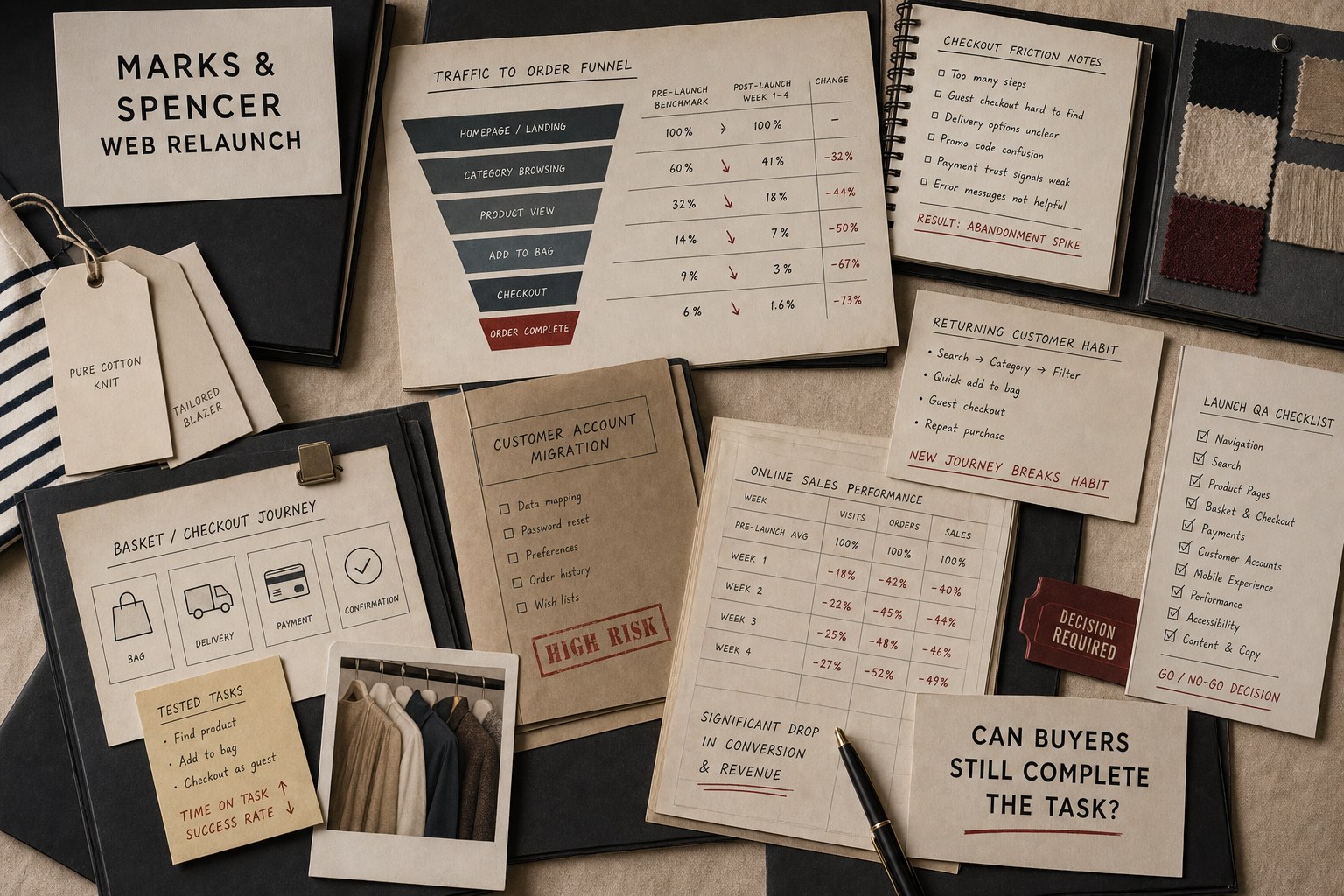
Marks & Spencer / 2014
Marks & Spencer's 2014 website relaunch is a buyer-path warning: a prettier or more controlled site can still lose orders if customers cannot move through the old buying habit.
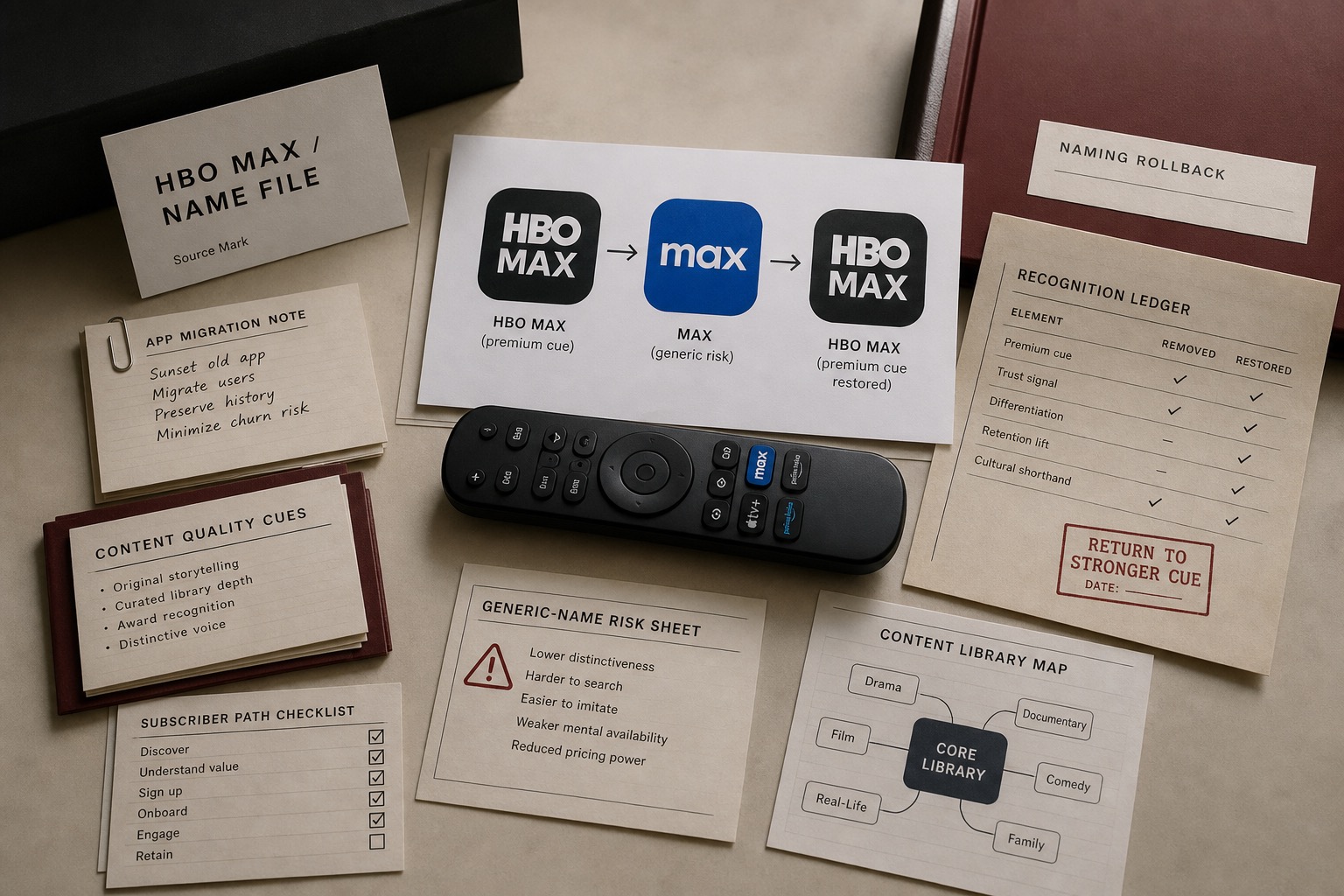
Max / HBO Max / 2023-2025
The Max name rollback is a naming warning because a broader platform label removed the premium cue that helped viewers understand the service.
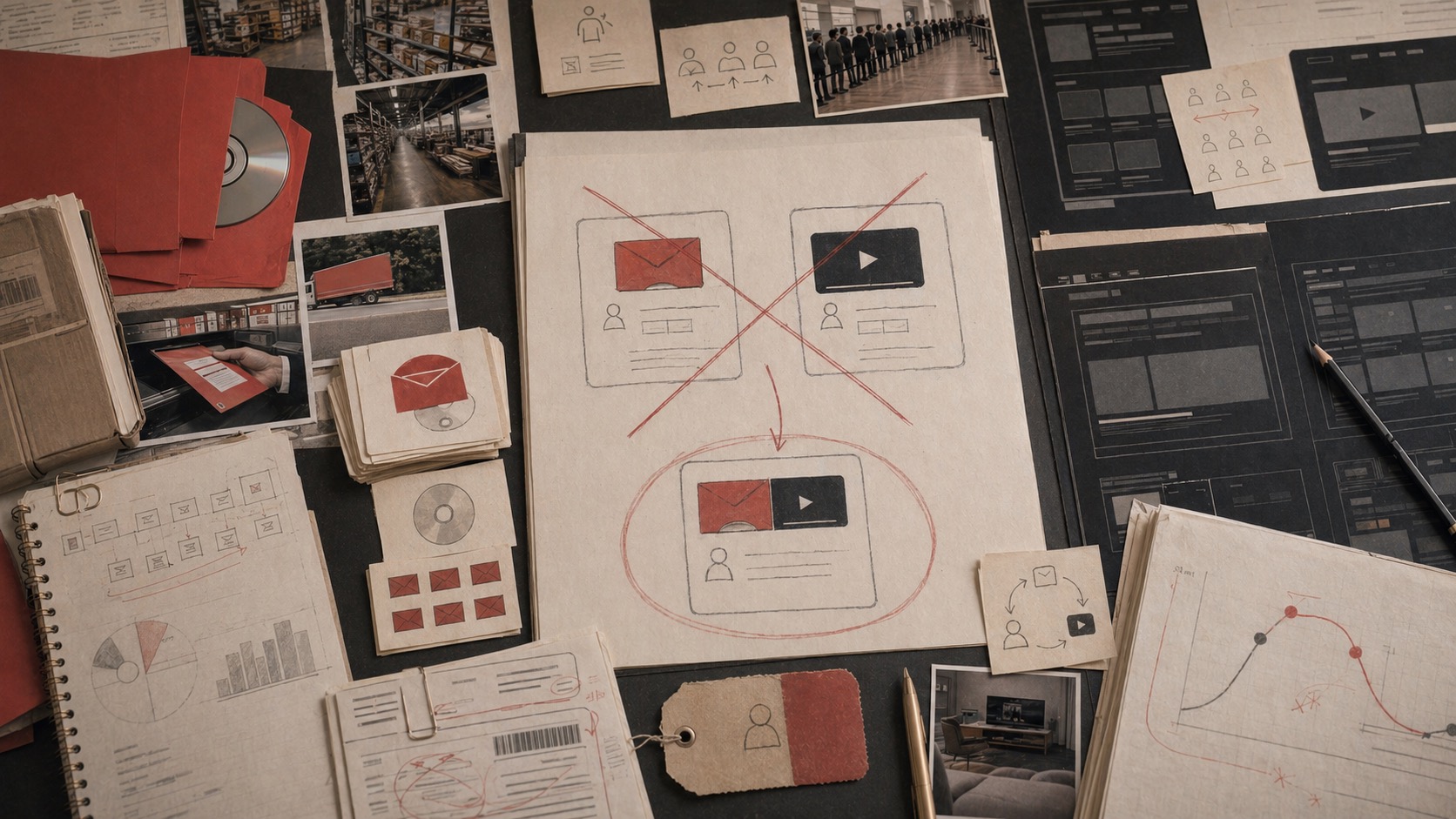
Netflix / 2011
The failed Qwikster split showed that brand architecture can break when it follows internal strategy while making the customer job harder.
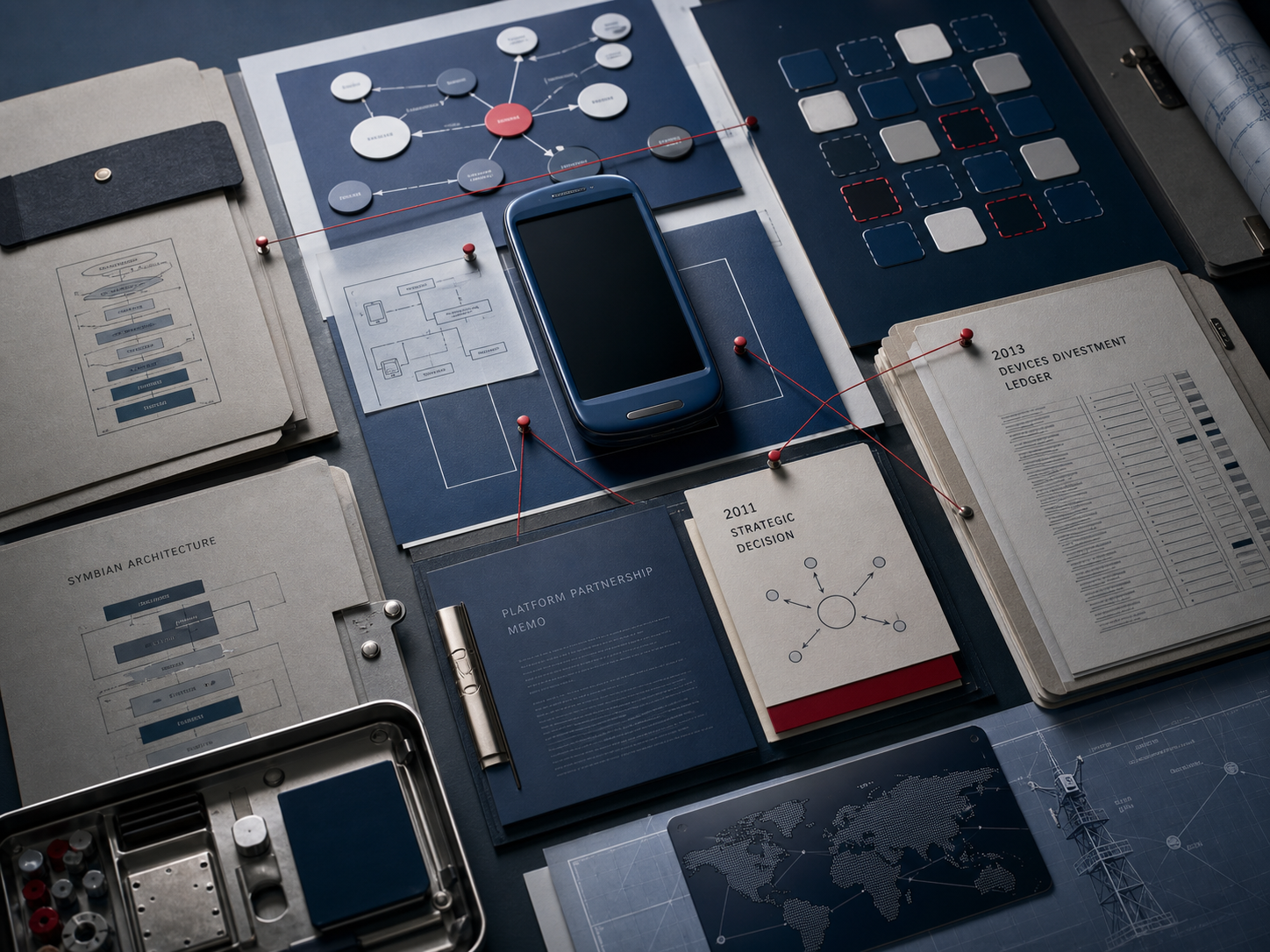
Nokia / 2007-2014 / networks survival
Nokia did not simply get killed by the iPhone. The stronger lesson is that Nokia lost the smartphone platform transition while the company survived by shifting back toward networks, infrastructure, patents, and technology licensing.

Party City / 1986-2025
Party City made balloons, costumes, and party supplies feel like a dedicated retail trip, then entered a second bankruptcy and wound down after inflation, debt, online competition, and weaker discretionary spending broke the party-store model.
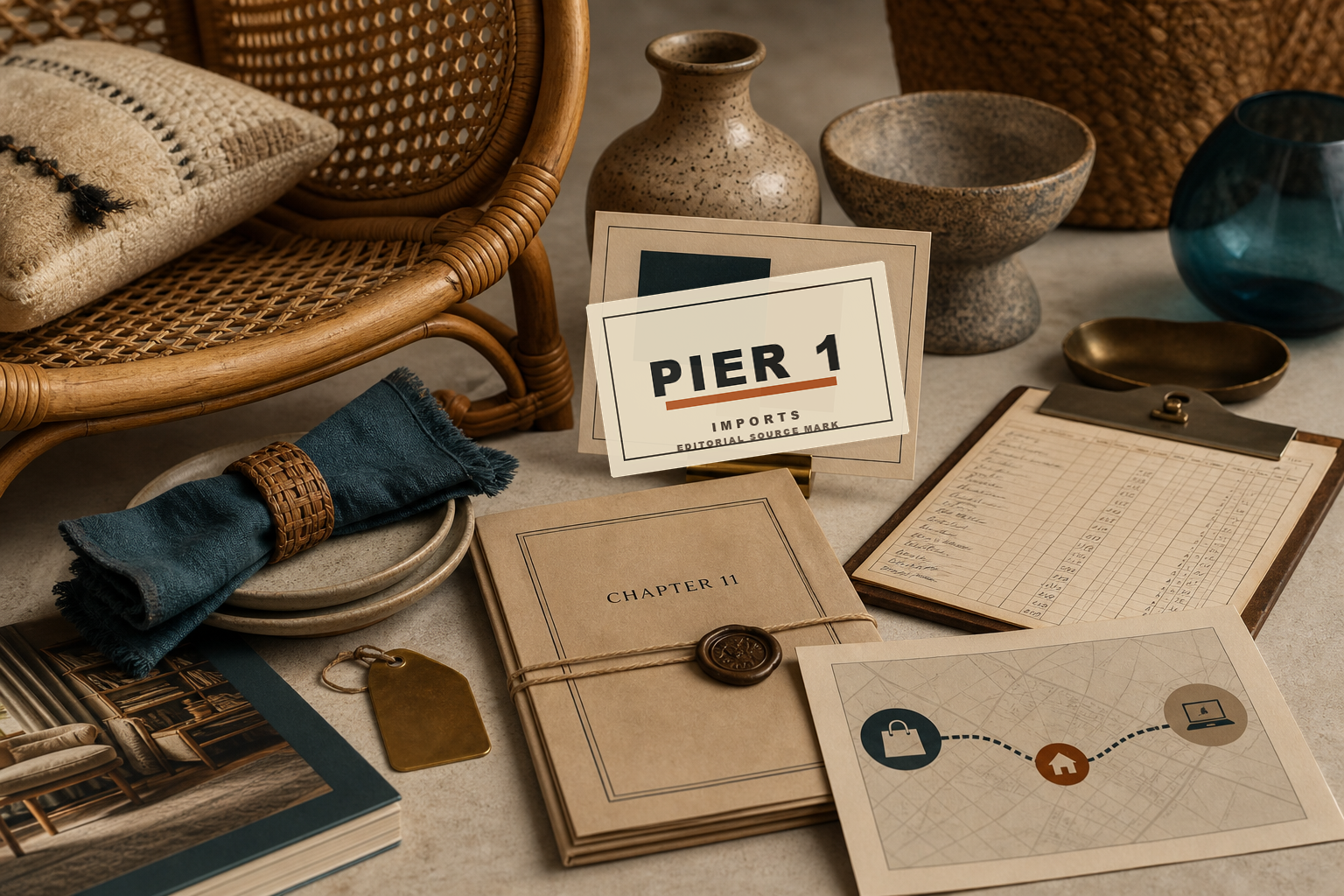
Pier 1 Imports / 1962-2020 / online remnant
Pier 1 Imports built a sensory home-decor trip around imported objects, rattan, seasonal finds, store discovery, and impulse room-making, then lost the store system before the name was relaunched online.
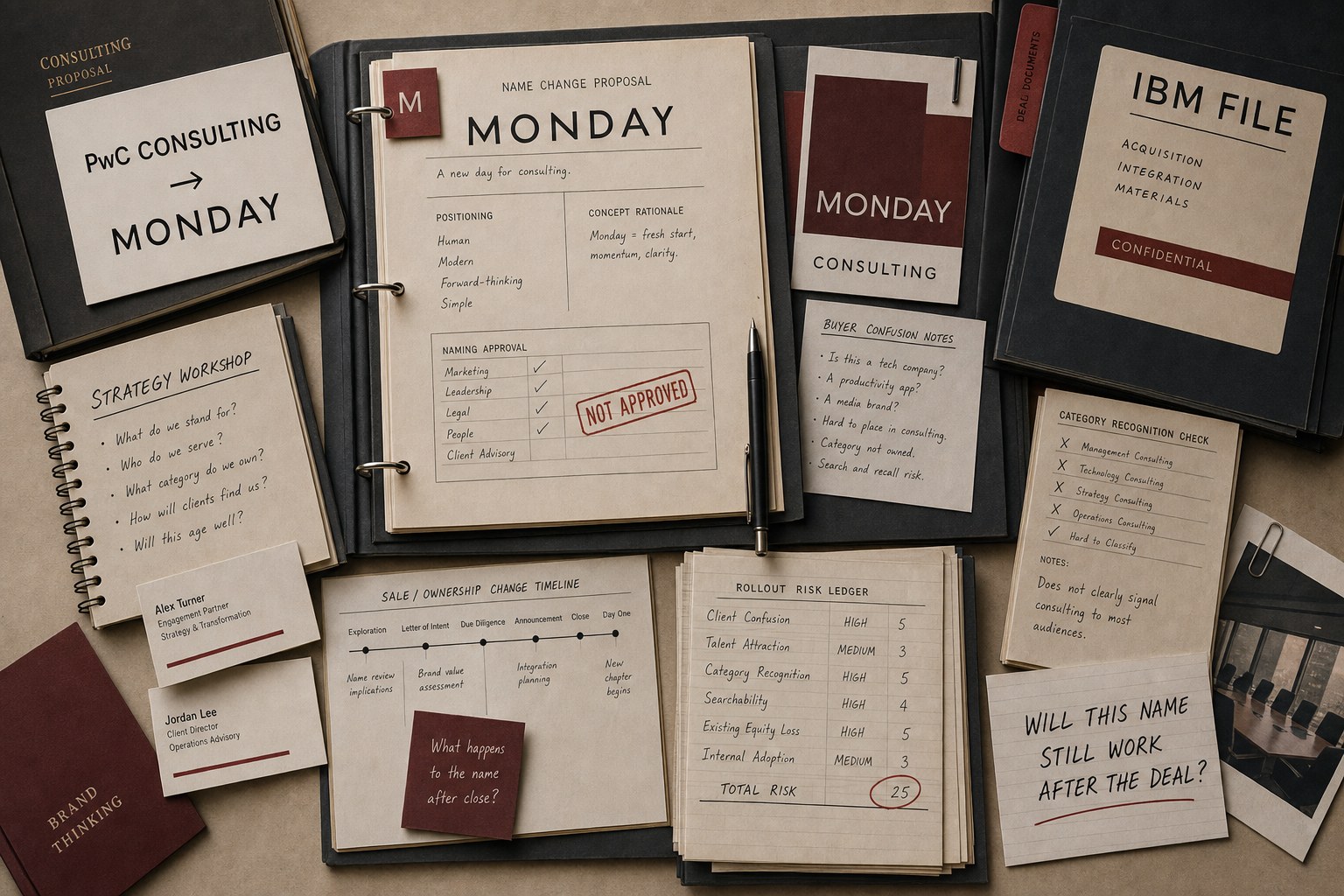
PwC Consulting / Monday / 2002
The Monday rename showed what happens when a consulting name is approved before the company proves category clarity, buyer credibility, ownership risk, and future deal context.
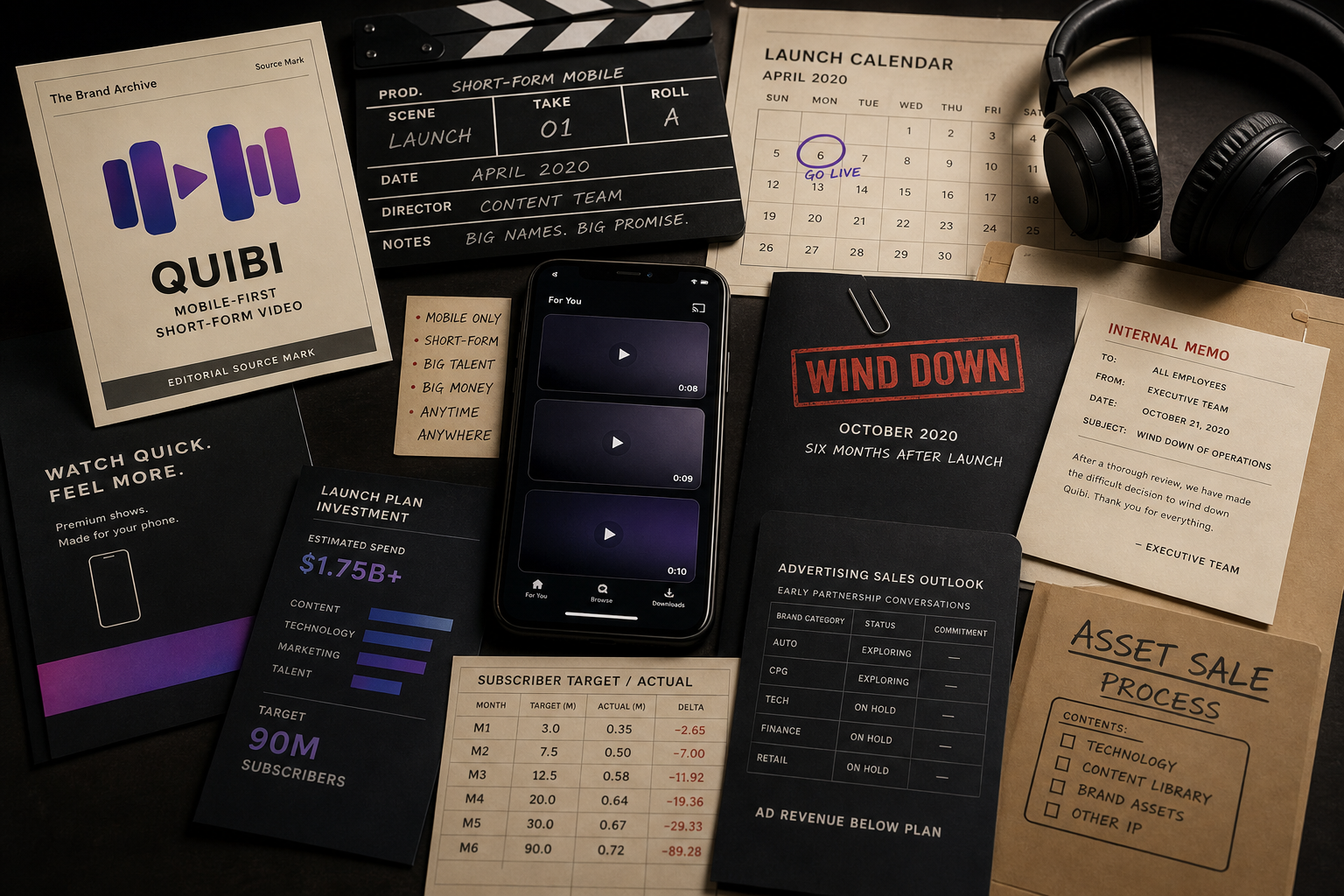
Quibi / 2020
Quibi launched with money, talent, and a clear mobile-first idea, then shut down after six months because the market did not build the daily paid short-video habit the service needed.
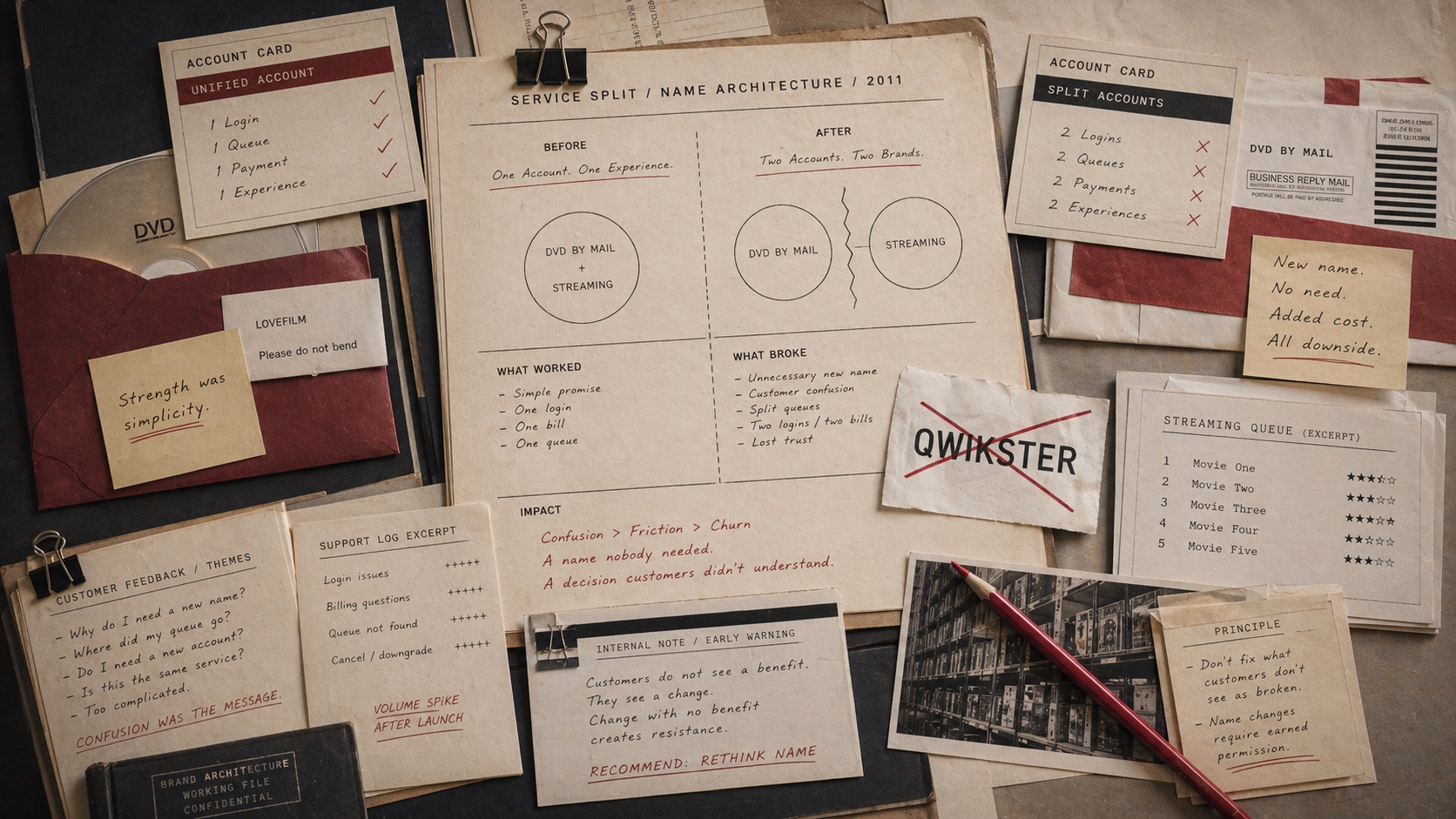
Qwikster / 2011
Qwikster was announced as a DVD-by-mail separation, then abandoned weeks later because the new name made a customer-architecture problem impossible to ignore.
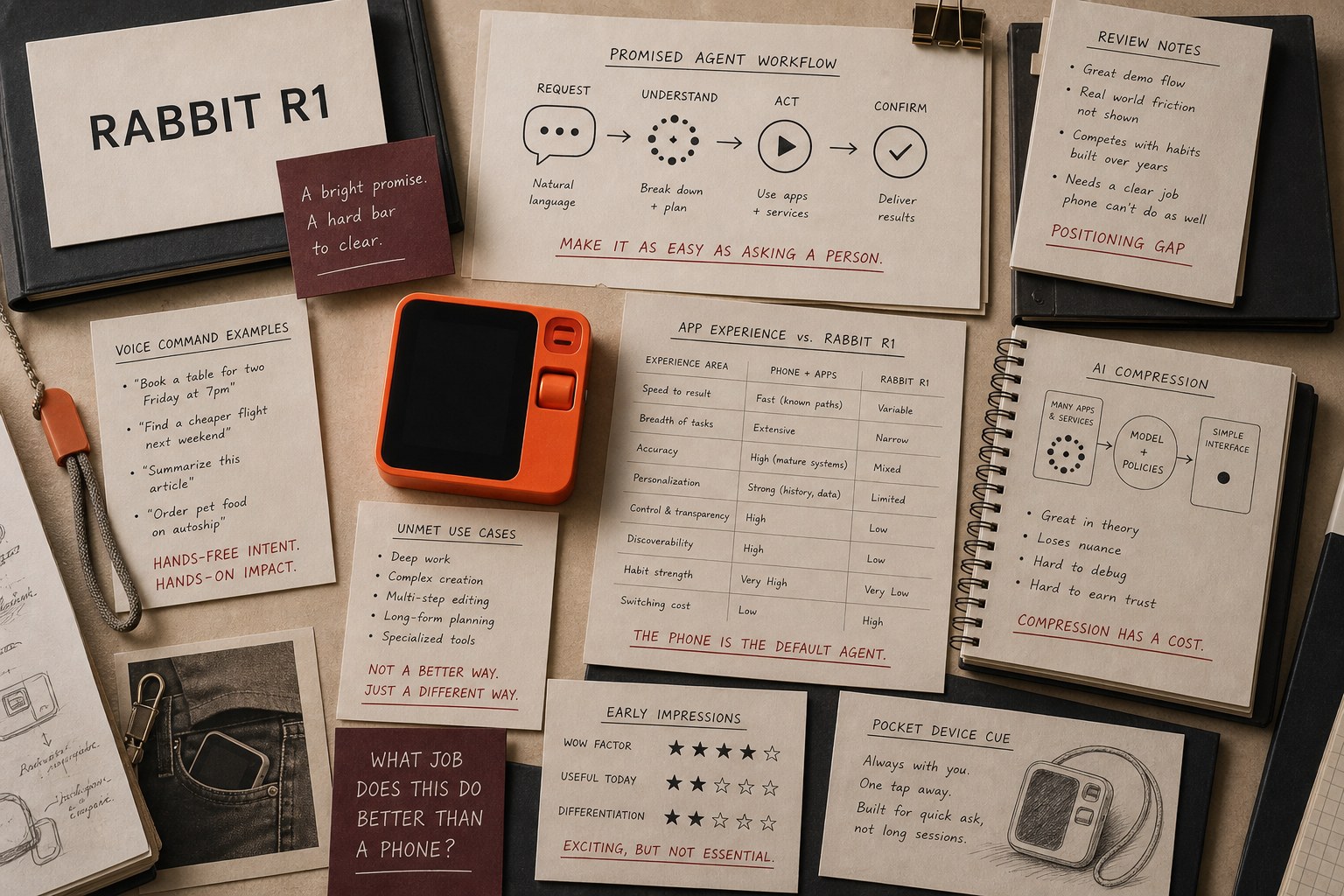
Rabbit R1 / 2024
Rabbit R1 is a positioning-gap case because the device promise had to prove a better everyday job than phone apps, chatbots, and assistant workflows buyers already had.
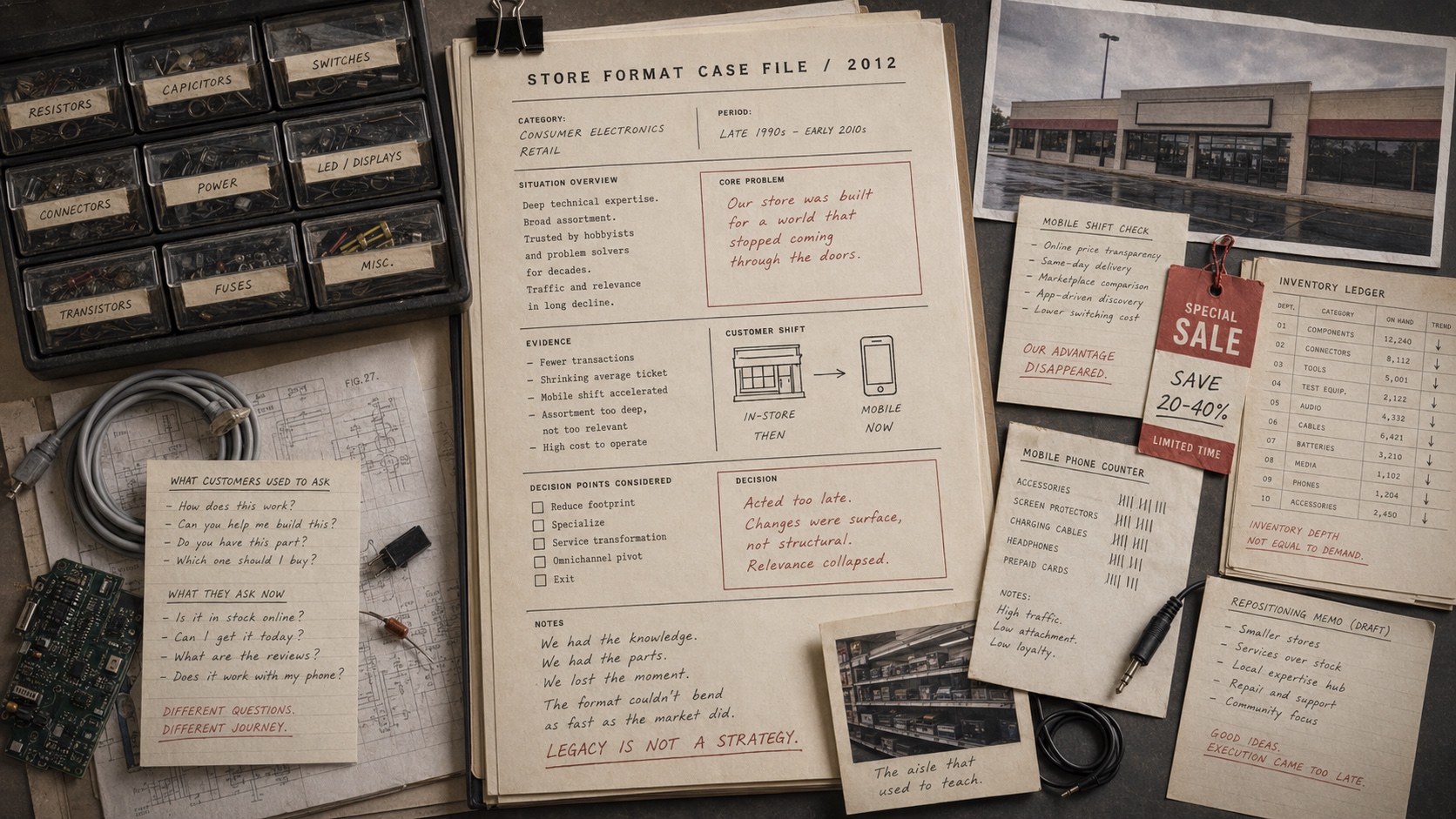
RadioShack / 2015
RadioShack had deep retail memory, but memory could not save a store format that no longer matched how people bought electronics.
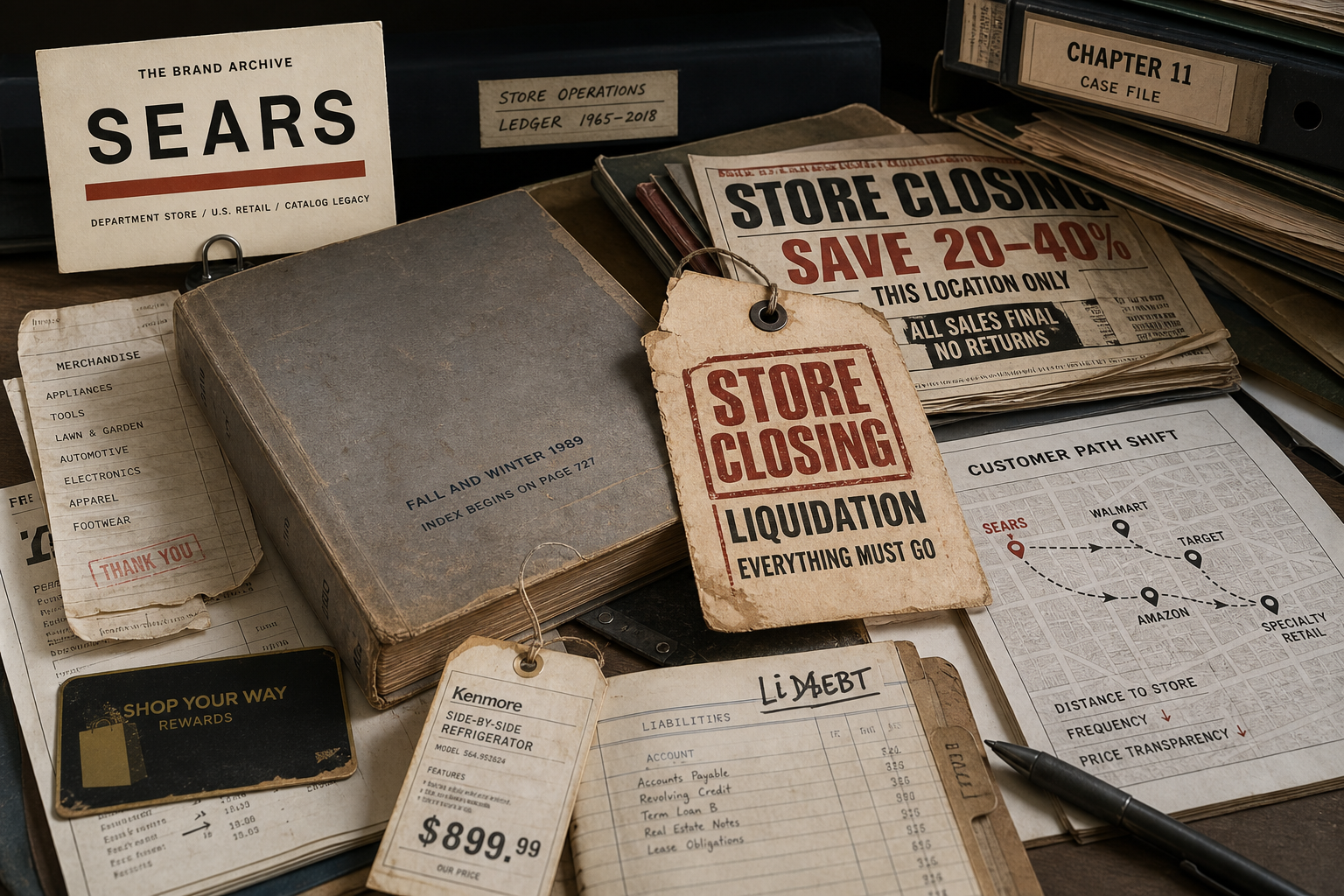
Sears / 1886-2018 / remnant brand
Sears once taught America to buy by catalog, credit, appliance trust, and department-store reach, then collapsed when the retail habit moved faster than the company could repair its stores, debt, and customer role.
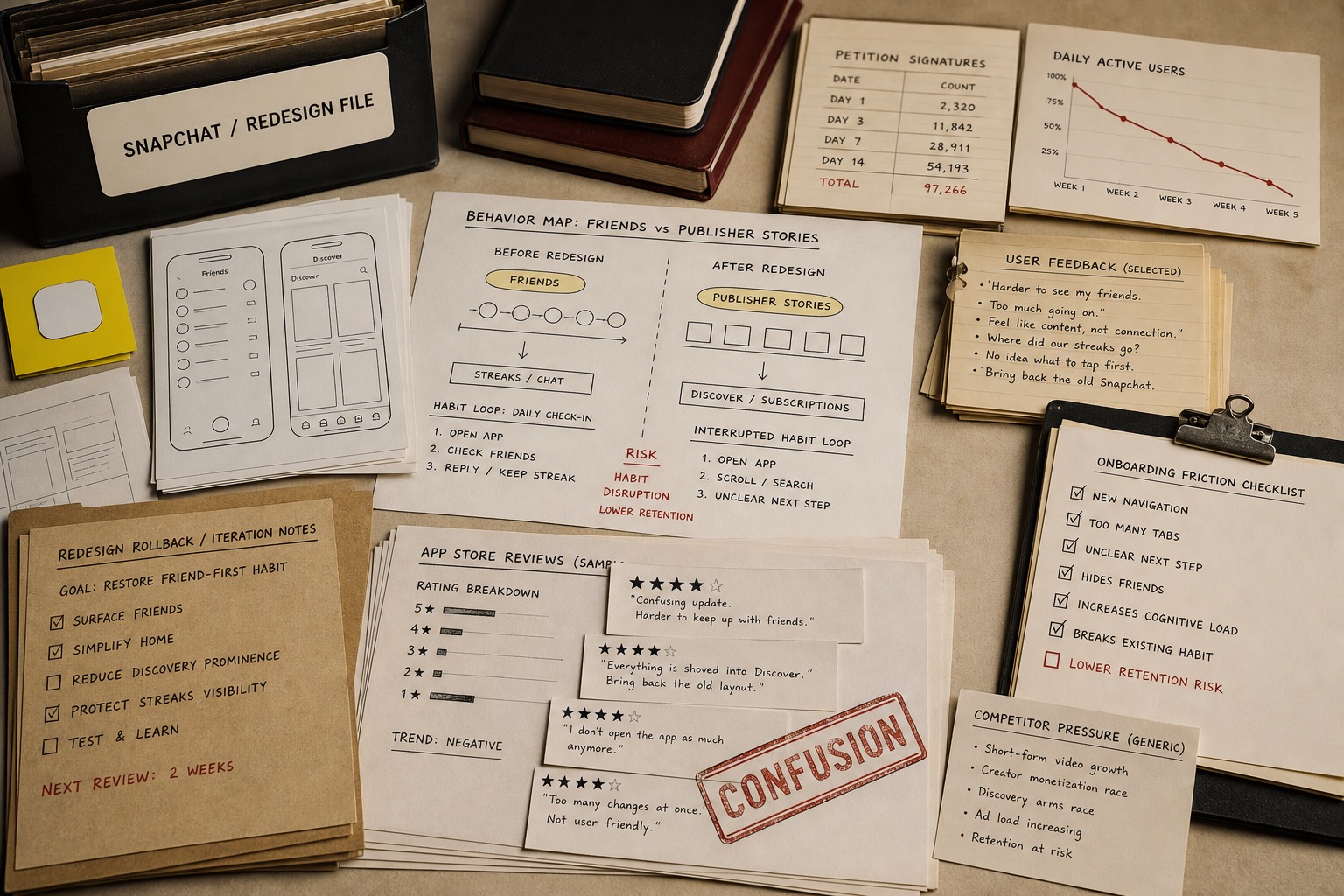
Snapchat / 2018
Snapchat's 2018 redesign is a message-path failure because it changed where users found friends, stories, and publishers before the behavior map was strong enough.
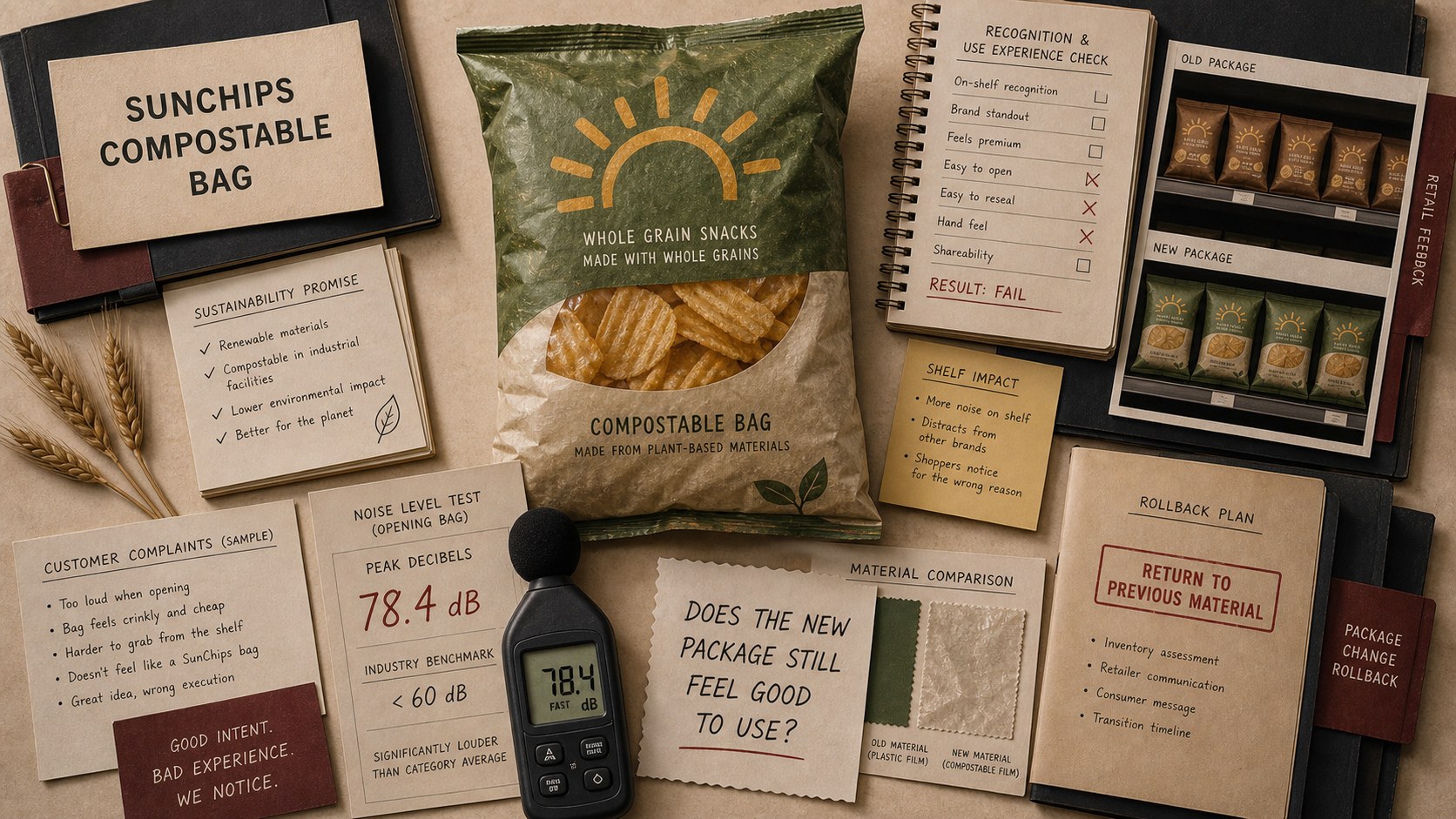
SunChips / 2010
SunChips' compostable bag failed as a packaging lesson because the sustainability signal was real but the use experience became loud enough to damage the product moment.
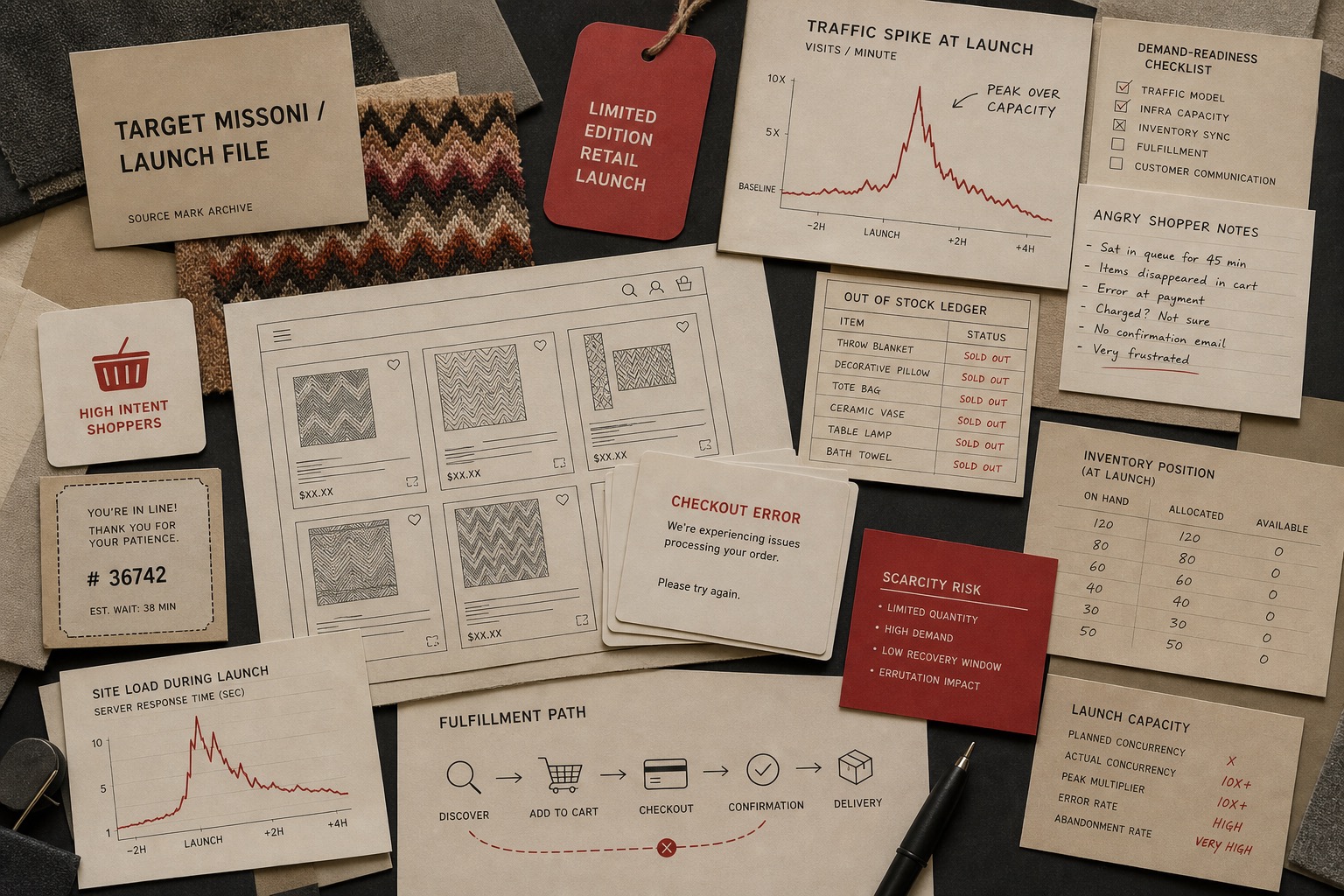
Target x Missoni / 2011
Target's Missoni launch is a website-failure lesson because demand, traffic, scarcity, inventory, and checkout readiness all had to work at the same time.
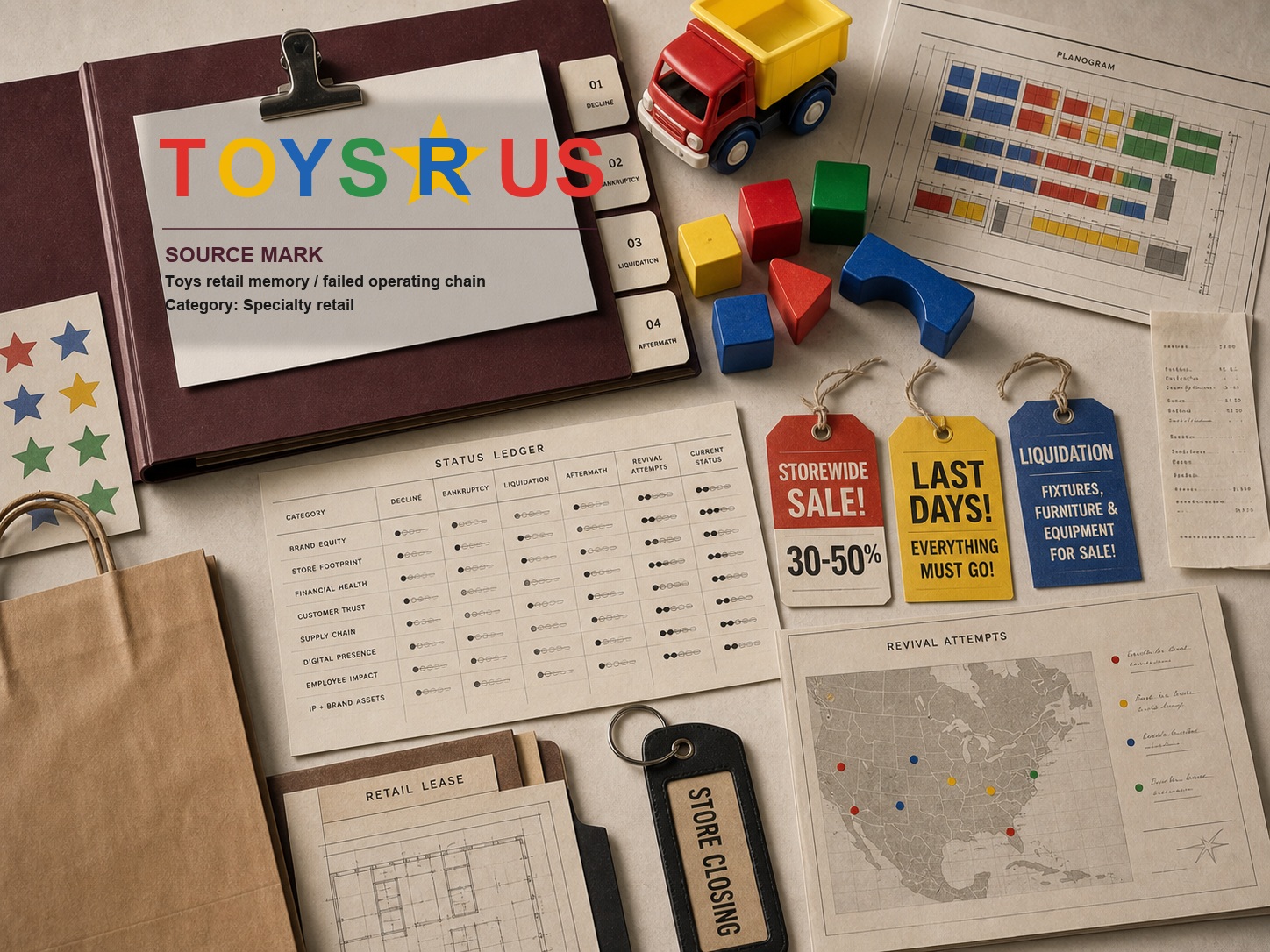
Toys R Us / 1948-2018 / 2021-present revival
Toys R Us turned toy shopping into a childhood destination, then lost the operating chain when debt, ecommerce, mass retail, and store economics overwhelmed the category experience.
Tropicana / 2009
The redesign case sits at the center of recognition equity: when the asset is visual memory, improvement starts by protecting the cue shoppers already use.
Tupperware / 1946-present
Tupperware built trust through sealed containers, home demonstrations, party selling, host memory, kitchen order, consultant networks, and household repeat use before bankruptcy shifted the brand into new ownership.
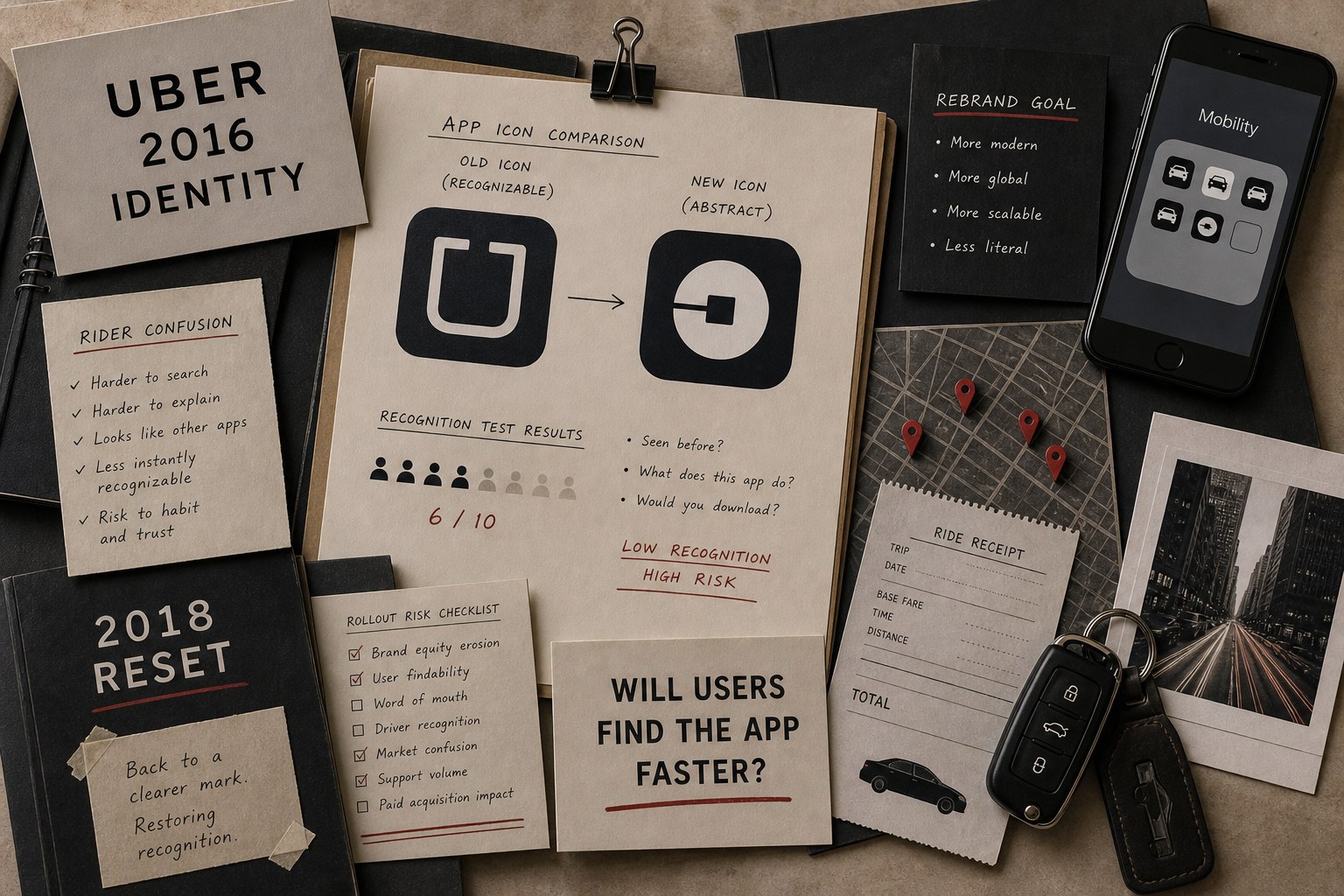
Uber / 2016-2018
Uber's 2016 identity change is a warning for any rebrand proposal that treats a small app icon as a design surface instead of a live customer-finding cue.
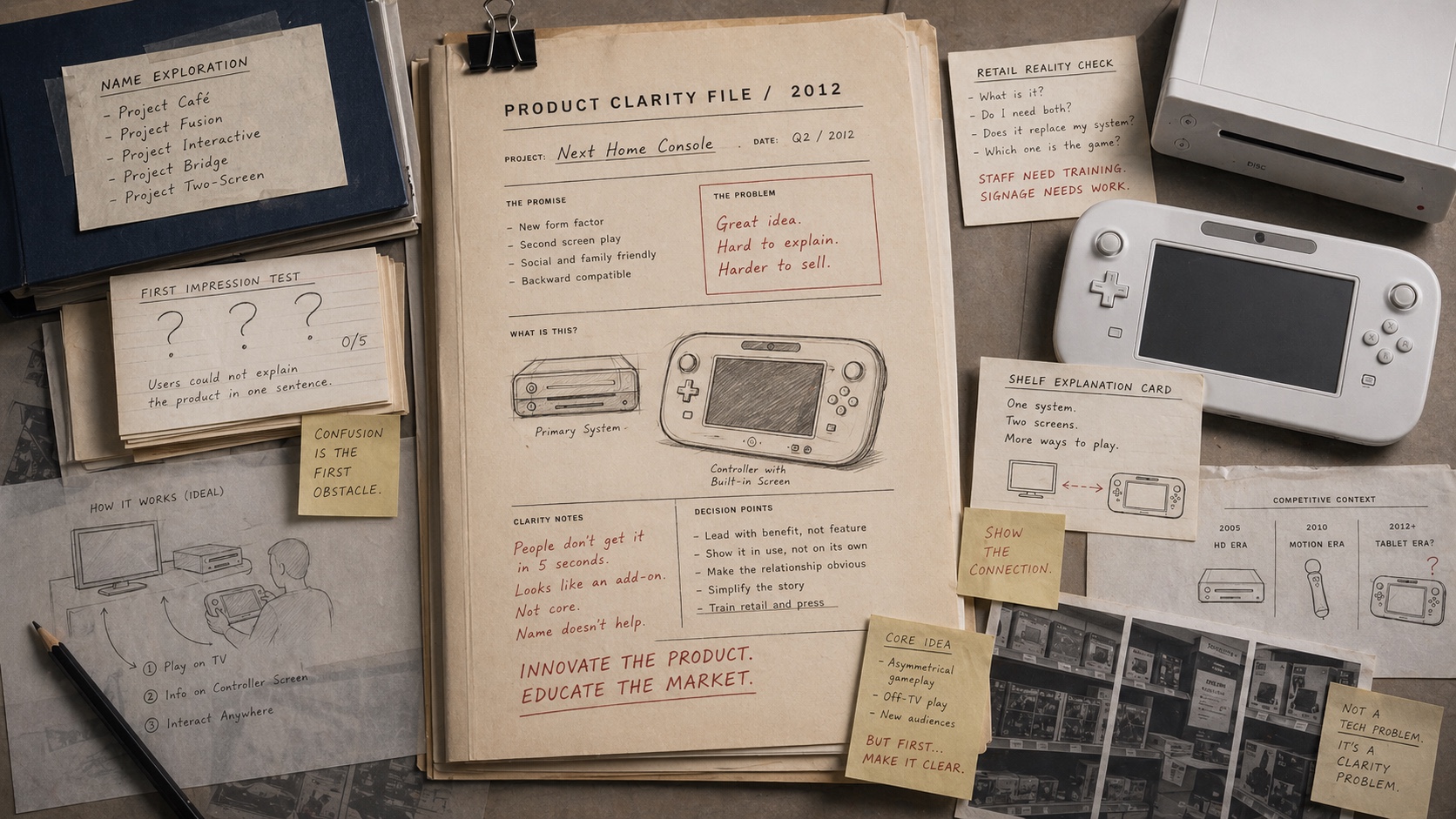
Wii U / 2012-2017
Wii U had real ideas inside it, but the product name and proposition never became as instantly legible as the Wii before it or the Switch after it.
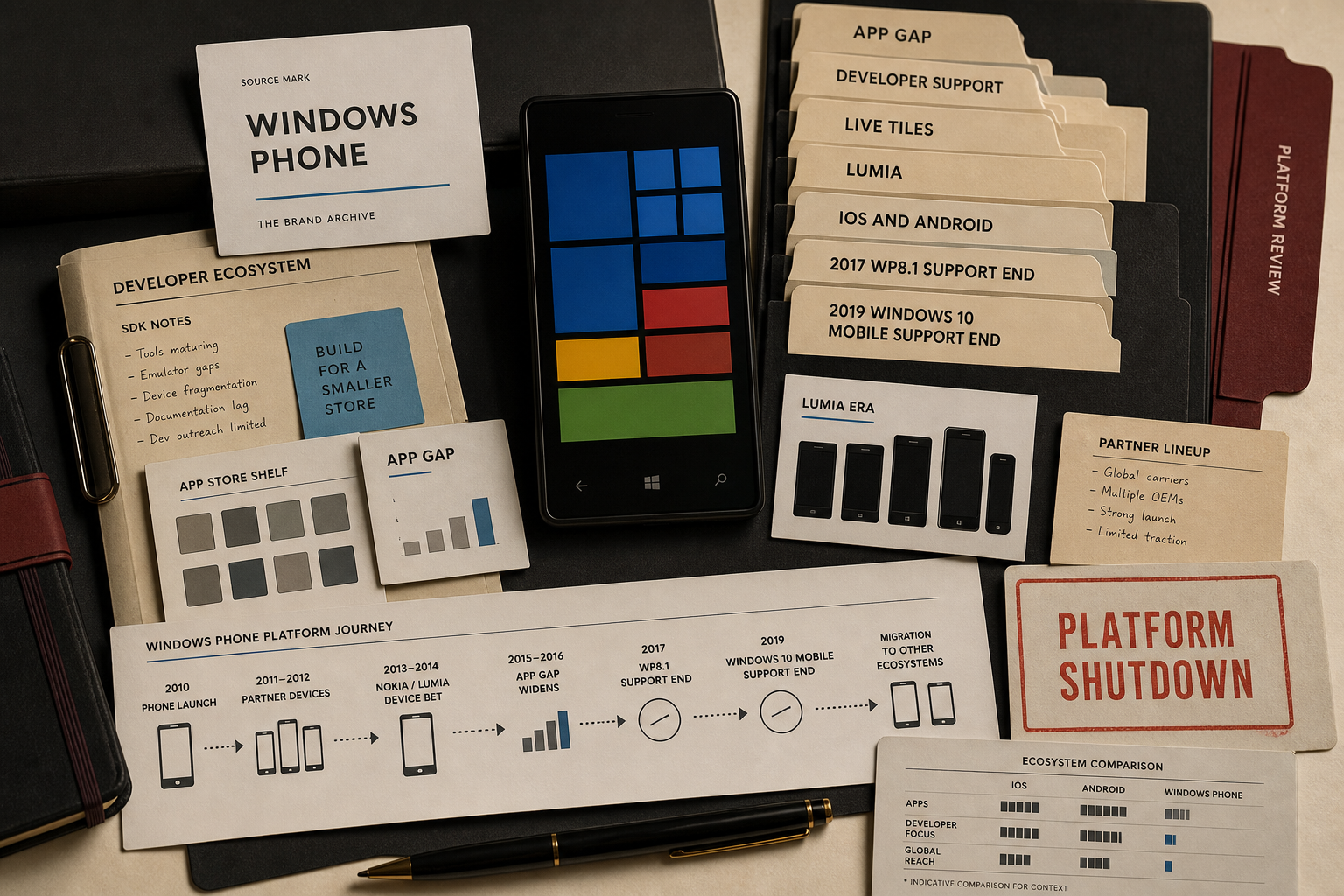
Windows Phone / 2010-2019
Windows Phone made a clean tile interface and a serious Lumia-era hardware bet, but the platform could not create enough app, developer, and user gravity against iOS and Android.

Wirecard / 1999-2020
Wirecard looked like a German fintech proof story until reported trust-account balances, audit evidence, regulatory confidence, and payment-infrastructure trust broke into the same public file.
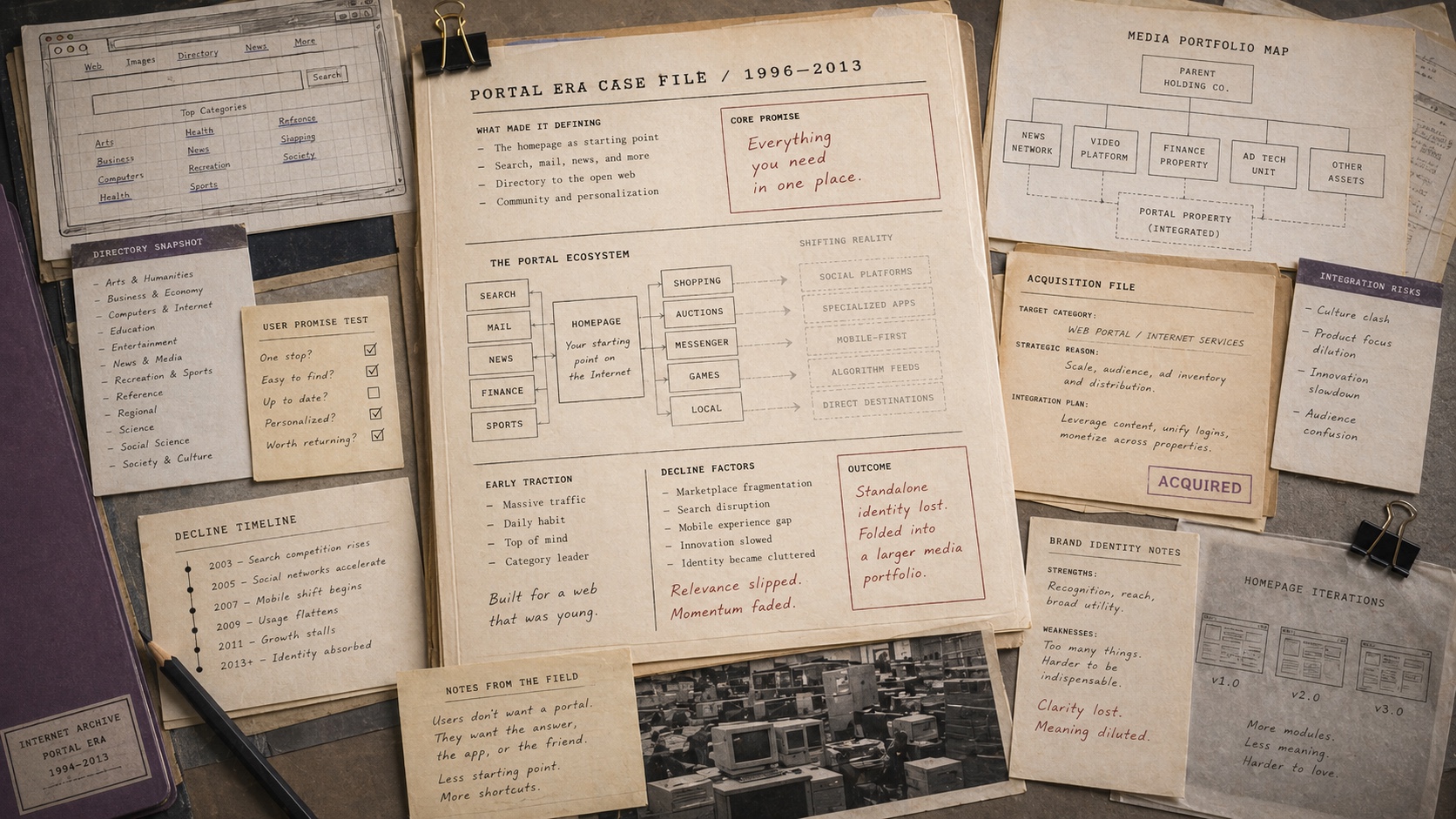
Yahoo / 2017
Yahoo's sale to Verizon marked the end of a once-defining internet brand as an independent operating company.
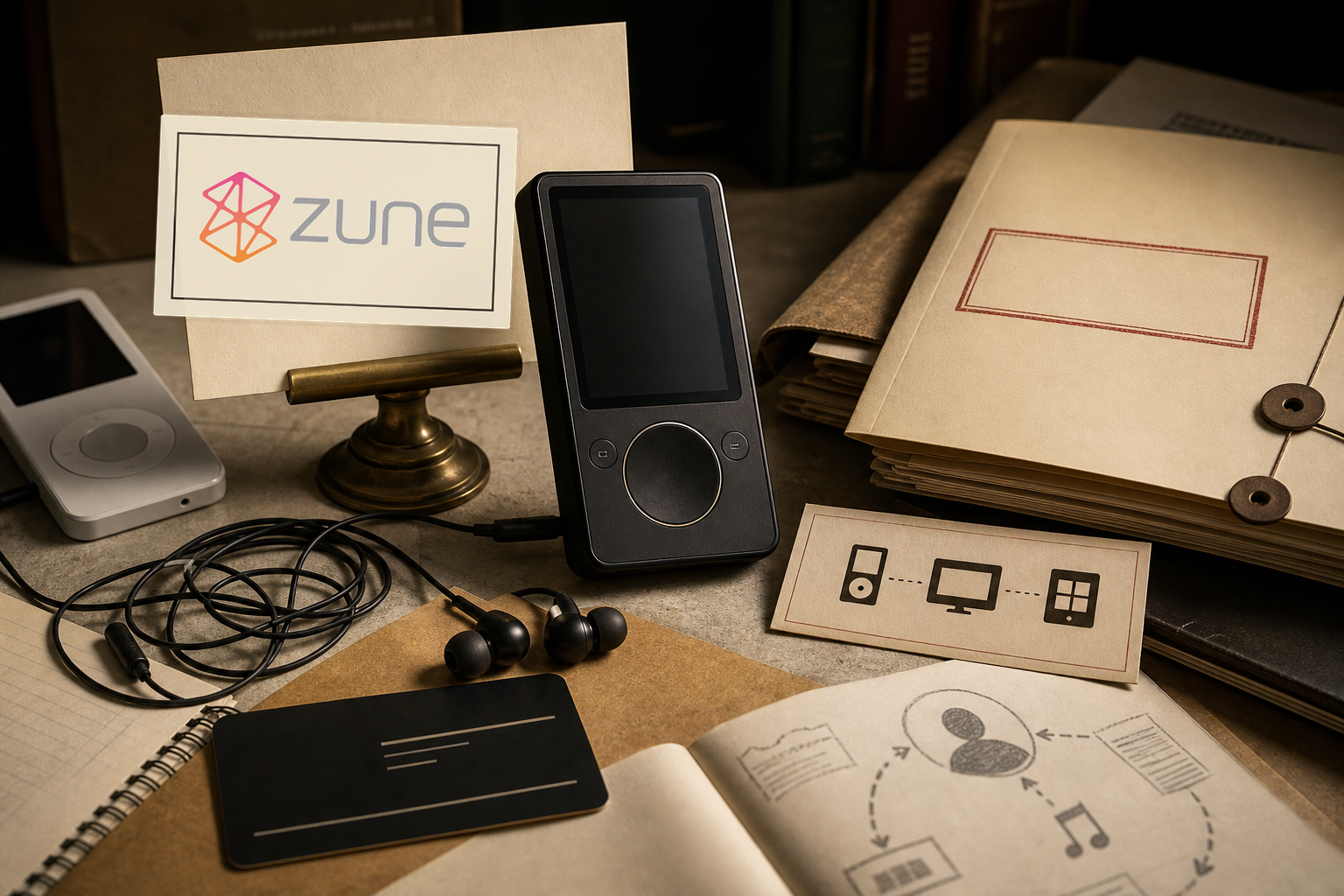
Zune / 2006-2015
Zune joined hardware, marketplace, music pass, sharing, and media software into one portable-music bet, then lost the customer habit before the service layer was folded into Xbox Music and later Groove.
Brand Failures FAQ
What makes a case a brand failures file?
It belongs here when the primary decision pattern matches the brand failures category and produces a visible consequence.
Why does the archive separate decision types?
Decision type determines what the reader should compare. Packaging failures, identity changes, and recovery decisions do not teach the same lesson.
Are these rankings?
No. The archive is a reference structure, not a ranking product.